

I grew up in Pennsylvania reading roadside markers like they were treasure maps. As an adult, I started collecting the real ones, antique battlefield maps that still smell faintly of paper and time. But the older I get, the more I realize the most important “maps” are the ones our public memory forgot to draw in the first place.
If you want to understand the American Revolution through the soles of your shoes, you cannot skip the story of Black Patriots. Enslaved and free men served in Patriot forces, and Black women also supported the war effort as cooks, laundresses, nurses, and messengers. Just as importantly, they carried news, warnings, and messages through households, camps, and streets where official paperwork rarely followed. The good news is that many of the most meaningful places to learn these stories are still there. You can stand where units marched, where freedom was debated line by line, and where later generations finally built monuments that say, plainly, “They were here.”
Before you go
Sites that interpret Black Patriot history come in a few forms, and it helps to know what you are looking at.
- Battlefield landscapes: open ground, lines of advance, river crossings, and choke points. Sometimes the story is on a wayside panel. Sometimes it is in the terrain itself.
- Memorials: often built much later than the war, and valuable for what they say about memory as well as history.
- Burial grounds and churchyards: the most personal stops, and the most likely to change how you feel about the war.
- Neighborhood trails: where daily life, labor, and politics meet. These are fantastic for families because they keep moving.
To sharpen your on-site “map eyes,” I wrote a primer that pairs well with this kind of travel day: How to Read Revolutionary War Battlefield Maps on Site.
Rhode Island
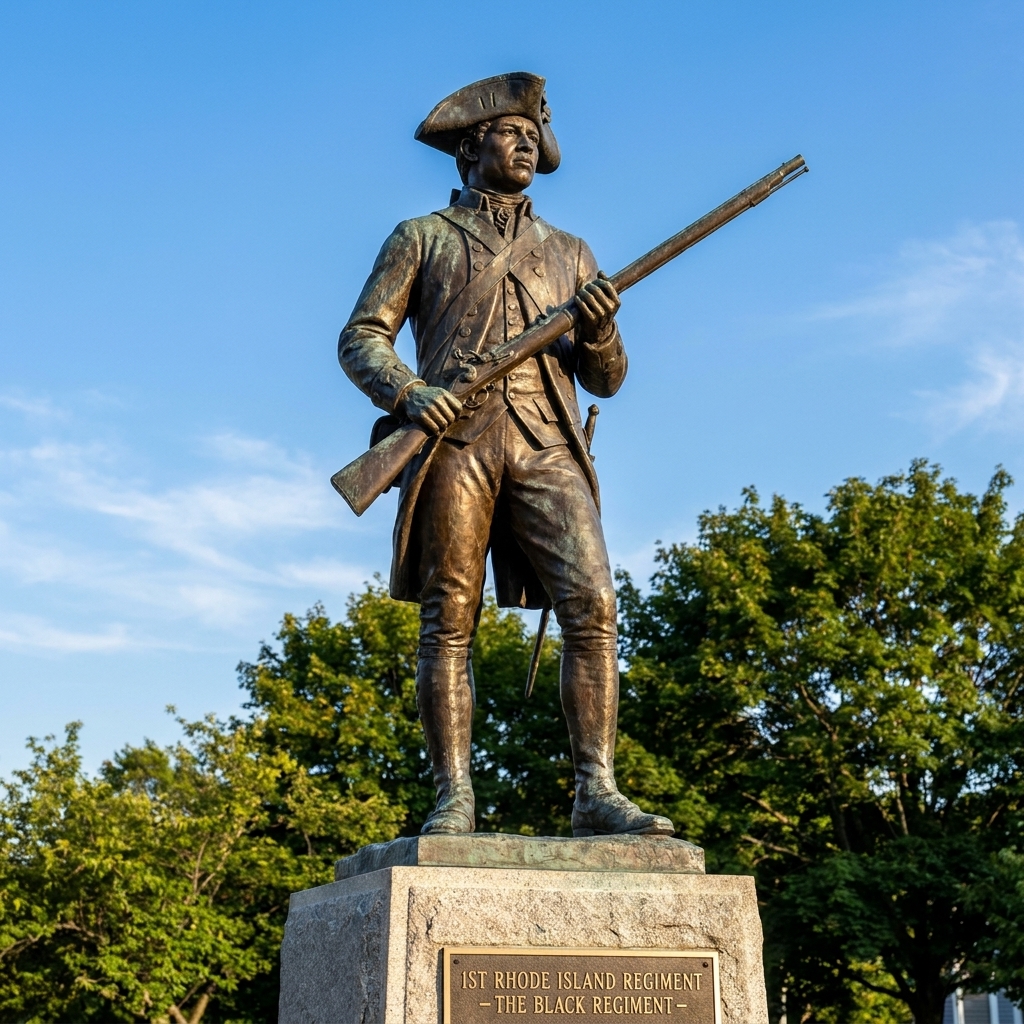
If you only pick one state to start tracing Black Patriots, Rhode Island is hard to beat. In 1778, Rhode Island authorized the enlistment of enslaved men with manumission tied to service, alongside compensation provisions intended for enslavers. The resulting unit is often called the “Black Regiment” in later memory, and it is part of the lineage commonly associated with the 1st Rhode Island Regiment. The names and organization shifted over time, but the footprint of that 1778 policy is still one of the clearest signposts for Patriot service and contested liberty.
It also sits in a complicated but important category: for a period, it stands as one of the Revolution’s most notable examples of a racially mixed Continental regiment, including substantial Black and Indigenous enlistment alongside white soldiers.
What to see in Newport County
- 1st Rhode Island Regiment Memorial (Portsmouth): This is a strong “start here” stop because it says the quiet part out loud. Read every line, then walk a slow circle around it. I always find that a memorial is not only about who it honors, but when and why a community finally chose to honor them. Before you drive out, do a quick check of access details, since small memorial sites can change.
- Aquidneck Island landscapes: The island itself is the best “artifact.” Aim for places where you can read the terrain: long sightlines over open fields, marsh edges that limit movement, and road approaches that funnel traffic toward a ridge or crossroads. If you find a pull-off with an interpretive panel, use it like a map key: match the arrows and names to what your eyes can still see.
- Newport’s waterfront and colonial core: Even without a single perfect plaque, Newport’s harbor edge and older streets help you think through the world these soldiers came from, including maritime labor, slavery, privateering, and wartime scarcity. For a concrete walk, I like to start near the waterfront and work uphill into the older streets, watching how quickly the geography shifts from working harbor to tight, defensive-feeling lanes.
- God’s Little Acre (Newport): This historic burial ground is a quiet, powerful counterweight to the grand “founding” story. Visit with respect, move slowly, and give yourself a few minutes to simply sit with what it means to find names and lives in the ground when the paper record is thin.
On-the-ground tip: Standing at a memorial, turn away from the plaque for a minute. Look down the nearest road and across the nearest field. Ask the most practical question in military history: “If I had to move 200 men from here to there, how would I do it?” That is the moment the regiment stops being an idea and starts being people.
Boston
Boston is one of my favorite places to teach friends how to “read” Revolutionary history in a city. You can do it as a walking day, with coffee breaks, museum stops, and plenty of chances to talk through what you are seeing.
Black Heritage Trail
The hub for much of this interpretation is the Boston African American National Historic Site and the Black Heritage Trail on Beacon Hill. This is not a battlefield day. It is something just as important: a chance to understand community, activism, institutions, and how Black Bostonians pressed for liberty while living inside a society that denied it.
What to look for as you walk:
- Historic churches and meeting spaces where ideas moved as fast as people did.
- Homes connected to abolition and Black civic life in the decades after independence, which helps you see the Revolution as a beginning, not a finish line.
- Interpretive panels that connect individuals and families to the broader war story.
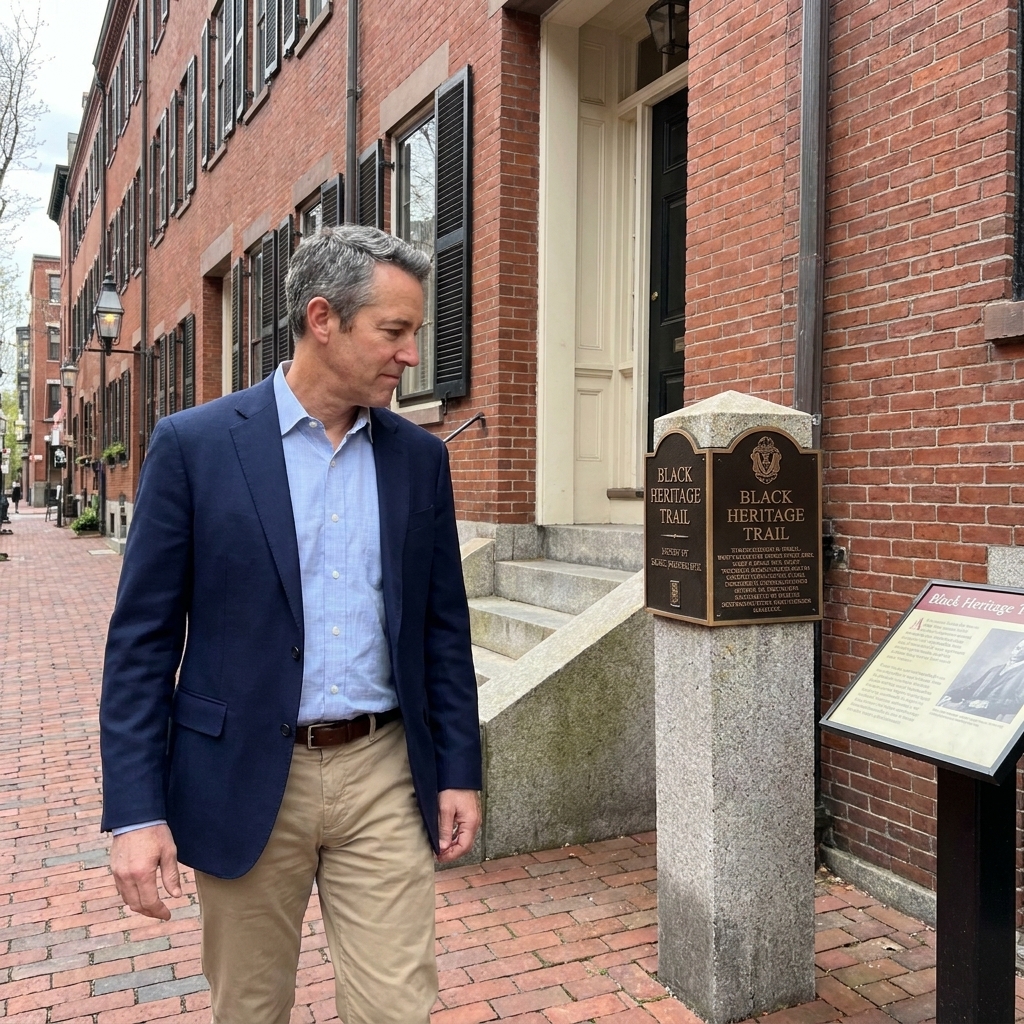
Practical tip: Start early, before the sidewalks get crowded, and treat this like a neighborhood visit, not a checklist. The pauses are the point.
Pair it with the opening shots
To stitch Black Patriot history into a classic Revolution weekend, pair Boston with a day out on the road to Lexington and Concord. That corridor is where you start seeing how quickly the war became a mobilization of entire communities, including people who did not have equal standing in the society they were defending.
If you want a ready-made driving and walking framework, I have it mapped here: Following the Minutemen on the Lexington and Concord Battle Road.
New York City
New York is where I feel the Revolution’s contradictions most sharply. You have constant movement, constant shortages, constant fear, and a constant argument about what liberty actually means in practice.
African Burial Ground
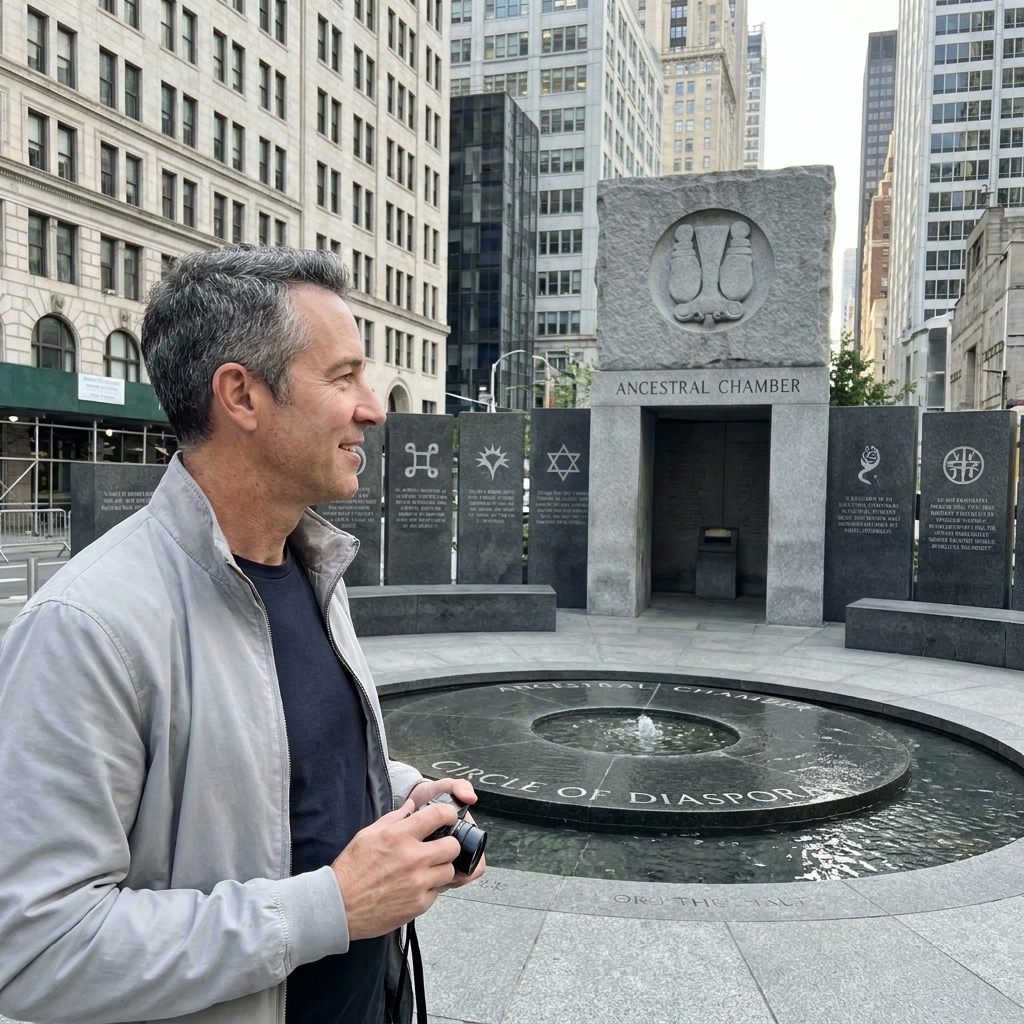
Although it primarily interprets the colonial era, the African Burial Ground National Monument in Lower Manhattan is a powerful stop for anyone trying to understand Black life in the Revolutionary world. It reminds you that the war happened in cities built, in part, by enslaved labor, and that patriot rhetoric echoed through neighborhoods that did not share equally in its promises.
How to visit well: Give yourself quiet time here. This is not a “five minutes and a photo” site. Read slowly, and let it recalibrate your day before you move on to more traditional Revolution stops.
Plan by corridors
On the road, I build an itinerary the way armies did: by corridors. I group stops by drivable clusters and realistic walking time, not by how inspiring the brochure sounds. For a framework for building days that actually work, start with Plan a Revolutionary War Site Visit.
New Jersey
New Jersey is the Revolution in motion. Roads, rivers, winter lines. It is also a useful place to hold two truths at once: Black people pursued freedom through Patriot service, but many also sought freedom by reaching British lines. Those opportunities shifted by region and changed over the course of the war, and people made decisions with incomplete information and very real consequences.
Trenton and Princeton
For a visitor-friendly way to put that motion under your feet, I like the Trenton and Princeton sequence because you can grasp the geography quickly and still have time to slow down and ask harder questions about who was present, who labored, and what happened to people on the margins after the headlines moved on.
My guide for building that day is here: Following Washington’s Crossing: Trenton and Princeton.
Morristown winter ground
Another New Jersey stop that belongs on this kind of trip is Morristown. Even if you come primarily for the winter quarters story, it is a place that helps you ask better questions about military labor, camp life, and who did the work that kept an army alive. It is a good reminder that the Revolution was not only fought in dramatic minutes, but also endured in long seasons.
Southern campaigns
When people think about Black Patriots, they often picture New England enlistments. But the southern theater is full of sites where the story of Black participation and the story of slavery collide in ways that are impossible to ignore. In many places, you also run straight into the wider wartime truth: both sides made promises, and Black families evaluated those promises with their lives.
Sullivan’s Island, South Carolina
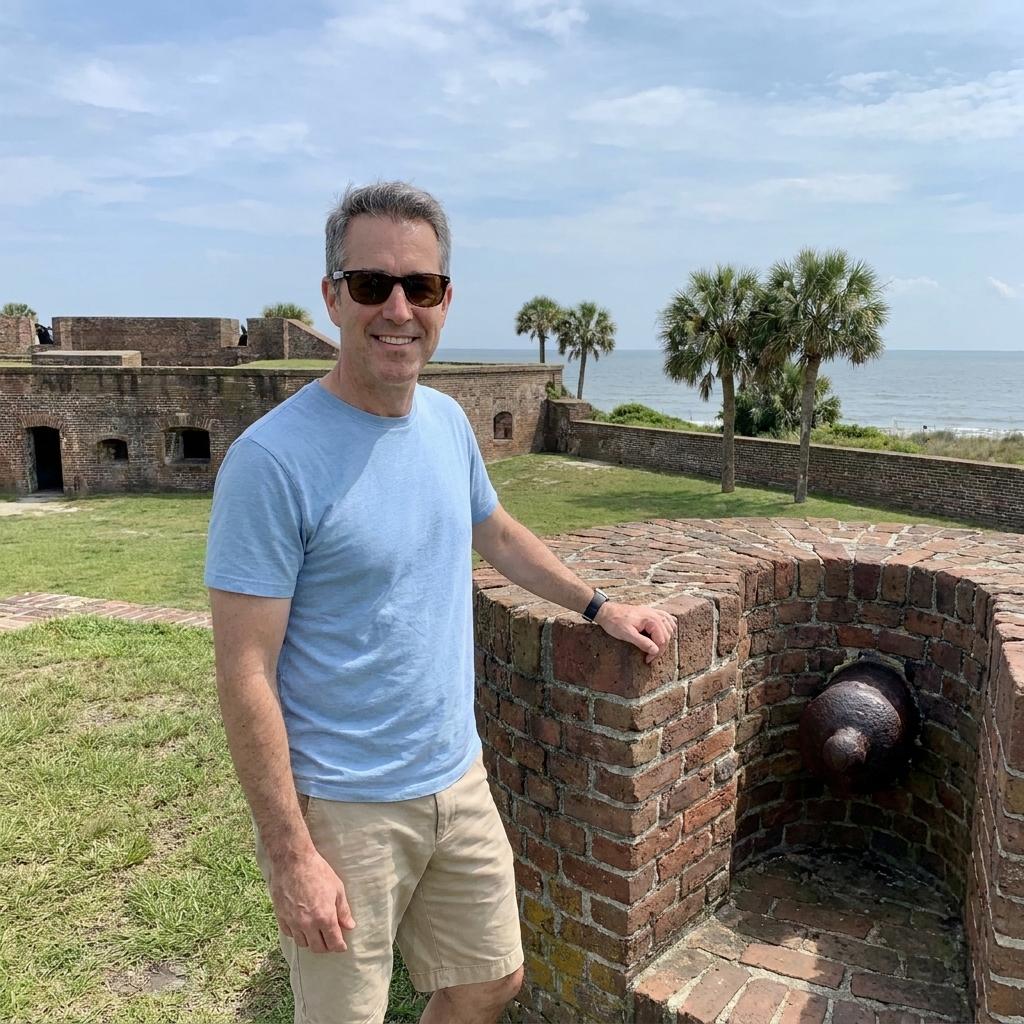
Sullivan’s Island is one of those places that surprises you. The palmetto-log fortifications and the coastal geography make the military story easy to grasp, even if you only have an hour or two.
For a deeper visit, read my on-the-ground guide first: Palmetto Logs and Cannonballs at Sullivan’s Island. When you are there, keep an eye out for interpretation that connects the fort, Charleston’s economy, and the lives of Black South Carolinians. You leave with a clearer sense of what independence protected for some people, and threatened for others.
Backcountry sites
The farther you get from the postcard cities, the more the Revolution becomes a local war. Families divided, and supply mattered as much as speeches. Enslaved people weighed impossible risks with every decision. Even when a site is not explicitly marked as a Black Patriot stop, you can still visit with better questions, and you can choose battlefields that tend to have strong interpretation and a manageable layout for modern visitors.
- Who built and maintained the roads and fortifications I am standing on?
- Who was promised freedom, and by whom?
- After the battle, who benefited, and who was written out?
For southern battlefields that work especially well for modern visitors, including families, see Top 5 Revolutionary War Battlefields to Visit With Kids. Even on a kid-focused trip, you can build in interpretation about Black soldiers and civilian life.
More stops
Some of the best stops are not famous “battlefield parks” at all. They are courthouses, small-town greens, museums, and memorials that are trying, sometimes imperfectly but honestly, to widen the story. Here are a few destinations that can deepen a trip, especially if you want more than one stop per region.
- Saratoga, New York: The Saratoga campaign is packed with lessons about manpower and logistics, and it is also a good place to look for interpretation that acknowledges Black military service in the northern theater. If you are deciding how Saratoga fits into your travel priorities, start here: Saratoga vs. Yorktown: Which Turning Point Battlefield Should You Visit First?
- Monmouth, New Jersey: Monmouth is one of those battlefields where the environment still teaches, especially heat, distance, and exhaustion. It is also the kind of site where asking “Who carried water, dug, cooked, and hauled?” improves your understanding instantly. If you go in summer, plan it well: Surviving the Heat at Monmouth Battlefield
- Kings Mountain and Cowpens: The southern backcountry is where the war becomes intensely local. These are good places to think about militia service, coercion, and the choices people made when authority broke down. If either is on your route, my site guides start here: Battle of Kings Mountain and The Battle of Cowpens
Names to carry
I find it easier to absorb a memorial or a battlefield when I am carrying a few names in my pocket. Here are several Black Patriots and Black figures of the Revolutionary era who often appear in museum interpretation, tours, and primary-source discussions. Seeing one of these names on a panel tends to open doors to deeper context.
- Crispus Attucks: remembered for the Boston Massacre, and often discussed at Boston-area sites as the Revolution’s story accelerates.
- Prince Estabrook: a Black minuteman associated with Lexington, a reminder that April 1775 was not a monochrome moment.
- James Armistead Lafayette: an intelligence asset in Virginia whose story sometimes appears in Yorktown-area interpretation.
- Peter Salem: connected in popular memory to Bunker Hill and Black service in early New England fighting.
- Salem Poor: praised for bravery at Bunker Hill, and a name worth watching for in New England exhibits.
Interpretation varies from site to site. When you see a name you do not recognize, take a photo of the panel for your own notes and look it up later. That single habit has turned more of my trips into lasting learning than any guidebook ever has.
A simple weekend
Option 1: Boston
- Day 1 morning: Black Heritage Trail walk at an easy pace.
- Day 1 afternoon: Add a drive out to Lexington and Concord for classic battlefield context, using this route as your spine: Following the Minutemen on the Lexington and Concord Battle Road.
- Day 2: Choose one indoor stop and one shorter neighborhood stop so you do not burn out. For indoor time, I often point people to the Museum of African American History (Boston) or the Massachusetts Historical Society if they want documents and context. Then take a slower walk somewhere that lets the city breathe again, like a loop along the Boston Common and Public Garden, or a meander through the North End in the late afternoon when you are ready to trade interpretation panels for street-level texture.
Option 2: Rhode Island
- Day 1: Start at the 1st Rhode Island Regiment Memorial (Portsmouth), then do an Aquidneck Island loop with deliberate stops to read terrain and signage.
- Day 2: Spend the morning in Newport’s colonial core and waterfront, then make time for a quiet visit to God’s Little Acre. Keep the 1778 enlistment policy in your head as you go, what it promised, and what it required of the men who accepted it.
If you are building a longer road trip, my broad trip-planning hub is here: Guide to Historic Sites. I use the same logic for every route: group by geography, then by the kind of energy each stop requires.
Travel habits
- Read the whole panel, not just the headline. The headline is often safe. The body text is where you find names, dates, and the uncomfortable specifics.
- Look for what is missing. If a battlefield tour talks about manpower but never about who could enlist, who could not, and why, that is a clue to dig deeper.
- Ask about primary sources. At visitor centers, I often ask staff, “Is there a document or quote you wish more people knew?” It is a great way to surface Black Patriot stories that are not on the main path.
- Leave space for reflection. A burial ground or memorial can change the tone of your day. Build in a slow lunch afterward.
For context
If you want a reliable starting point before you travel, the National Park Service has a helpful overview of Black Patriots and the Revolution. It is a good primer to read once, then let the places do the rest of the teaching when you arrive.