

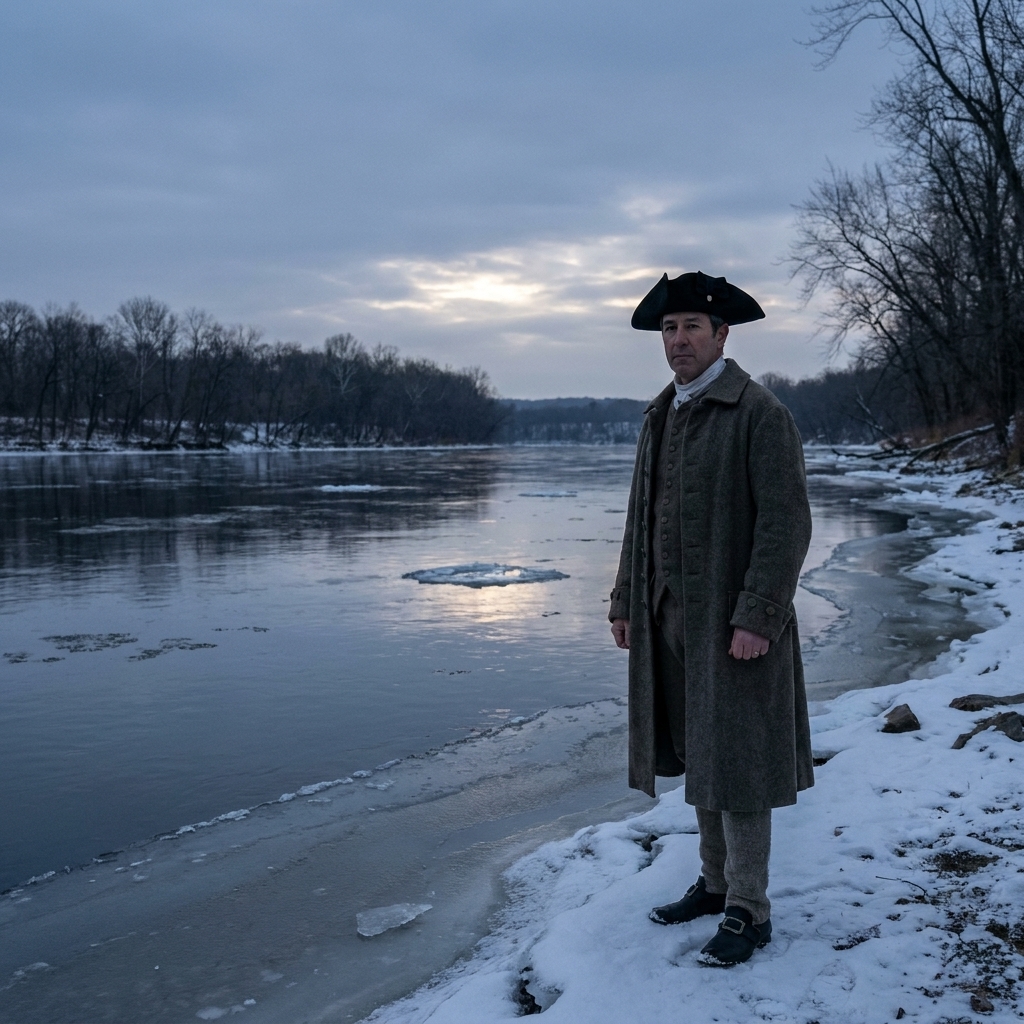
Some Revolutionary War stories feel like they belong to the landscape more than the textbooks. Washington’s winter campaign of 1776 to 1777 is one of them. You can read about the Delaware River crossing, the sudden strike at Trenton, and the hard march to Princeton, but the full weight of it only lands when you are standing in the cold river air, looking at a road that still funnels movement the way it did 250 years ago.
I grew up in Pennsylvania, and I have always had a soft spot for places where history is stitched into ordinary terrain. The Trenton and Princeton sites are exactly that. They are not one fenced battlefield. They are a chain of locations, each one a chapter, and together they tell you why this gamble mattered.
This guide walks you through the campaign in order, with a route you can follow over a day or a weekend. I will keep it practical, but I also want you to feel the story as you go.
Before you go
What you are following
In late December 1776, the Continental Army was fraying. Enlistments were expiring, morale was low, and recent defeats around New York had been brutal. Washington’s decision to cross the Delaware River on Christmas night and strike the Hessian garrison at Trenton was a calculated risk. The victory at Trenton, followed by the Battle of the Assunpink Creek (often called the Second Battle of Trenton) and then the surprise hit at Princeton, helped change the psychological direction of the war.
How to structure your visit
- Half day: Focus on Trenton only, especially if you have kids or limited walking time.
- Full day: Add the Princeton sites. The two towns are close enough to pair comfortably.
- Weekend: Slow down and catch the smaller stops that make the campaign feel connected, not just famous.
Practical tips
- Dress for wind, not just temperature. River and open-field sites can feel much colder than the forecast suggests.
- Bring footwear with traction. Winter and early spring visits often mean muddy edges and slick paths.
- Plan for short hops. This is a driving tour with several compact walks rather than one long hike.
- Expect hours to vary. Visitor centers, small museums, and even parking access can change seasonally, so it helps to keep your day flexible.
- Accessibility note. Many viewing areas are easy to reach by car, but some paths can be uneven or soft after rain or snowmelt.
If you are building a bigger heritage trip around these stops, start with my planning hub at Plan a Revolutionary War site visit.
Stop 1: Delaware crossing sites

The crossing is the opening scene, and it is worth treating it that way. Even if you are not a reenactment person, standing on the riverbank makes the logistics feel real: the width of the river, the way the shoreline drops, and how quickly the wind cuts through you.
This is one of those moments where seeing both sides helps. There are well-known public parks and interpretation areas on the Pennsylvania side and the New Jersey side. If you only have time for one, pick the bank that fits your route. If you have the time, seeing the opposite shoreline turns an idea into a distance.
What to look for
- River access and sightlines. Find a point where you can look across and imagine the far bank as a destination, not a picture.
- Approach routes. The army did not teleport to the river. Pay attention to the roads and slopes leading down to the water.
- Scale. Think about artillery, horses, and exhausted men moving in darkness. The riverbank should make you pause.
How long to budget
Thirty to sixty minutes gives you time to walk, read a few interpretive signs if available, and simply stand near the river long enough to feel the setting.
Stop 2: Trenton (Dec 26, 1776)

Trenton is where the gamble pays off. Washington’s army, worn down and cold, hits fast. The key to visiting Trenton is remembering that this was a town fight with movement, confusion, and short bursts of violence. You are not touring a single field. You are tracing an action that flowed through streets and key points.
Core landmarks to prioritize
- Approach into town: Look for where roads funnel inward. Even today, street geometry explains a lot.
- Intersections that control movement: In a street fight, the battle can hinge on who owns a crossroads. When you find one, stop and look down each street the way an artillery crew would have, thinking in straight lines and limited cover.
- Commemoration sites: Monuments can be helpful, but do not let bronze replace geography. Use them as prompts, then look around at distances, angles, and what is hidden.
My on-the-ground advice
Trenton can feel busy and modern, which sometimes throws first-time visitors. That is normal. The trick is to keep the campaign in your head as a moving story. When you are in the right spot, you will feel the “why here” click, especially at a junction where the town naturally tightens and forces decisions.
Stop 3: Assunpink Creek (Jan 2, 1777)
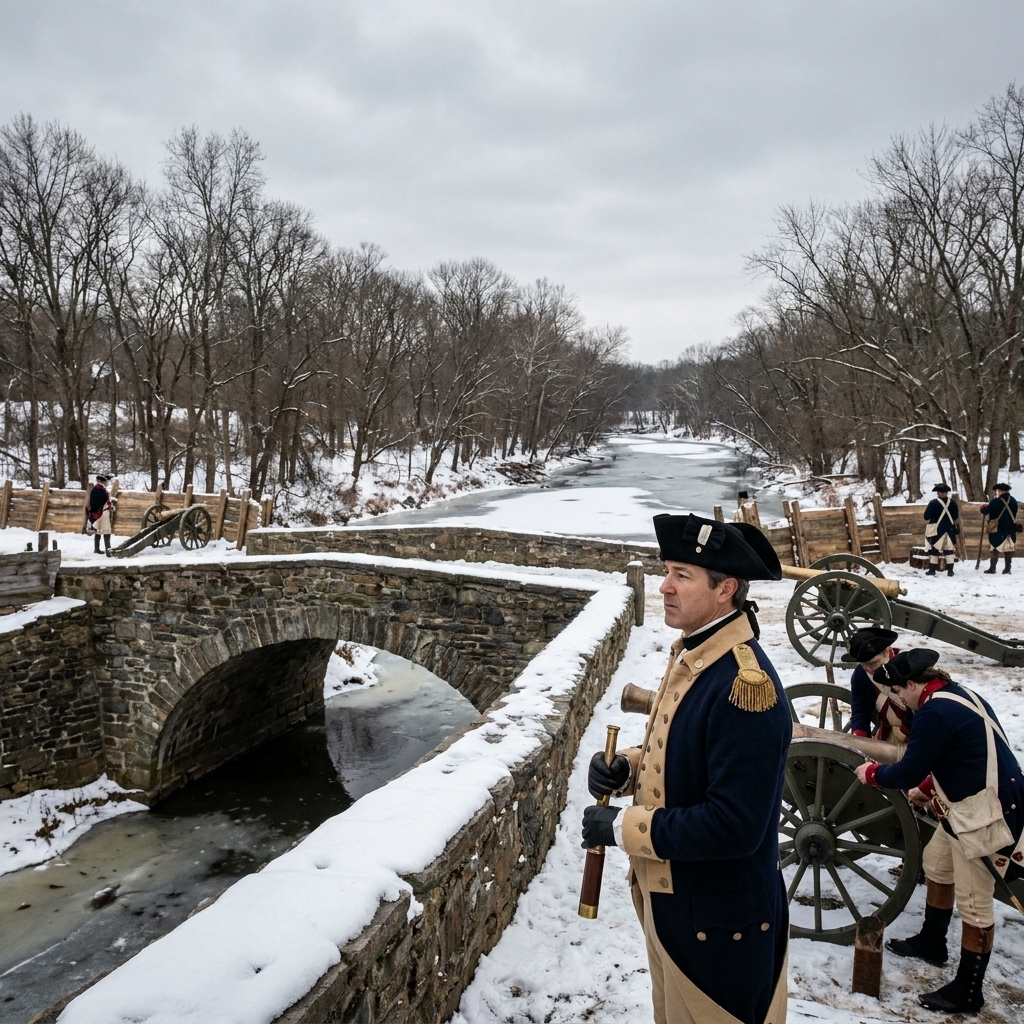
The second Trenton fight often gets less attention, but it is crucial. After the victory on December 26, British forces under Cornwallis advance on Trenton and press Washington’s position. The fighting on January 2 centers on holding a defensive line at Assunpink Creek long enough to survive the day. Then comes one of the boldest parts of the campaign: slipping away at night to hit Princeton.
What to focus on as a visitor
- Water as a barrier. Creeks and bridges are not scenic details. They are tactics made visible.
- Limited crossing points. Stand near a bridge or an obvious crossing and look up and down the creek. You are looking for the problem the commanders had to solve.
- Distance. When you later drive to Princeton, pay attention to how short it looks on a map versus how it feels when you remember this march began after a long day of fighting.
Stop 4: Princeton (Jan 3, 1777)

Princeton is the exhale and the punch at the same time. Washington’s army, after avoiding Cornwallis overnight, collides with British forces near Princeton. For visitors, Princeton tends to feel more like a traditional battlefield experience, with open ground and a clearer sense of lines and movement.
Key places to seek out
- Main engagement areas: Stand at field edges where you can look across open ground and think about visibility and timing.
- Wooded margins and slight rises: The edges explain why units broke, rallied, or vanished from view. Even gentle terrain can shape decisions.
- Interpretation and markers: When present, they can help anchor you. Read, then turn and re-check the landscape with those details in mind.
How long to budget
Plan for ninety minutes to two hours if you want to walk more than one interpretive loop and actually let the battlefield settle into your imagination.
Suggested one-day route
If you only have one day, I like to do this in story order. It keeps the campaign from feeling like disconnected stops.
- Morning: Delaware River crossing area for atmosphere and context.
- Late morning into early afternoon: Trenton sites for the December 26 battle and the January 2 Assunpink Creek defensive action.
- Mid to late afternoon: Princeton battlefield to finish with open ground and a clearer sense of the campaign’s outcome.
Driving time between these areas is not long, but traffic can change the feel of the day. If you can, avoid commuter rush windows, and give yourself extra padding for parking and short walks.
If you prefer to reduce driving, you can also base the entire day on one side of the river and treat the crossing as a scenic contextual stop rather than a hard requirement.
For families
When I travel with friends who are not history diehards, I keep it simple: one big question per stop.
- At the river: “Would you willingly get in a boat tonight, in this weather, knowing you still have to fight?”
- In Trenton: “How do you control a town quickly without getting stuck block by block?”
- At the creek line: “What does a bridge mean when it is the only easy way across?”
- At Princeton: “How far can you push exhausted people if the goal is worth it?”
Even younger kids tend to engage when the landscape is part of the conversation, not just names and dates.
Read next
If you are building out a wider set of battlefield visits, start here:
- Battles guide for more campaigns you can follow on the ground.
- Historic sites guide for museums, preserved landscapes, and towns that still feel colonial in their bones.
- People guide when you want the human stories behind the maps and maneuvers.
And if you want to get a feel for how I approach a battlefield, with both storytelling and practical walking notes, you can also read my write-up of The Battle of Cowpens.
Quick FAQ
Is this a good winter trip?
Yes, and in some ways it is the best season for it. Fewer leaves means longer sightlines, and the cold helps you understand what the army was fighting against. Just dress for wind and be ready for muddy edges.
Do I need a guided tour?
Not required. These sites work well as a self-guided day if you keep the campaign’s sequence in mind and take time to read the ground, not just the markers.
How far apart are Trenton and Princeton?
Close enough to pair easily in a day. The short distance is part of the story, too, because it helps you appreciate how quickly Washington turned one victory into the next surprise.