

The first time I walked Monmouth Battlefield State Park in late June, I understood something the history books never quite convey. This was not just a battle. It was a battle in an oven. The air sat heavy over the fields, the tree line barely stirred, and every few minutes I caught myself doing what the soldiers did in 1778: scanning for shade and rationing my energy.
Monmouth is one of those rare Revolutionary War landscapes where the story is written right on the ground. You can stand where the British army marched across New Jersey toward New York, where Charles Lee’s advance became disordered in the first hard contact, and where George Washington rode forward to steady retreating troops and re-form the line.
You can also walk ground tied to the Molly Pitcher tradition, a mix of folklore, commemoration, and real battlefield roles that still makes this park feel personal.
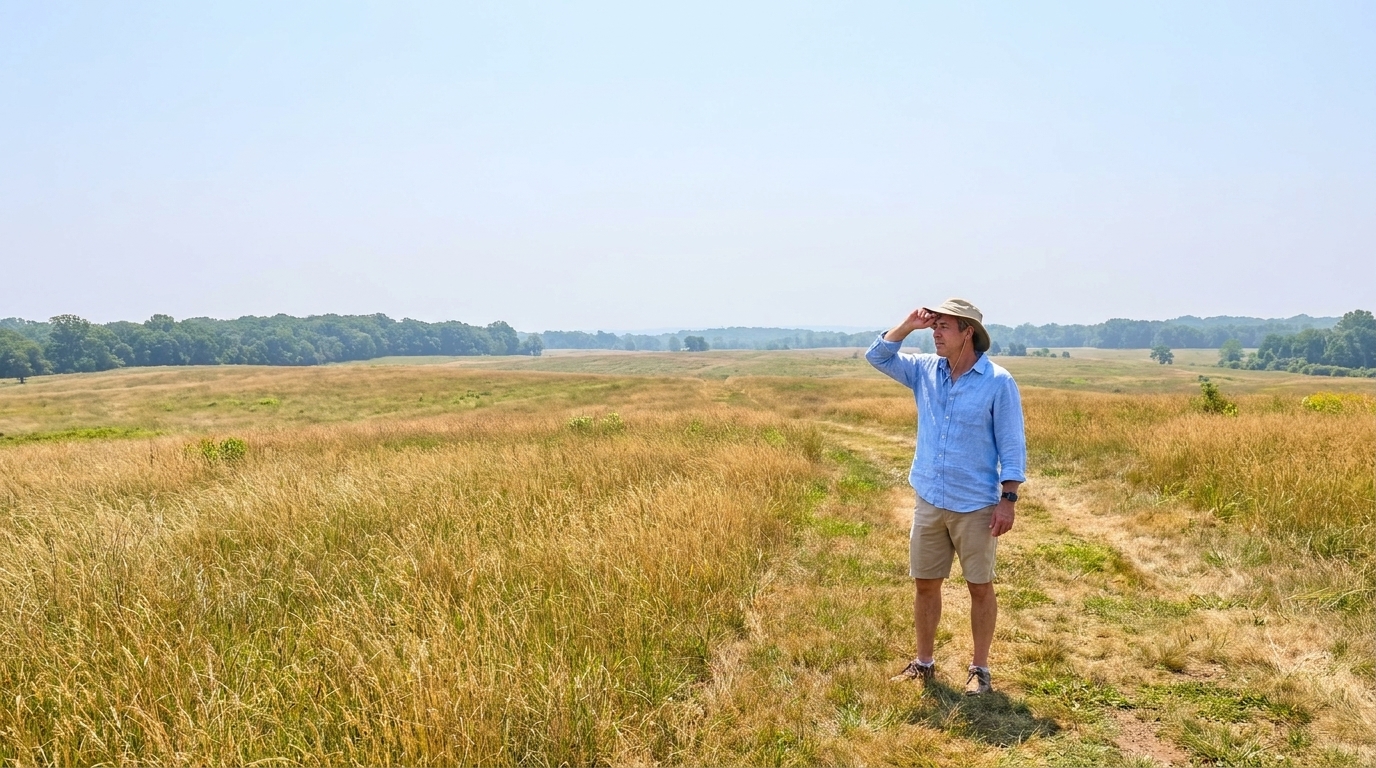
This guide is built for warm weather visits: how to pace the park, what to see first, how to avoid turning your day into a forced march, and how to make the history come alive even when the temperature climbs.
Why summer matters
The Battle of Monmouth, fought June 28, 1778, is remembered for chaos, drama, and tactical importance. It was Washington’s first major test after Valley Forge, and it was a hard-fought day against British regulars under Sir Henry Clinton moving from Philadelphia toward Sandy Hook and on to New York.
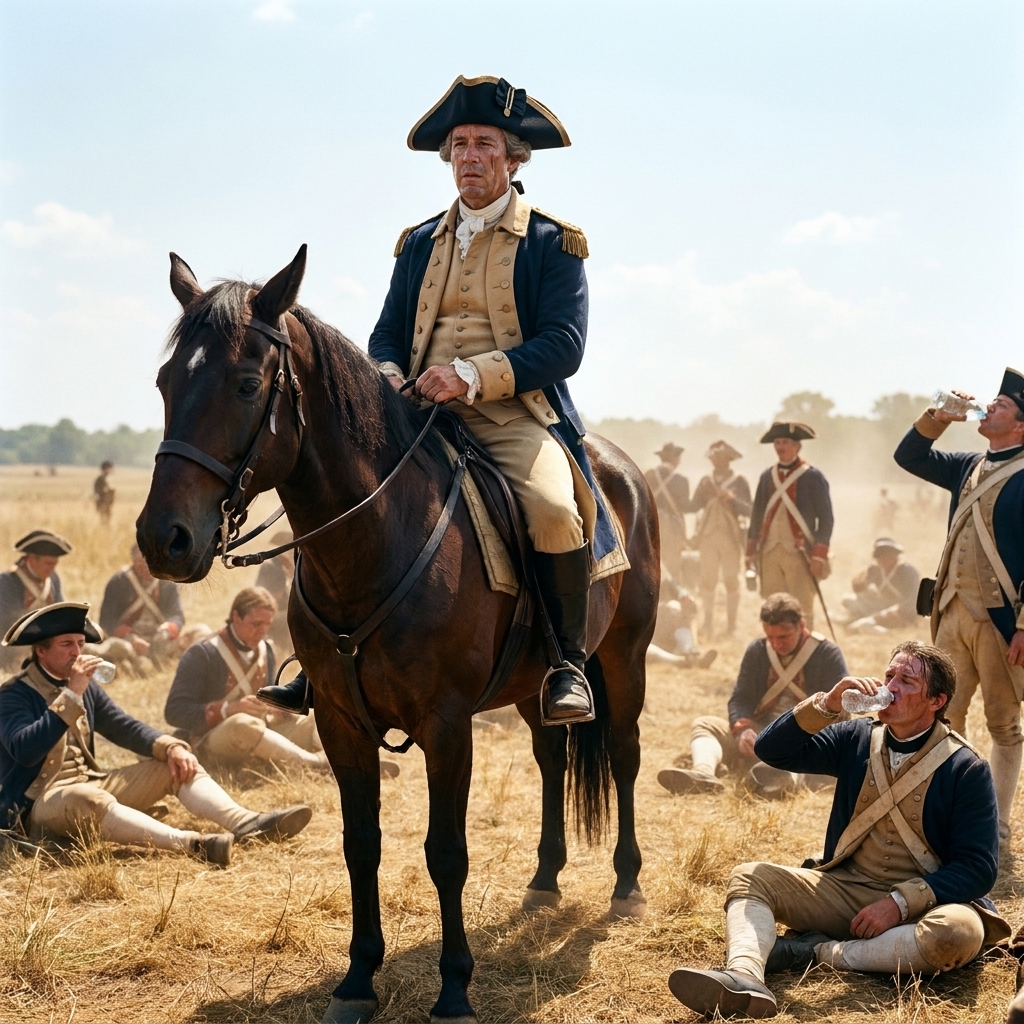
But if you ask me what makes Monmouth unforgettable, it is the heat. Contemporary accounts describe men collapsing and water running short, with the day grinding bodies down as surely as musket fire did. When you visit in June, July, or August, you are not just touring a battlefield. You are stepping into the battle’s most relentless participant: the weather.
That is why your strategy matters here. Monmouth rewards a visitor who thinks like an 18th-century marcher: start earlier, stop often, drink before you feel thirsty, and never pass up a patch of shade.
Visitor basics
Monmouth is a state park battlefield. In practice, that means your day usually combines short drives between key stops and shorter walks out onto open ground. I like it that way in summer because you can keep the history flowing without staying exposed too long.
- Start point: I begin at the main parking area and interpretive hub, if it is open when you visit, to get my bearings. If it is not, you can still build a good visit by using the waysides at the first pullouts as your orientation.
- Restrooms and water: Do not assume you will have water available on the field when you need it. Bring what you plan to drink and keep extra in the car.
- Accessibility: Many stops can be enjoyed from pullouts and short, relatively flat walks. Longer routes often mean grass, uneven ground, and full sun. On a hot day, I treat the pullouts as features, not compromises.
If you are stitching Monmouth into a larger trip, my broader approach is on Plan a Revolutionary War Site Visit. Monmouth is exactly the kind of place where pacing makes the difference between a memorable day and a miserable one.
Before you go
Arrive early
If you can, aim for morning. The park’s open terrain is beautiful, but it also means long stretches with little shade. An early start lets you see the most exposed stops before the heat peaks.
Bring more water than you think
I treat Monmouth like a long walk on a historic farm lane. Even if you only plan short loops and pullouts, bring water you can sip continually. In high humidity, you can sweat yourself dry without noticing until you are behind.
Dress for sun, ticks, and grass
- Footwear: closed-toe shoes with a solid sole. Some paths are grassy, some are packed dirt, and all of them feel longer on hot days.
- Sun protection: hat, sunglasses, and sunscreen. The battlefield does not offer the tree canopy you get at many wooded sites.
- Ticks: long socks help if you plan to walk through taller grass. Do a tick check when you get back to the car.
Pack a cooling kit
- Refillable water bottle plus an extra bottle kept cold in a small cooler
- Salty snack for longer walks
- Small towel or bandanna you can dampen
- Bug spray
- A paper map or a screenshot of the park layout in case your phone signal is spotty
A first-time route
If it is your first visit, and it is hot, I recommend a simple sequence you can complete in chapters. You will see plenty without turning your day into a long, exposed hike.
- Orientation stop: Start where the park interpretation is densest, read the waysides, and get the “shape” of the battle in your head before you head into the open fields.
- Lee’s morning action: Visit one of the early-battle areas and take a short walk. This is where the battle’s first contact turned into confusion and a fighting withdrawal.
- Washington’s rally point: Move to a stop that lets you picture Washington arriving amid retreating troops, anger, urgency, and the scramble to form a line.
- Artillery and water: Spend time at a point that highlights artillery positions and the problem of water on a day like this. This is where the Molly Pitcher tradition tends to “click” because you can feel the exposure and distance.
- Late-day line and overlook: Finish at a broad view where you can look across the ground and imagine a long, punishing afternoon of sustained fire and exhaustion.
This is intentionally flexible. The names and exact order of pullouts vary depending on how you like to visit, what is open, and how the heat is treating you. The key is the rhythm: information first, one longer walk, then shorter stops and views.
The story on the ground
Monmouth can be explored in quick highlights or in a long, immersive wander. In summer, I think in chapters. Do a chapter, cool down, then do the next.
Chapter 1: The opening confusion
Monmouth’s early hours are full of movement and miscommunication. The American force sent forward to strike the British rear met stiff resistance, and what began as an advance became a confused engagement and withdrawal. The terrain feels deceptively gentle, but the distances between points matter. When you are standing in the sun and you realize how far a line of troops would have had to shift under fire and fatigue, the battle’s confusion becomes easier to understand.
Chapter 2: Washington’s moment
Every battlefield has a hinge, the moment where the story could have broken another way. At Monmouth, the hinge is Washington riding forward, confronting the retreat, and rebuilding a fighting line. I have visited enough Revolutionary War sites to know that legends can grow over time, but this is one of those episodes backed by a chorus of eyewitnesses. Even if you come to Monmouth knowing only that single scene, the park gives you room to imagine it: dust, heat shimmer, exhausted soldiers, and a commander refusing to let the day collapse.
Chapter 3: Artillery, water, and Molly Pitcher
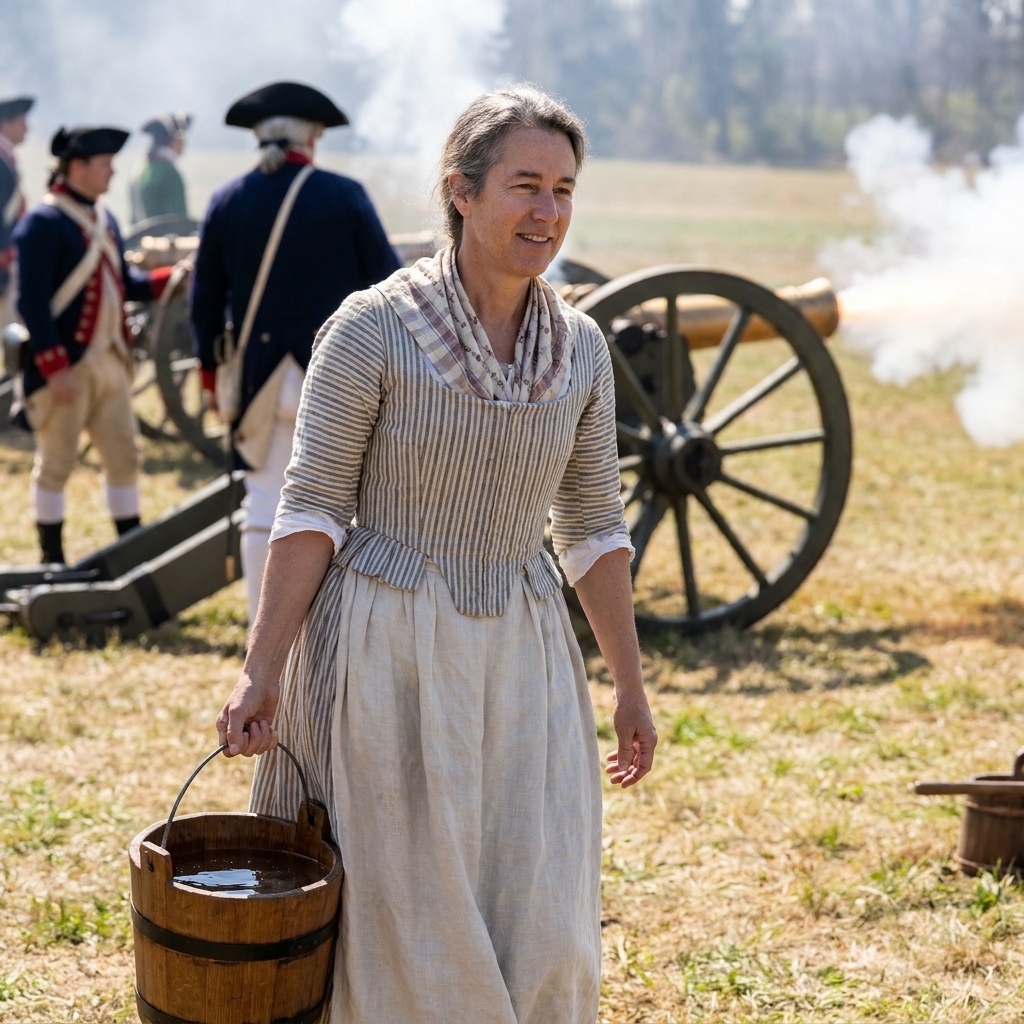
Monmouth’s most famous name to modern visitors is often Molly Pitcher, a traditional figure associated with carrying water to soldiers and, in some accounts, helping work an artillery piece after a gunner fell. The story is usually connected to Mary Ludwig Hays, but the identification is not definitive, and the name also became a broader symbol of women’s work and endurance around armies.
The important thing, especially in the heat, is to let the landscape teach the lesson. Water was not a convenience. It was survival. Once you start noticing low spots, drainage, and the way the sun beats down across open ground, you understand why water carriers mattered so much, and why their stories endured.
Chapter 4: The end of the day
By late afternoon, Monmouth had become a grinding contest where heat and fatigue shaped decisions as much as tactics. The British ultimately continued their movement toward New York, leaving the Americans on the field. If you read the battle as a tactical draw or as a strategic boost for Washington depends on what you value most, but on the ground it feels like a turning point in confidence. In summer, take a quiet moment at one of the open overlooks and let the stillness settle in. It is hard to reconcile the calm of a modern park with the suffering described in accounts of June 28, 1778.
My walking strategy
If you are visiting on a warm day, here is the approach that has worked best for me and for friends I have brought along who are not hardcore battlefield walkers.
Step 1: Do a short orientation loop
Begin with the most information-dense area first, when your energy is highest. Read the waysides, get the basic flow of the battle in your head, and note where you can find shade and a breeze. Even ten minutes of orientation makes the rest of the park feel like a coherent story instead of scattered stops.
Step 2: Walk one longer stretch, then break
Pick one stretch of the battlefield to walk slowly, not power-walk. When you finish, return to the car, cool down, and hydrate. I treat the car like a tiny 21st-century field hospital: water, a snack, air conditioning for ten minutes, and a check for ticks.
Step 3: Finish with pullouts and viewpoints
After your main walk, you can still see plenty without baking in the sun. Hit the interpretive stops you skipped, revisit one viewpoint that made the battle click, and keep your time out in the open brief.
If you are traveling with children, the best trick is to turn Monmouth into a scavenger hunt for clues: “Find the highest ground,” “find a place you would hide artillery,” “find the nearest shade.” For more family-friendly battlefield ideas, I keep a running list at Top 5 Revolutionary War Battlefields to Visit With Kids.
What to bring
- A field-guide mindset: I like to bring a small notebook or use my phone notes to jot down questions. “What could they see from here?” “Where would the water have been?” Those questions make the visit stick.
- Modern map convenience: You do not need an antique map collection to enjoy Monmouth, but a modern map and a sense of direction go a long way on a large, open battlefield.
- Binoculars: Optional, but surprisingly useful for reading terrain and spotting distant markers without crossing a sun-soaked field twice.
- Light layers: Even on hot days, a breathable long-sleeve layer can be more comfortable than bare arms under direct sun.
Safety and respect
Heat illness is the real hazard
If you feel dizzy, unusually tired, or stop sweating, take it seriously. Get to shade or air conditioning, drink water, and rest. Monmouth’s history is dramatic, but the park is not a place to push through warning signs.
Stay on paths
Battlefields are fragile historic landscapes. Staying on trails and mowed paths also reduces tick exposure and makes it easier to keep your bearings.
Do not try to do it all
Monmouth is not a site you complete. It is a place you return to. If the day is brutal, focus on a few key stops and leave something for a cooler visit.
Where it fits on a trip
Monmouth pairs well with other Mid-Atlantic Revolution stops if you are building a road trip through New Jersey, Pennsylvania, and New York. If you are mapping out how battlefields connect and how to space them across several days, start with my broader overview at Guide to Battles, and for general site travel logistics I keep everything I have learned the hard way in Plan a Revolutionary War Site Visit.
If you want an interesting contrast after Monmouth, I love comparing it to a Southern Campaign site like The Battle of Cowpens, where terrain, timing, and tactical choreography feel completely different underfoot.
FAQ
Is Monmouth worth visiting in summer?
Yes, especially if you want to understand what made this battle so punishing. Just plan for the heat: go early, bring plenty of water, and build in cool-down breaks.
How long do you need?
You can get meaningful highlights in 1 to 2 hours. For a deeper visit with walking, plan 3 to 4 hours with breaks. On very hot days, I would rather do a shorter visit well than drag out a long one and stop absorbing the story.
Did the Americans win at Monmouth?
It depends on how you define “win.” Tactically, many historians describe Monmouth as a draw. Strategically and psychologically, it mattered because Washington’s army proved it could stand up in a major fight after Valley Forge, and the Americans held the field as the British continued their withdrawal.
What is the best way to experience the Molly Pitcher story?
Focus on the role of water and the artillery fight, not just the legend. Look for how exposed the fields are, imagine the thirst and heat, and read the on-site interpretation with an open mind. The Molly Pitcher tradition is part individual story, part symbol, and Monmouth is one of the best places to feel why that symbol mattered.
Is the park good for kids?
It can be, especially for kids who like open space and short walks between stops. In hot weather, keep walks short, bring extra water, and treat the day like a series of small adventures rather than one long hike.
One quiet minute
Before you leave, stand still somewhere out in the open where the sun feels too strong, just for a moment. Let the heat press down. Then picture thousands of men doing the same, except they could not step back to a cool car or a water bottle in a cupholder. That single minute will teach you as much about Monmouth as any plaque on the battlefield.
That is the power of this park, and the reason I keep coming back to places like it. History makes the most sense, I have found, when you learn it through your feet.