

I grew up in Pennsylvania, the kind of place where a roadside historical marker can hijack your whole Saturday. Back then, I was the kid tugging at my parents’ sleeve, asking to pull over. Now, after visiting well over 150 Revolutionary War sites, I can tell you this: kids do not need a long lecture to connect with the Revolution. They need space to move, a story with clear stakes, and just enough hands-on discovery to feel like they found something on their own.
These are five battlefields I recommend again and again for families. They each offer some combination of interactive exhibits, manageable walking trails, and programming that fits real life with kids. Think: “big history, small legs.”
If you are still mapping out the basics of a trip, start with my planning hub at Plan a Revolutionary War site visit, and browse more destinations in Battles.
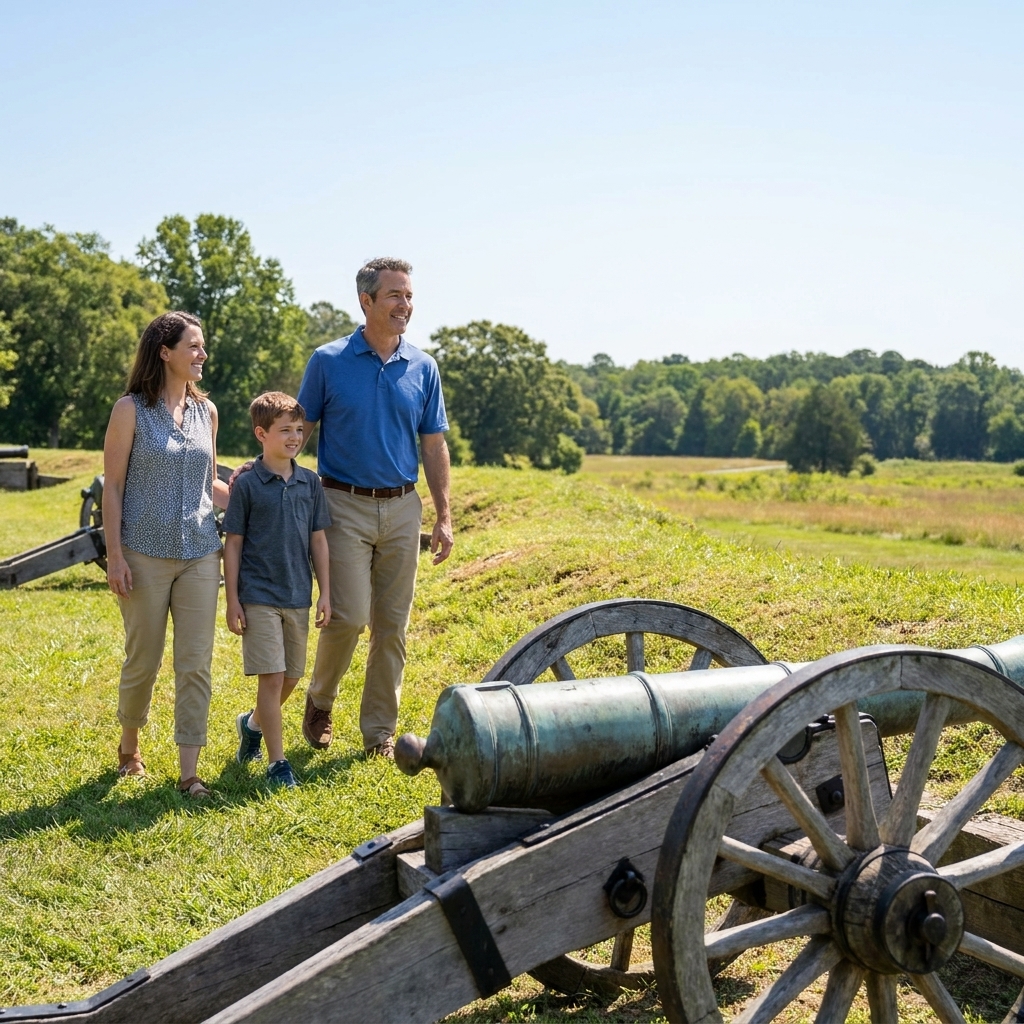
What makes a battlefield kid-friendly
Before we jump into the list, here is what I look for when I am recommending a battlefield to families.
- Short, flexible walking options so you can do 30 minutes or 3 hours without feeling like you failed.
- Visual anchors like cannons, earthworks, redoubts, or water crossings that help kids picture the action.
- A visitor center worth your time with films, exhibits, artifacts, or ranger talks that are understandable without a PhD.
- Room to roam, meaning safe paths, open fields, and places to take a snack break without shushing anyone.
- Junior Ranger programs or kid booklets when available, because a badge or booklet turns a visit into a quest.
1) Yorktown Battlefield (Virginia)
Why kids love it: You can still see and walk the siege lines, and the story is easy to grasp. Cornwallis’s army is effectively boxed in on land and cut off by sea. The Americans and French dig in closer and closer. Then the big surrender. It is dramatic, visual, and mercifully straightforward.
Do not miss with kids:
- Earthworks and trenches that make the siege feel real, especially when you explain that soldiers dug these at night.
- Cannons and redoubt areas where you can point and say, “The fighting was right here.”
- A short “loop” mentality. Even if you only do a few stops, you can still tell the beginning, middle, and end of the story.
My parent-tested tip: Start at the visitor center first, even if your kids are the “run first, read later” type. A quick film and a map turns the rest of the drive into a story hunt: “Okay, where were the British? Where did the French land? Where were the cannons?”
2) Saratoga Battlefield (New York)
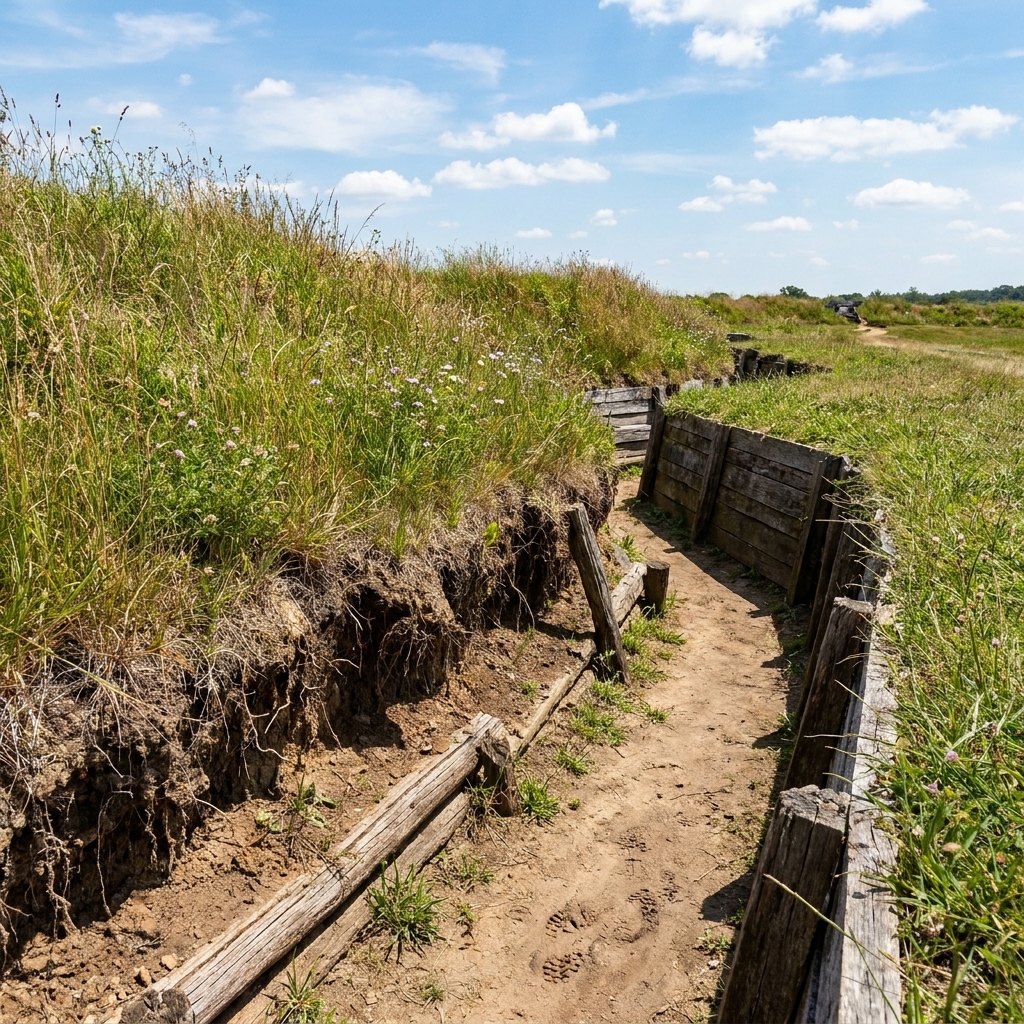
Why kids love it: Saratoga feels like a giant outdoor classroom where the “wow” factor comes from scale. Open fields, wooded edges, and clear viewpoints give you lots of chances to pause and let kids imagine formations moving across the ground.
For grownups, Saratoga is a turning point that helped convince France to openly support the American cause. For kids, the hook is simpler: two big battles, a lot of marching, and a surrender that changed everything.
Do not miss with kids:
- Scenic overlooks and open fields where you can do quick, physical storytelling. Have them stand where one side was, then walk 30 steps and “be” the other side.
- Visitor center exhibits to put faces and objects to names.
- Short trails where you can keep it fun and avoid a meltdown spiral.
My parent-tested tip: Pack one “battlefield prop.” I like a small toy soldier or a simple printed map from the visitor center brochure. It sounds silly, but giving kids a tangible “story object” keeps their attention when you are explaining who is who.

3) Minute Man National Historical Park (Massachusetts)
Why kids love it: This is one of the best places in the country for kids to grasp the opening spark of the war because the geography is so approachable. Roads, bridges, houses, and fields. The story moves like a chase scene from town to town.
Kids often connect quickly here because it feels like a real place people lived, not just a distant battlefield. You can stand at the North Bridge area and talk about what it means to face trained soldiers when you are a farmer with a musket and a whole lot of fear.
Do not miss with kids:
- North Bridge, which is naturally “kid sized” in distance and impact.
- Walking a short section of the Battle Road Trail, even if you only do a half mile out and back.
- Ranger programs when available. This park often does an excellent job making interpretation feel like storytelling, not homework.
My parent-tested tip: Make it a “then and now” game. Ask: “What do you hear today? What would you have heard in 1775?” Let them list things. Birds, cars, wind. Then you add: shouting, drums, musket fire, running feet.

4) Cowpens National Battlefield (South Carolina)
Why kids love it: Cowpens is a gift for families because the battlefield story can be told in plain language and in a short amount of time. It is a battle with a clever plan and a satisfying “gotcha” moment when it looks like the Americans are falling back and the British interpret it as a retreat, only to run into a trap.
Even better, the landscape reads clearly. You are not trying to squint through modern development. You are walking through a place that still feels like it can hold the past.
Do not miss with kids:
- The main battlefield walk, which can be tackled without turning your day into a forced march.
- Simple storytelling stops: “Line one, line two, line three,” so kids can follow the plan.
- A quick orientation stop before you head out, so everyone starts with the same mental picture.
My parent-tested tip: Turn the battle plan into a quick backyard-style game. At one stop, have your kids stand in three “lines.” Then act out a pretend step back and explain why it worked. Physical movement cements the story.

5) Guilford Courthouse National Military Park (North Carolina)
Why kids love it: This park pairs battlefield history with a walkable, shaded landscape that feels more like a big historic green space than a remote site. That is a plus for families. You can do history in bite-sized sections and let kids burn energy between stops.
The battle itself is a great “bigger than it looks” lesson. The British win the field, but at such a cost that it strains their Southern Campaign and helps set up the next phase of the war, on the long road that eventually leads toward Yorktown.
Do not miss with kids:
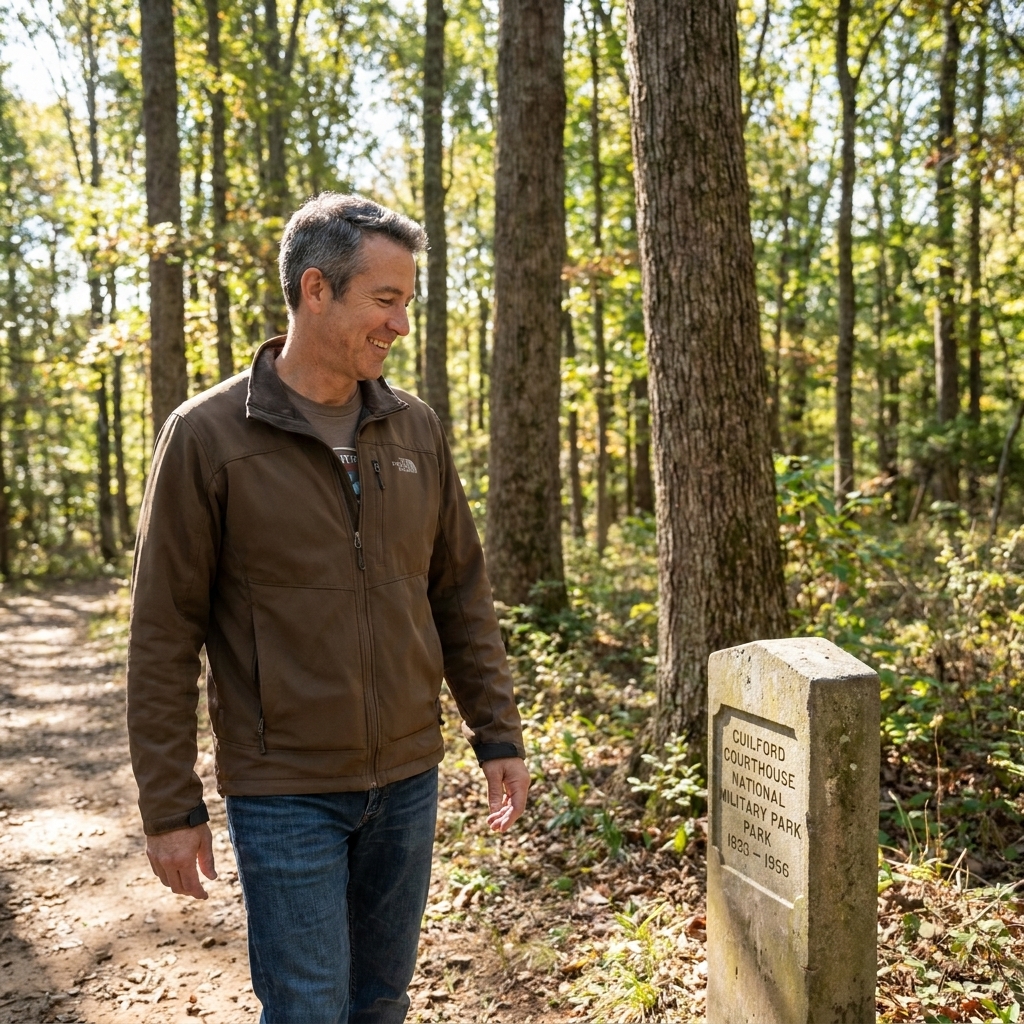
- Monuments and marked points that give kids something concrete to “find” as you walk.
- Short loops that can be adapted to attention spans.
- Talking about choices. Ask kids what they would do as a commander after a costly victory. It sparks surprisingly good conversations.
My parent-tested tip: Use one simple phrase and repeat it as you go: “Winning can still hurt.” Each time you stop, tie it back to that idea. Kids remember the theme even if they forget the names.
A simple one-day game plan for families
If you want the day to end with everyone still speaking to each other, I recommend this rhythm for almost any battlefield:
- 15 to 25 minutes: Start with bathrooms, water, and a fast overview.
- 45 to 75 minutes: One main loop or a few key stops outside.
- 10 minutes: Snack break, preferably before anyone is “mysteriously” starving.
- 30 minutes: One extra trail or exhibit only if the mood is good.
Two quick realities: hours and seasonal programs can change, so I always check details before I go. And bring water plus bug spray in warm months, especially in tall grass and woods where ticks can be a factor. Staying on marked paths also helps protect fragile earthworks and keeps everyone safer.
If accessibility is a concern, visitor centers are usually the easiest starting point, and accessible routes vary by park. When in doubt, plan a shorter loop and build from there.
And if you want more ideas for mixing history with food stops and practical pacing, my trip planning page is here: Plan a Revolutionary War site visit.
Quick FAQ for visiting battlefields with kids
What age is best for Revolutionary War battlefields?
I have seen kids connect anywhere from preschool to teen years, but the sweet spot is often 6 to 12. Younger kids do best with very short walks and big visuals like cannons and earthworks. Teens usually enjoy the “why it mattered” conversations and the harder questions about loyalty, sacrifice, and consequences.
How long should we plan to stay?
For most families, 1.5 to 3 hours is the happy range. Longer is possible, but only if you build in breaks and let kids set part of the pace.
Are battlefields stroller-friendly?
Some paths and visitor centers are, but battlefield terrain can include grass, gravel, and uneven ground. If you are traveling with a stroller, plan on mixing paved areas with shorter walks and consider a baby carrier for the rougher sections.
How do I keep it engaging without overwhelming them?
Pick one clear storyline. For example: “This is where the war began,” “This is where the plan worked,” or “This is where the British got boxed in.” Then hang everything on that hook. You can always read deeper later.
For more places to explore once your crew catches the history bug, browse the site guides for Historic Sites and Colonial Life.