

Welcome. I’m Daniel Townsend, the creator of My Revolutionary War, and I’m glad you found your way here.
I grew up in Pennsylvania, the kind of place where history is never very far away. Some kids spend weekends at the mall. I spent mine squinting at roadside historical markers, wandering state parks, and trying to picture what a ridgeline looked like when it was lined with smoke and musket fire instead of autumn leaves. Somewhere along the way, the American Revolution stopped feeling like something locked in a textbook and started feeling like a landscape you could step into.
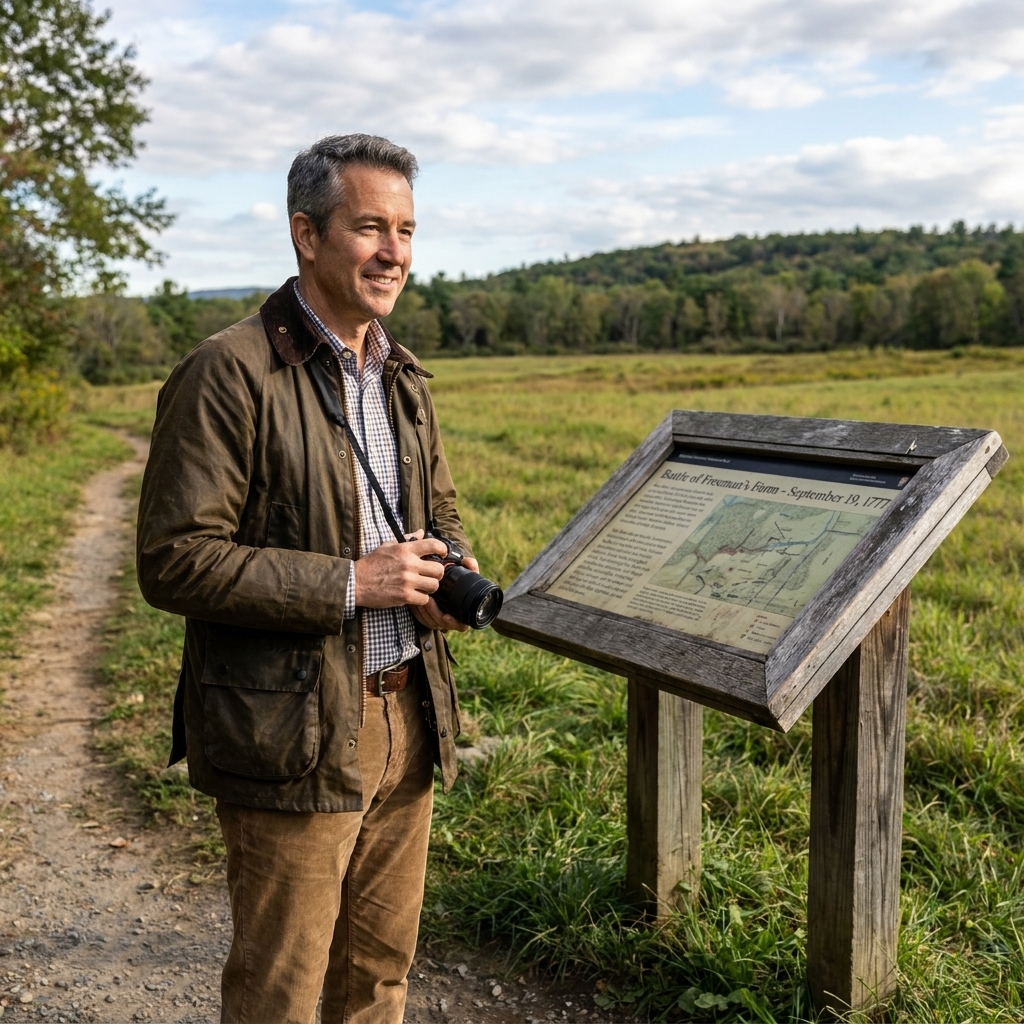
Read the history. Explore the places.
That simple idea is the heartbeat of this site, and it is how I’ve learned the Revolution best. Not just through famous names and big dates, but through the ground itself: river crossings, farm lanes, churchyards, old tavern corners, and the quiet back roads where skirmish lines once formed.
Why I built My Revolutionary War
I don’t have a formal history degree, and I’m upfront about that. What I do have is miles on my boots and a deep respect for the people who lived through the era. Over the years I’ve visited more than 150 Revolutionary War sites, from the sweeping scale of Saratoga to the culminating ground at Yorktown, and plenty of lesser-known places that rarely make it into mainstream travel guides.
My Revolutionary War grew out of a gap I kept running into: lots of excellent history writing explains what happened, but far less helps you go where it happened in a way that makes sense once you arrive. Where do you park? What should you see first? What’s easy to miss? Which museum artifact is tucked in a side room that most visitors walk right past? And after you have spent the day time traveling, where do you find a good meal and a comfortable place to stay without driving an hour off-route?
This site is my attempt to bridge that gap. Think of it as the companion I wish I’d had on my earliest trips, written from the perspective of a traveler who keeps coming back for one more overlook, one more preserved field, one more story that clicks into place when you stand in the right spot.
What you can expect here
Everything on My Revolutionary War is built to help you connect solid history with real places you can visit. I write like a tour guide because that’s how I approach every trip: I want you to feel oriented, curious, and confident from the first stop to the last.
- Battlefield overviews and on-the-ground context in the Battles section, with an emphasis on what the terrain still reveals today.
- Guides to the people behind the events in People, including the famous names and the figures you may only meet through a diary line or a plaque.
- Historic places you can actually stand in in Historic Sites, from major parks to overlooked corners that are worth a detour.
- Everyday life in the 1770s in Colonial Life, because understanding the ordinary often makes the extraordinary make more sense.
You’ll also see a practical streak running through nearly everything I write, because travel reality matters. I focus on how a place feels, how to approach it, and how to notice the details that bring the story into sharper focus.
My approach: maps, footsteps, and the “small tells”
I’m an antique map collector, and I’ll admit it: old maps have ruined me in the best way. Once you start comparing historic routes to modern roads, you realize how often the past still dictates the present. A bend in a river can explain a battle plan. A steep grade can explain a delayed march. A church at a crossroads can explain why an army chose to camp where it did.
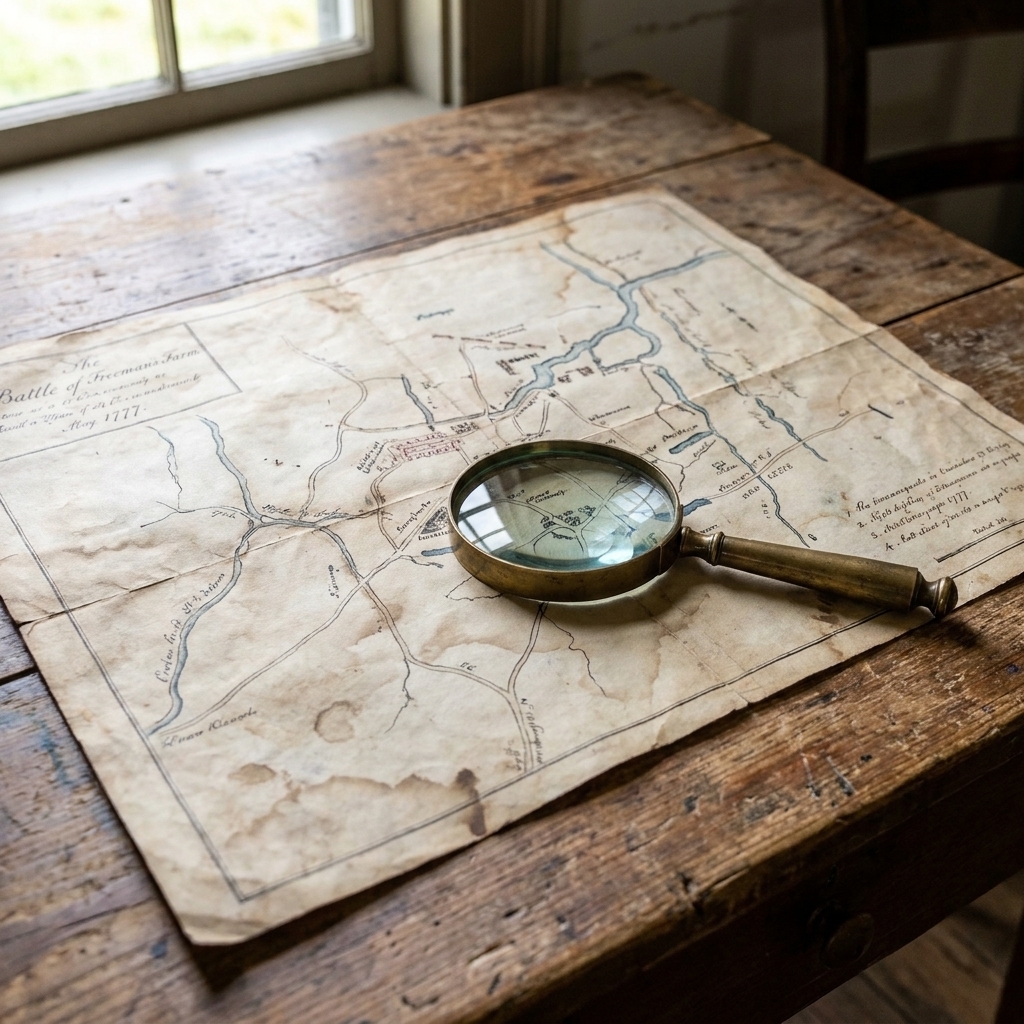
But maps are only half the story. The other half is walking the ground. I believe history is best understood through the soles of your shoes, one ridge and one weathered stone wall at a time. When you feel the distance between two hills, or hear how sound carries across an open field, the narrative stops being abstract.
A note on accuracy and corrections
I do my best to be careful and fair, and I rely on a mix of primary sources, museum interpretation, park materials, and trusted scholarship whenever I can. That said, history is a living conversation, and local knowledge is powerful. If you spot an error, have a correction, or want to add context from your own research or family story, I truly want to hear from you.
The best way to reach me is through the contact form at /contact/.
Start exploring
If you’re new here, you can start anywhere, but most readers like to begin with either Historic Sites for trip ideas or Battles for the big narrative arcs. If you want to plan a route that actually fits into real life, head over to Plan a Revolutionary War Site Visit.
Thanks for traveling with me. The Revolution left its marks on the landscape, and once you learn how to look, you’ll start seeing them everywhere.
Daniel Townsend