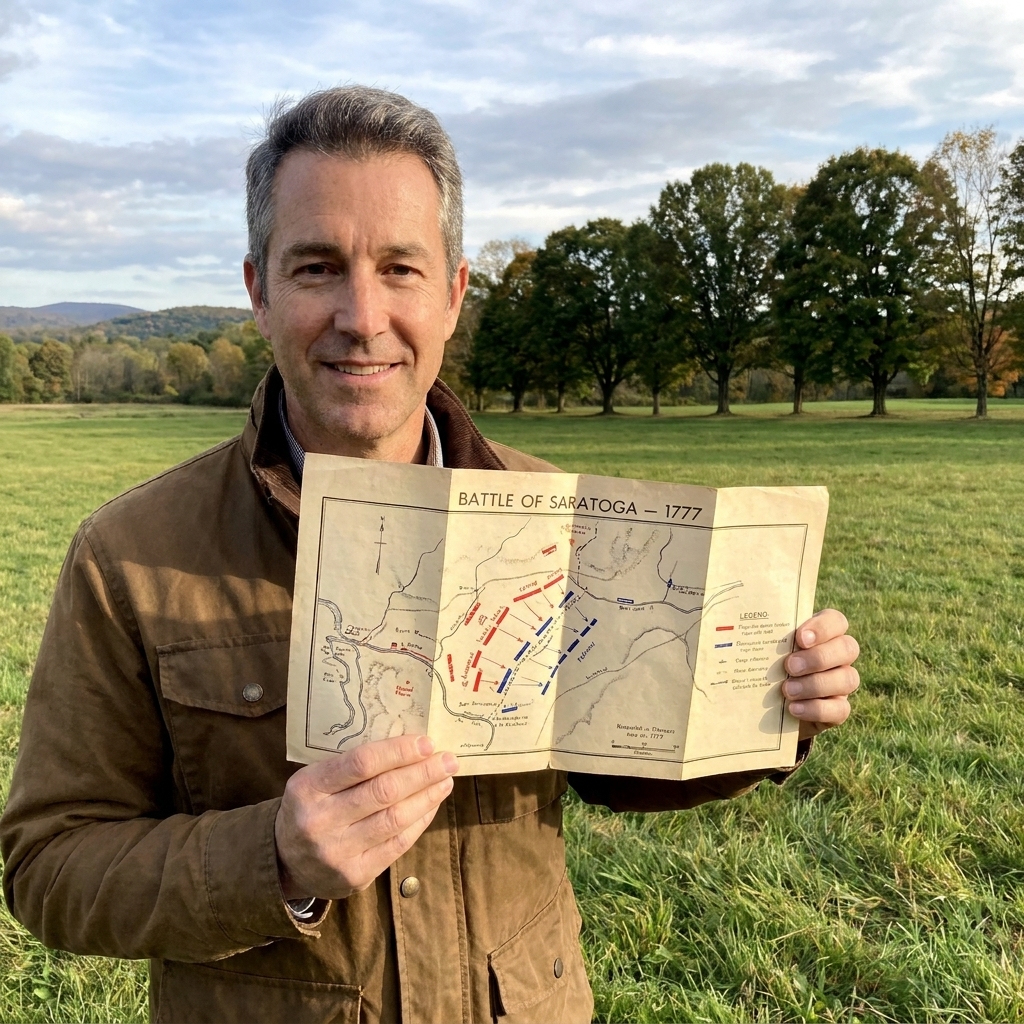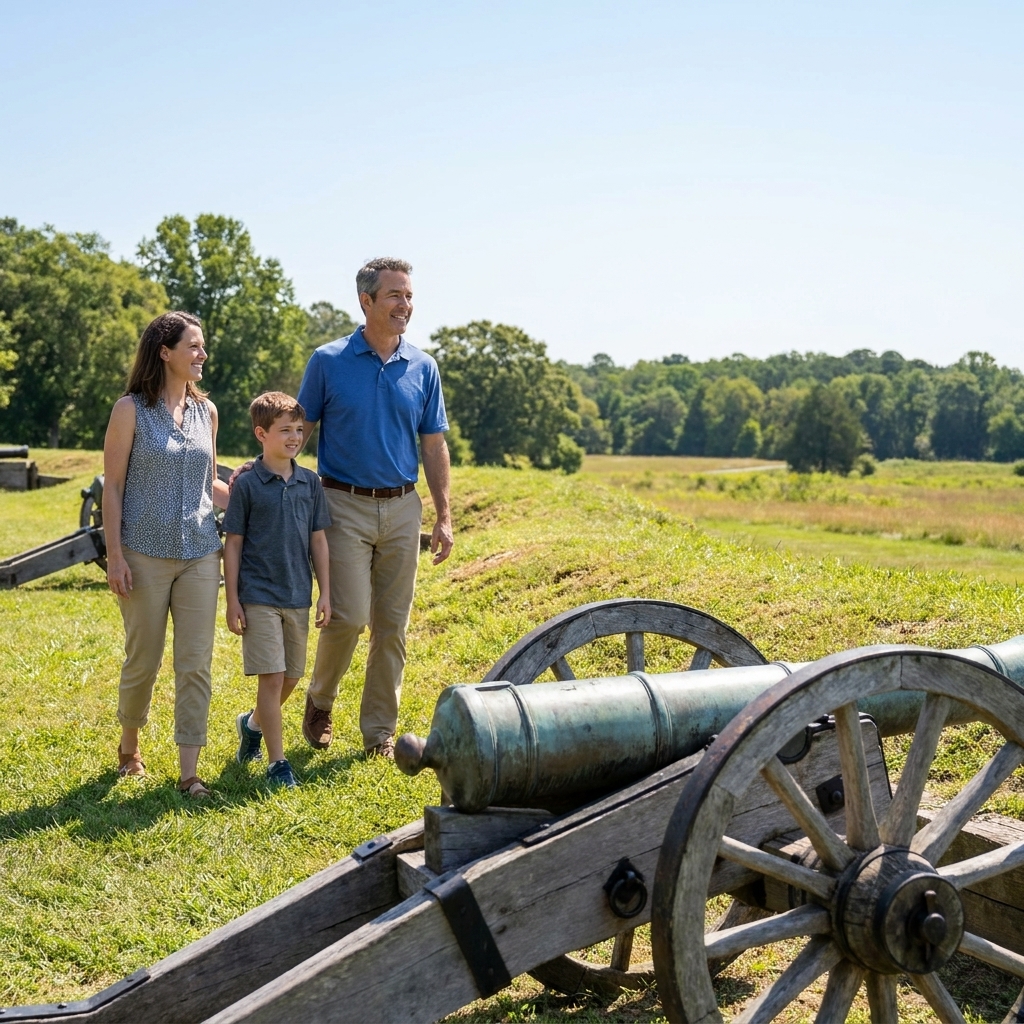

I have stood on both of these landscapes more times than I can count, and they still give me that same feeling I had as a kid in Pennsylvania: that quiet jolt when a normal-looking field suddenly snaps into focus as a place where history pivoted.
Saratoga and Yorktown are both called “turning points,” and they both earn it. But they feel very different on the ground. One is a northern battlefield story of wooded ridgelines, hard marching, and a British army boxed in until it breaks. The other is a coastal siege where you can almost hear the shovels in the trenches and the thunder of French and American artillery tightening the noose.

If you are trying to pick which to visit first, I recommend thinking less about which is “more important” and more about what kind of day you want to have: driving tour or trench walking, sweeping battlefield vistas or tight siege lines, crisp fall air upstate or salty tidewater breezes.
The turning point question
Saratoga (1777): the alliance that helped make independence possible
When people say Saratoga “won the war,” they are usually talking about what happened after the surrender. The American victory over John Burgoyne’s army in October 1777 convinced France that the rebellion had real staying power. That confidence turns into formal alliance in 1778, plus money, supplies, a navy, and eventually French troops fighting alongside Americans. It is not the only reason independence happens, but it is one of the moments that shifts the war from desperate survival to something the Americans can actually sustain.
On the ground, Saratoga is really two major fights, Freeman’s Farm and Bemis Heights, plus weeks of maneuvering, fortifying, and exhausting uncertainty. The drama is not just in the musket fire. It is in the slow tightening of the trap, the breakdown of British logistics, and the moment Burgoyne realizes there is no clean way out.
Yorktown (1781): the war’s ending in everything but paperwork
Yorktown is the closing act that feels like a closing act. The combined American and French army pins Cornwallis on a peninsula. The French fleet effectively blocks escape or relief by sea after the Chesapeake campaign, and on land the siege lines creep forward as artillery pounds day and night. Two key British positions, Redoubts 9 and 10, fall in sharp nighttime attacks. Cornwallis surrenders in October 1781.
The war does not legally end until the Treaty of Paris in 1783, and fighting continues in some places. But after Yorktown, the political and financial will to keep the war going erodes rapidly in Britain, with support breaking hard enough that Lord North’s ministry falls in 1782. When you tour Yorktown, that sense of tightening options is part of the experience. Even Cornwallis’s last-ditch escape attempt across the river is a reminder that by then, the war is a narrowing hallway, not an open road.
If you like the big chessboard moments of diplomacy and international alliance, Saratoga hits hard. If you want the satisfying final chord where the military story visibly resolves, Yorktown delivers that in a very tangible way.
How the parks feel
Saratoga: a classic driving tour with stops that reward slow looking
Saratoga’s battlefield experience tends to be built around a driving tour with multiple pull-offs, monuments, and short walks. That makes it family-friendly and stamina-flexible. You can have a full day without needing to hike miles, but you can also layer in longer walks if you want to chase terrain and sightlines.
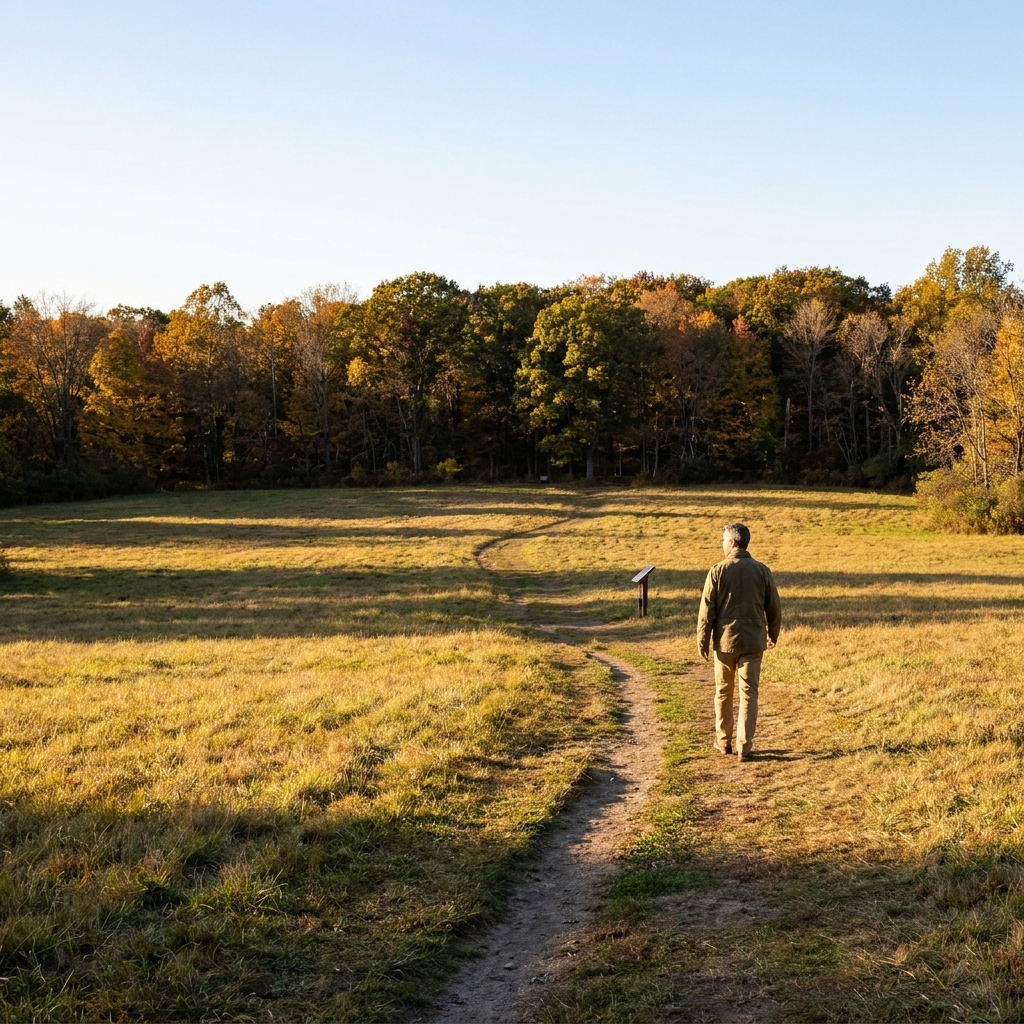
What I love most about Saratoga is how the landscape teaches you to read the battle. Slight rises, tree lines, and creek crossings matter here. The fighting was often close, confused, and brutal, and standing in the woods around Bemis Heights or looking out across the ground near Freeman’s Farm helps you understand why command and control broke down so quickly.
Yorktown: earthworks, siege lines, and coastal scenery
Yorktown is a place where the war looks engineered. You have lines, angles, batteries, and a sense of methodical pressure. Touring often mixes a driving loop with frequent moments on foot: stepping into a trench, walking along earthworks, and pausing where cannons once sat aimed at British positions.
Because Yorktown sits in tidewater Virginia, the environment is part of the story. Water routes, naval power, and coastal geography are not background details. They are the reason the siege works. Expect marshy edges, big skies, and that particular hush you get near the water even when the road is not far away.
Amenities and comfort
Amenities can make or break a family trip, especially if you are traveling with kids, grandparents, or anyone who needs regular breaks. While details can change seasonally, here is how the two experiences generally compare.
| Category | Saratoga Battlefield | Yorktown Battlefield |
|---|---|---|
| Pace and access | Very flexible, lots of short stops | Flexible, but more frequent get-out-and-walk stops |
| Terrain | Wooded areas, fields, rolling ground | Earthworks, open siege lines, coastal terrain |
| Best for | Families who like a scenic drive plus bite-sized history | Visitors who want to physically trace siege works and positions |
| Weather factor | Glorious in fall, cool to cold shoulder seasons | Hot and humid summers, breezy shoulder seasons |
Accessibility reality check: both sites can be enjoyed mostly from a vehicle with short, optional walks, but both also include uneven ground. At Saratoga, that can mean roots, soft trails, and damp spots in the woods. At Yorktown, it can mean sandy paths, earthwork edges, and bright sun exposure along open lines. If you want a broader primer on how I plan a battlefield day so it does not turn into a rushed checklist, I keep my approach on Plan a Revolutionary War Site Visit.
Which to visit first
Visit Saratoga first if you want the “how did we survive this?” chapter
- You love campaign stories. Marches, supply problems, crossroads decisions, and momentum shifts are Saratoga’s language.
- You enjoy reading terrain. Saratoga rewards visitors who like stopping, looking, and asking, “Why here?”
- You are traveling with mixed mobility. The driving tour style lets everyone have a meaningful day without long continuous walking.
- You are planning a Northeast history loop. Saratoga pairs naturally with other northern sites and colonial towns.
Visit Yorktown first if you want the cinematic finale
- You want closure. Yorktown feels like an ending, and that is powerful if this is your first big Revolution trip.
- You like fortifications. Siege lines, redoubts, and artillery positions are visible and graspable.
- You want a broader “colonial Virginia” vacation. Tidewater Virginia can be a full itinerary beyond the battlefield.
- You have kids who like tangible shapes. Earthworks and trenches often click faster than abstract troop movements.
If you are building a longer list of battlefields to work through over time, start with our broader hub at Battles. For people-focused context, especially the commanders and political figures orbiting these campaigns, People is a good companion read before you hit the road.
Make it unforgettable in one day
1) Arrive early and commit to a slow first hour
I always try to get on the ground before the day warms up and before I have mentally checked the box. Give yourself the first hour to simply absorb: read the landscape, listen, and let the scale settle in. It makes every stop afterward feel connected.
2) Pick one defining question
- At Saratoga: “What did the Americans do that made Burgoyne’s position collapse?”
- At Yorktown: “How did the allies remove every escape route, one by one?”
3) Do at least one short walk even if you are mostly driving
A battlefield is not a museum hallway. The distance between points is part of the story. At Saratoga, a short walk helps you feel why visibility and communication mattered. At Yorktown, walking the earthworks makes the siege feel real in your legs.
4) Bring the right basics
- Comfortable shoes that can handle uneven ground
- Water and a small snack, especially in summer at Yorktown
- Bug spray in warm months for both parks
- A light layer for Saratoga shoulder seasons
For more ideas on pairing battlefield time with living history, museums, and the kind of local stops that make a trip feel rooted, you can also browse Historic Sites and Colonial Life.
Quick decision
Choose Saratoga first if you want:
- The battlefield that helped unlock the French alliance and globalize the war
- A scenic driving tour rhythm with frequent short stops
- Wooded terrain and that “campaign in motion” feeling
Choose Yorktown first if you want:
- The surrender that effectively ended major fighting
- Earthworks and siege lines you can literally walk
- A coastal Virginia setting where naval power makes immediate sense
If you asked me what to do if you only get one big Revolutionary War trip in the next year, I would tell you this: pick the one that matches your travel personality, then promise yourself you will do the other later. Saratoga explains why independence stayed alive. Yorktown shows you what victory looked like when it finally arrived.