
The first time I stood on Sullivan’s Island with the harbor breeze in my face, Charleston felt close enough to touch and impossibly far away all at once. You can watch container ships and sailboats glide through the channel today, but in June 1776 that same waterway carried a British fleet determined to force its way past a half-finished fort made of sand, timber, and stubbornness.
This is one of my favorite kinds of Revolutionary War sites because it still feels like a place with an argument to make. Fort Moultrie is not a grand stone citadel rising over a river. It is a low-profile work built to absorb punishment, and it did. The defenders turned palmetto logs, sand, and local know-how into one of the first major Patriot victories of 1776, a moment that helped convince a lot of people that independence was not a fantasy.
Why Sullivan’s Island mattered
By the summer of 1776, the war was already stretching the colonies, and the British were looking for places to reassert control. Charleston was one of the most important ports in the South. If the Royal Navy could sail into the harbor, land troops, and take the city, South Carolina’s rebellion could be choked off early.
The problem for Britain was geography. Charleston Harbor is guarded by shifting channels, bars, and sandy barrier islands. Sullivan’s Island sits along the main approach into the harbor, right where a fleet would want to control the ship channel into Charleston. That made it a natural spot for a coastal fort. South Carolina’s leaders ordered a fort built at the island’s southwestern end, positioned to throw shot into the channel and discourage ships from pushing past.
It was a bold plan with an unglamorous execution. The fort was unfinished. It was short of supplies. Its walls were not stone. And yet, when the British arrived under Admiral Peter Parker, with General Henry Clinton’s army intended to support the operation, the defenders were ready to bet everything on an odd local material that most outsiders would have laughed at.
Palmetto logs and “soft armor”
One of the most famous details of the battle is also the easiest to misunderstand. The fort’s walls were built with palmetto logs, stacked like a thick wooden sandwich and packed with sand. Palmetto is fibrous and spongy. Instead of shattering when hit, it tends to compress.
In other words, when British cannonballs slammed into the fort, a surprising number of shots failed to penetrate deeply and often lodged in the palmetto. Some shots stuck. Others bounced away in dull thumps that did more bruising than blasting. The British sailors and gunners expected a quick reduction of a crude rebel position. What they met was a fort that soaked up punishment and kept firing back.
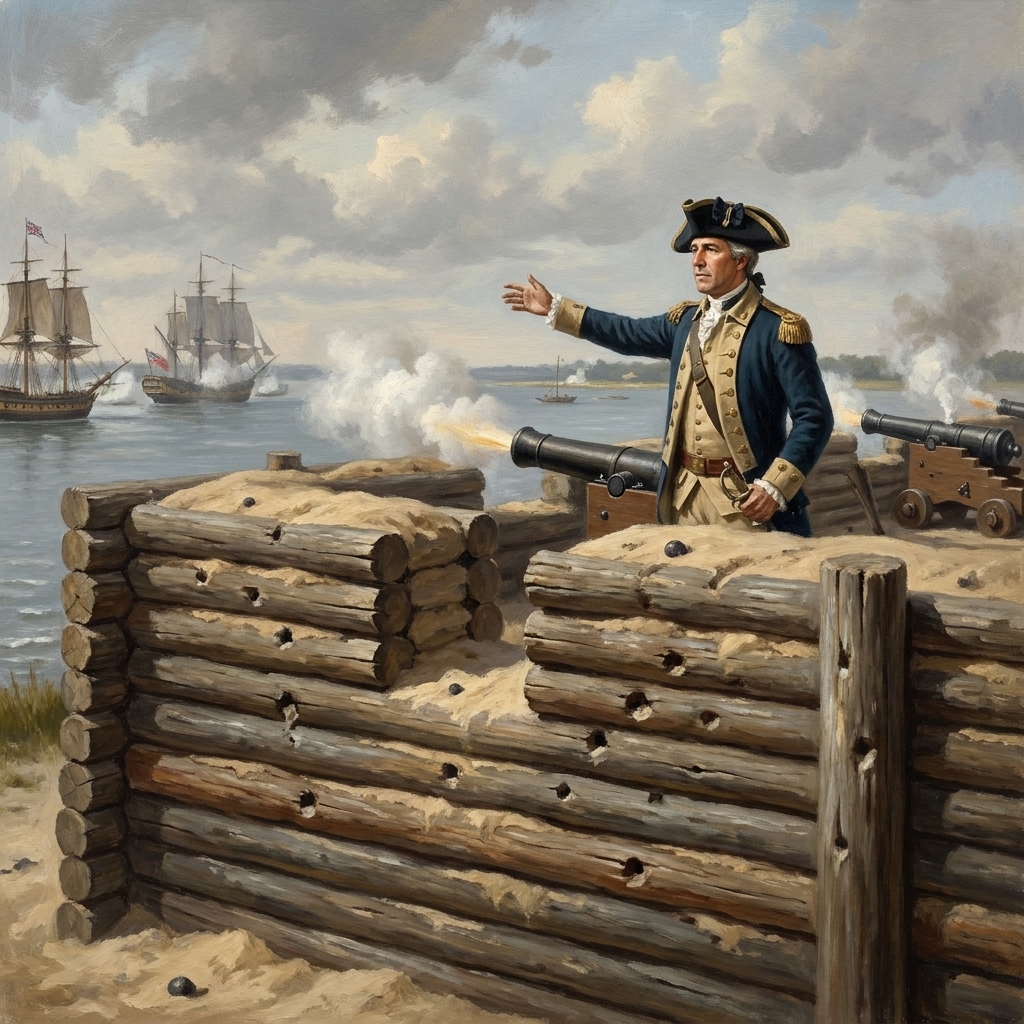
The battle on June 28, 1776
The British plan leaned heavily on naval power. Warships would bombard the fort while the larger operation threatened Charleston. The American side, commanded at the fort by Colonel William Moultrie, understood something important: if the fort held, Charleston likely held.
On June 28, the British fleet opened fire. The bombardment was fierce and sustained, and you can still stand on the site and picture the smoke hanging over the water. Inside the fort, the defenders worked guns, hauled powder, and repaired damage under fire. They were not just fighting the British. They were fighting exhaustion, heat, and the steady wear on the nerves that comes from watching heavy shot chew at the walls.
Meanwhile, the intended land support struggled. Clinton’s troops made attempts to cross from Long Island (today’s Isle of Palms) via Breach Inlet, but the crossing and coordination never came together in a way that could meaningfully pressure the fort from the rear. That left the ships to do the job alone, and the fort proved stubbornly hard to crack.
The fort’s gunners returned fire methodically, and the British ships paid for the attempt. Several vessels were badly handled, and casualties mounted, especially among crews exposed on open decks. One of the most dramatic episodes involved the fort’s flag. When the flagstaff was shot away and the flag fell outside the works, Sergeant William Jasper, according to contemporary accounts and later tradition, retrieved it under fire and raised it again. It is a scene that reads like legend, but it also captures the emotional reality of these early battles: symbols mattered because morale mattered.
By the end of the day, the British had taken serious damage and failed to silence the fort. Rather than force the issue in a narrowing tactical situation, the fleet withdrew. Charleston was spared. And the victory echoed far beyond the harbor because it arrived at a crucial moment in 1776, when Americans were still measuring what they could realistically withstand.
Touring Fort Moultrie today
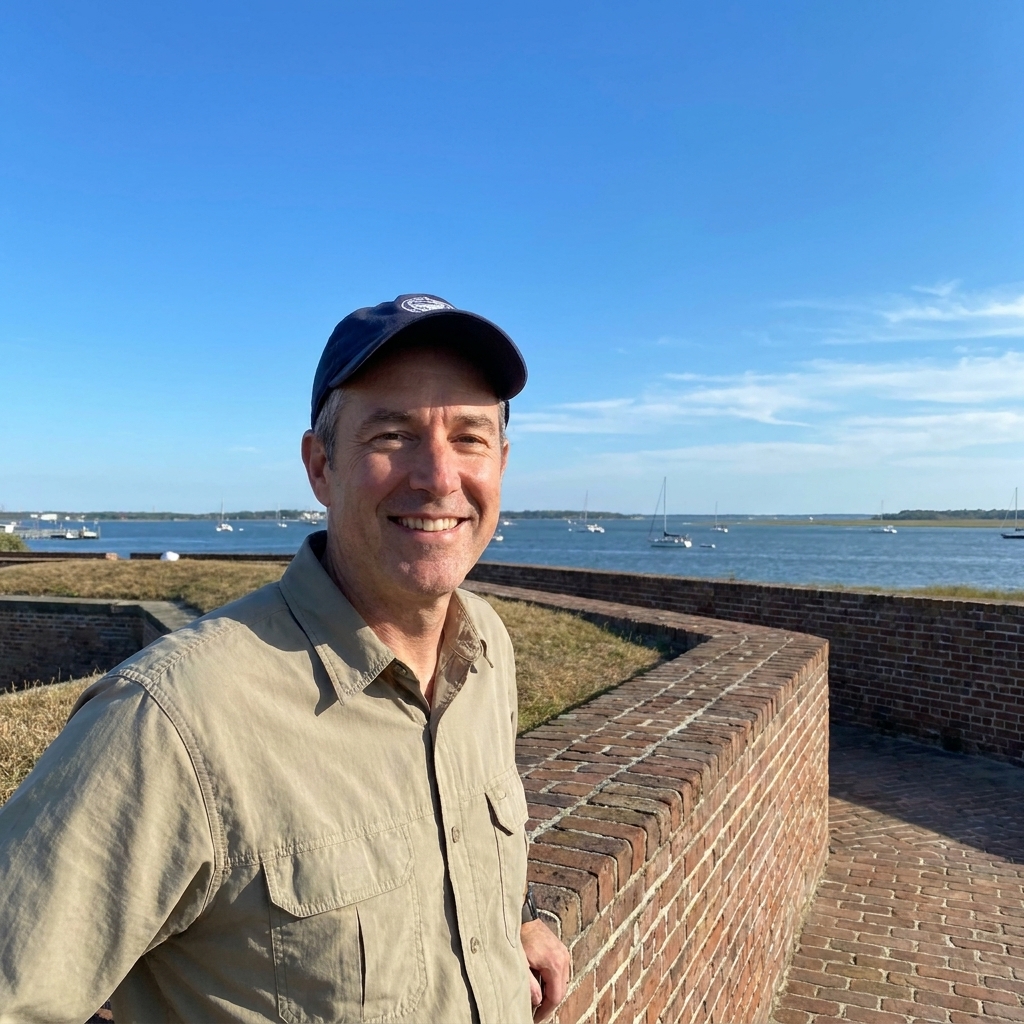
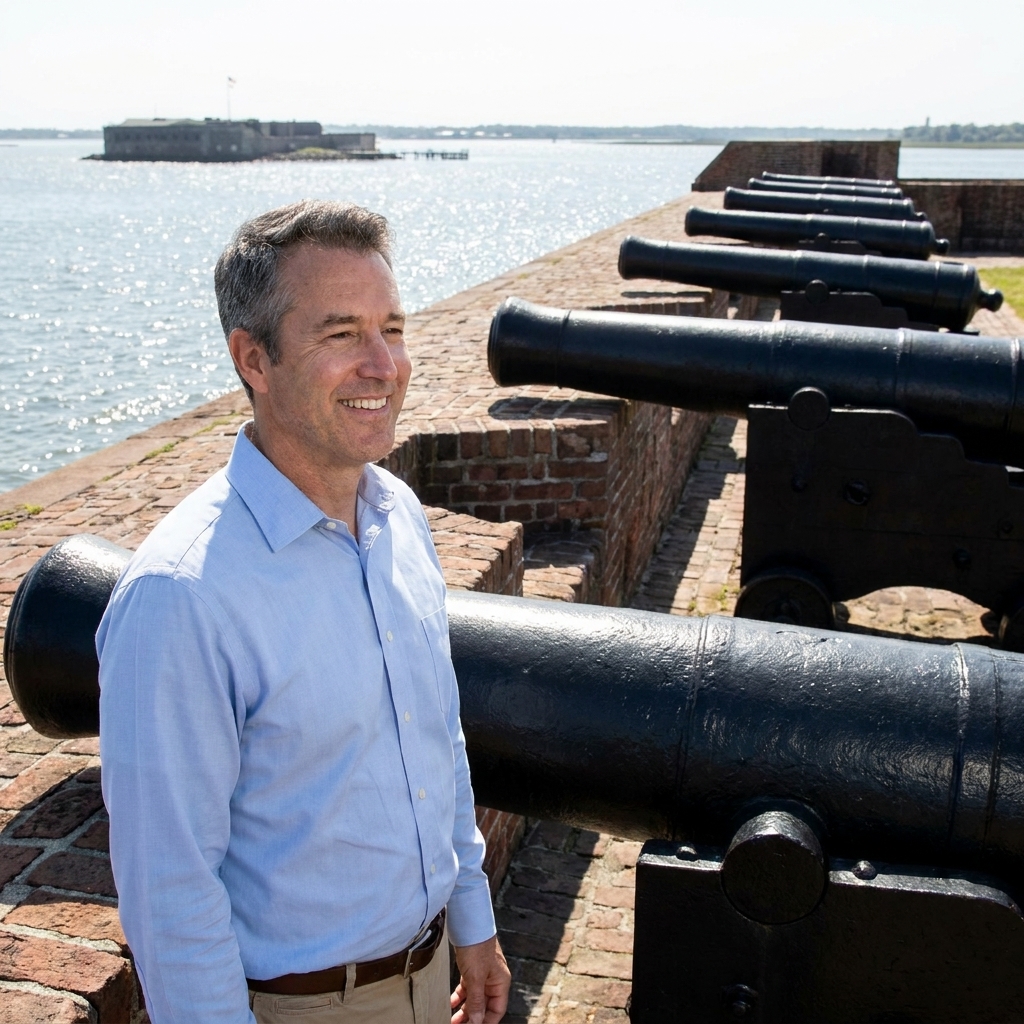
Fort Moultrie, as you visit it now, represents layers of coastal defense over generations. That is part of the fun. You are not walking through a frozen 1776 set. Much of what you see above ground today reflects later construction, including brick and earthwork phases that came long after the palmetto-log fort. Still, the location is the story, and the site does a good job helping you translate modern surfaces into an older fight.
Start at the harbor side
Stand where the guns face the channel and take a few minutes to simply watch the water. I like to do this before reading any interpretive panels because your eyes will do the work for you. It becomes immediately obvious why a fort sits here. You can feel the bottleneck.
Notice the low profile
Many first-time visitors expect towering walls. Coastal forts are often about angles, fields of fire, and absorbing punishment rather than presenting a tall target. The story of palmetto logs is a reminder that “strong” does not always mean “hard.”
Look for the human scale
When you step through passages and courtyards, keep asking yourself where the powder would have been moved, where men would have crouched during incoming fire, and how the noise would have bounced around. It is one thing to read about a bombardment. It is another to realize how confined the working space can be inside a fort.
Simple walk for first-timers
If you have an hour or two, here is a route that tends to keep kids engaged and gives adults the best story flow.
- Begin at the harbor edge: orient yourself to the channel and talk about why ships had to pass within range.
- Circle the outside works: get a feel for how a defender uses low walls and angles rather than height.
- Move into the interior spaces: point out how supplies, guns, and crews would have moved under pressure.
- End by reimagining June 28: stand still, pick a point on the water, and picture smoke, splinters, and the slow rhythm of loading and firing.
For broader trip-planning advice that applies to any battlefield or fort visit, I keep my go-to tips on planning a Revolutionary War site visit. A little preparation goes a long way, especially in coastal heat.
How it fits the war
Americans sometimes learn the Revolution as a march from Lexington and Concord to Saratoga to Yorktown. The reality is messier, and the South Carolina coast is a great example of why. The Battle of Sullivan’s Island was an early, high-stakes test of whether the British could quickly seize a major southern port. They could not, at least not then.
The victory did not end the war in the South, and it did not make Charleston permanently safe. But it did buy time and confidence, and it demonstrated that local engineering choices and local terrain knowledge could blunt British naval superiority. If you enjoy tracing how single battles reshape strategy and morale, you might also like my overview section in Battles, where I connect individual sites to the bigger picture.
Practical notes
Best time of day
Morning light is kinder for photos, and summer afternoons can be intense on the coast. In warm months, I aim for earlier hours and save indoor museums for the hottest part of the day.
What to bring
- Water and sun protection, especially when you plan to linger along the harbor edge
- Comfortable shoes for walking on a mix of paved and packed surfaces
- A small notebook if you like matching what you see to maps and timelines
Pair it with nearby history
Charleston and the surrounding Lowcountry are thick with Revolutionary War stories, even when the original structures are gone. If you are building a longer itinerary, my Historic Sites guide is a good way to think in terms of clusters rather than single stops.
Quick FAQ
Was it the same fort in 1776?
The 1776 fort on Sullivan’s Island was an earlier version, commonly called Fort Sullivan at the time. The site evolved and was rebuilt over the years. What you visit today preserves the location and interprets the battle, even as the visible fortifications reflect multiple periods.
Why did palmetto logs work?
Because they compressed instead of splintering. Combined with sand, the palmetto-log construction absorbed impacts that might have shattered a rigid wall, reducing the effectiveness of the British bombardment.
Who commanded the defenders?
Colonel William Moultrie commanded the fort’s defenders during the battle, and the later fort took his name.
What is the main “don’t miss” moment?
Stand facing the channel and imagine hours of naval gunfire, then remind yourself the defenders held. The battle’s drama is not just in the cannonballs. It is in the decision to stay put when a fleet tries to batter you out of your own harbor.