

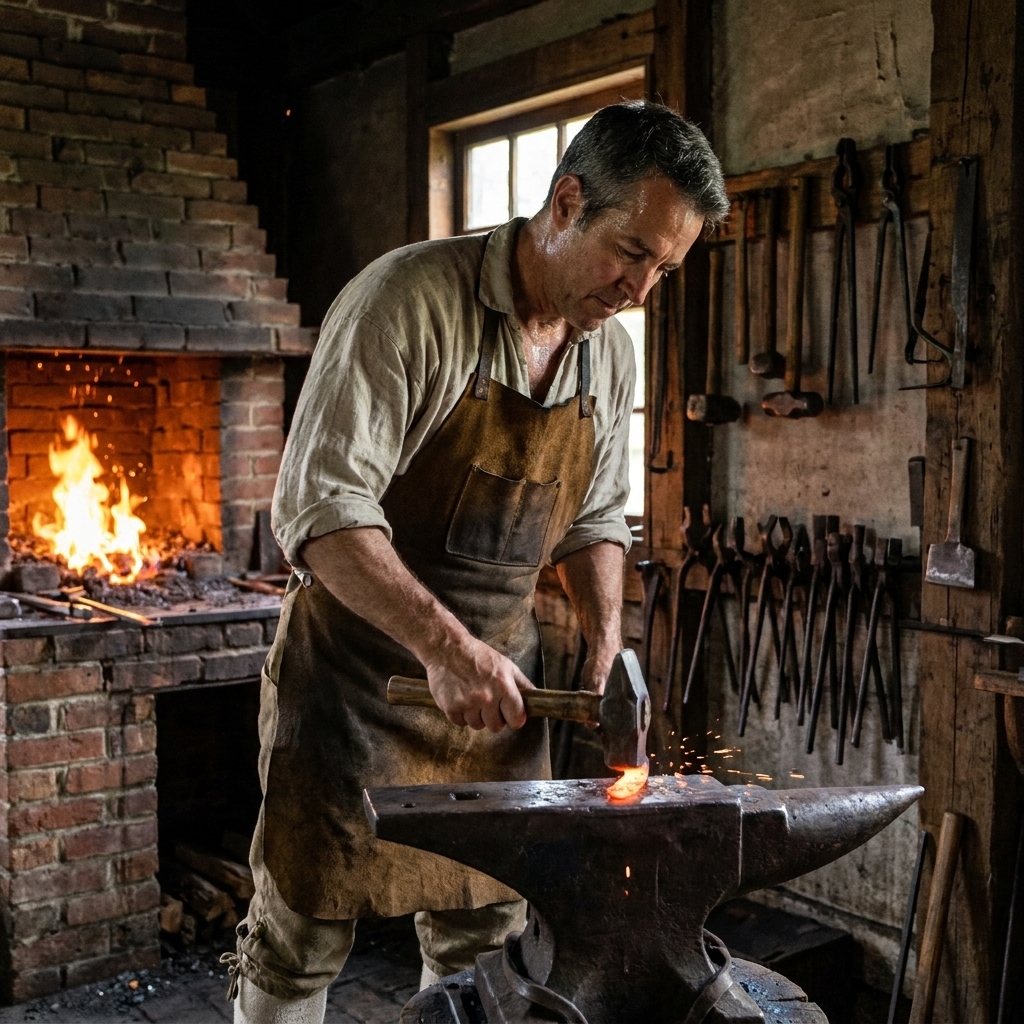
The first time I watched a blacksmith work the bellows, the whole shop seemed to breathe. The forge brightened, the iron took color, and a dead straight bar suddenly had a will of its own. A few minutes later, the hammering stopped, the smith quenched the piece with a hiss, and the smell of coal smoke clung to my jacket for the rest of the day.
That is why I love chasing down working trades. You can read about an army’s supply problems or a town’s politics, but when you stand next to a real forge or watch a printer pull a sheet fresh off the press, you finally understand what it took to keep an 18th-century community running.
This guide is for planning a trip around two of the most satisfying trades to see in action: blacksmithing and printing. I will point you toward the kinds of sites that tend to offer the most authentic demonstrations, what to look for once you are there, and how to build a day that keeps kids and history buffs equally happy.
What makes a great demo
Not every “smithy” or “print shop” is the same. The best experiences have a few things in common.
- Real work, not just talk: The interpreter is making something start-to-finish, even if it is a simple S-hook or a small broadside.
- Period-leaning tools and materials: In a smithy, look for a forge that is fired with the kind of fuel the site can support, often charcoal, sometimes coal depending on region and interpretation. In the print shop, look for hand-set type, composing sticks, and a press that actually prints. Inking is ideally done with ink balls, though some demos use modern brayers as a practical substitute.
- Room to ask questions: The best artisans teach while they work and will happily slow down to explain what you are seeing.
- Context beyond the craft: A smith should talk about wagon tires, nails, hinges, tools, and military contracts. A printer should connect the shop to newspapers, politics, pamphlets, and the simple problem of spreading information before radio, phones, or the internet.
If you are building a larger trip, my general planning approach is laid out in Plan a Revolutionary War Site Visit. Even a colonial life day goes better with a quick check on hours, walking distances, and what is truly on-site versus off-site.
Where to see blacksmiths work
Blacksmithing is one of the most audible trades in living history. You hear it before you find it. When you are choosing a destination, prioritize places where the shop is a working part of the town or fort interpretation, not a side exhibit.
Living history towns
Large living history towns often have multiple forges and a steady schedule of demonstrations, which means you are more likely to catch hot work rather than a static, talk-only stop.
- Typical projects: Hardware like hinges and hasps, nails, hooks, simple tools, repairs for wagons and farm gear, and occasionally specialty work like decorative items or edge tools.
- Good listening topics: Where iron came from, the difference between wrought iron and steel, and why nails and hardware were a big deal in everyday life.
Forts and military sites
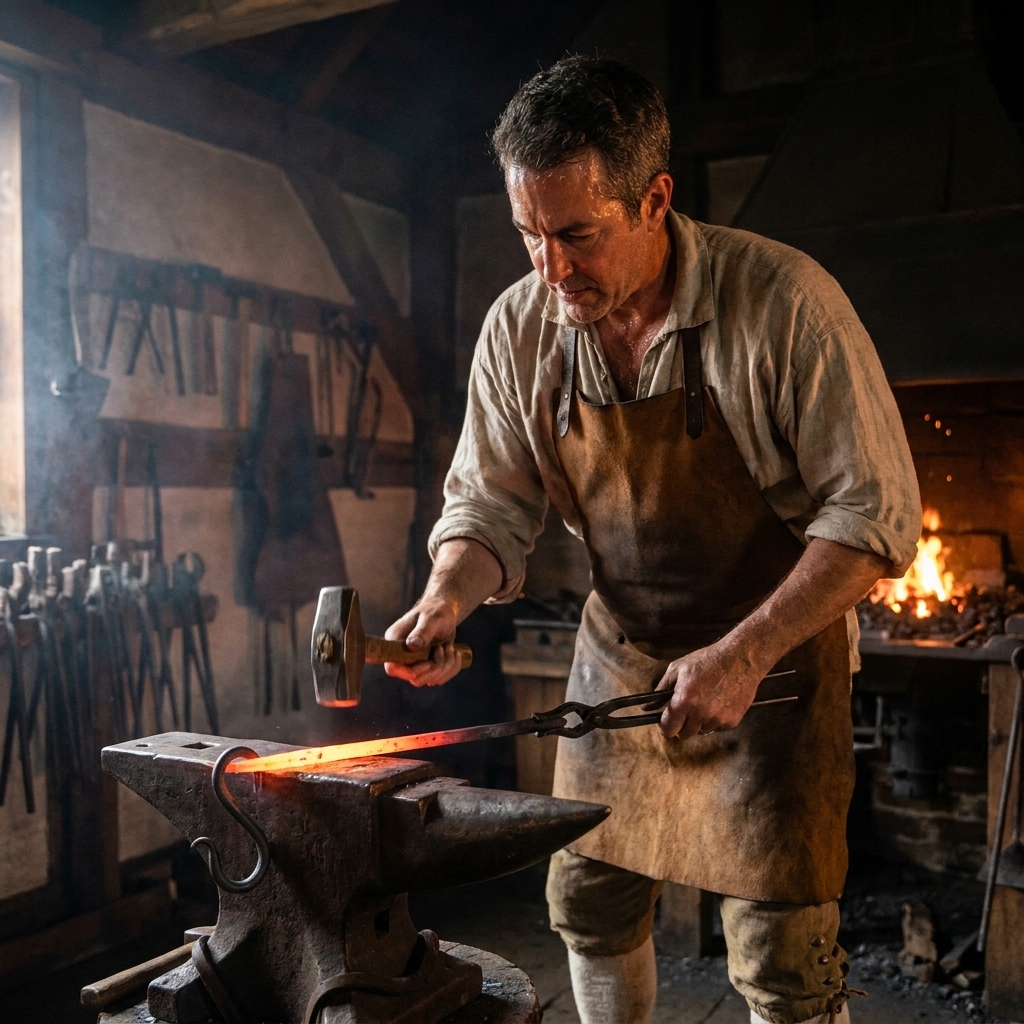
Forts are where blacksmithing suddenly feels strategic. Hinges, nails, chains, repairs to gun carriages and wagons, and endless maintenance work are the unglamorous backbone of keeping a post functional.
If you are heading toward northern New York, I have a soft spot for Fort Ticonderoga as an all-around living history stop. My trip notes and planning tips are in A Weekend at Fort Ticonderoga.
- What you may see: Repairs, utilitarian hardware, and explanations of how armies kept equipment moving.
- Best visitor strategy: Arrive early, find the day’s schedule, and plan to circle back. The most dramatic moments often happen in short bursts when the iron is at temperature.
Smaller museums with guest smiths
Some smaller historic sites bring in working smiths on weekends or special event days. These can be terrific because you are close enough to ask detailed questions and see fine technique. The key is checking the calendar before you drive.
If you are pairing a trades day with battlefield touring, use the Historic Sites guide to connect the dots and avoid crisscrossing a region unnecessarily.
Where to see colonial printing
Printing demonstrations tend to be quieter than a forge, but they are just as powerful. Watching someone set type by hand makes you appreciate why a print run took time, why errors mattered, and why the people who controlled presses had outsized influence.
Print shops in living history towns
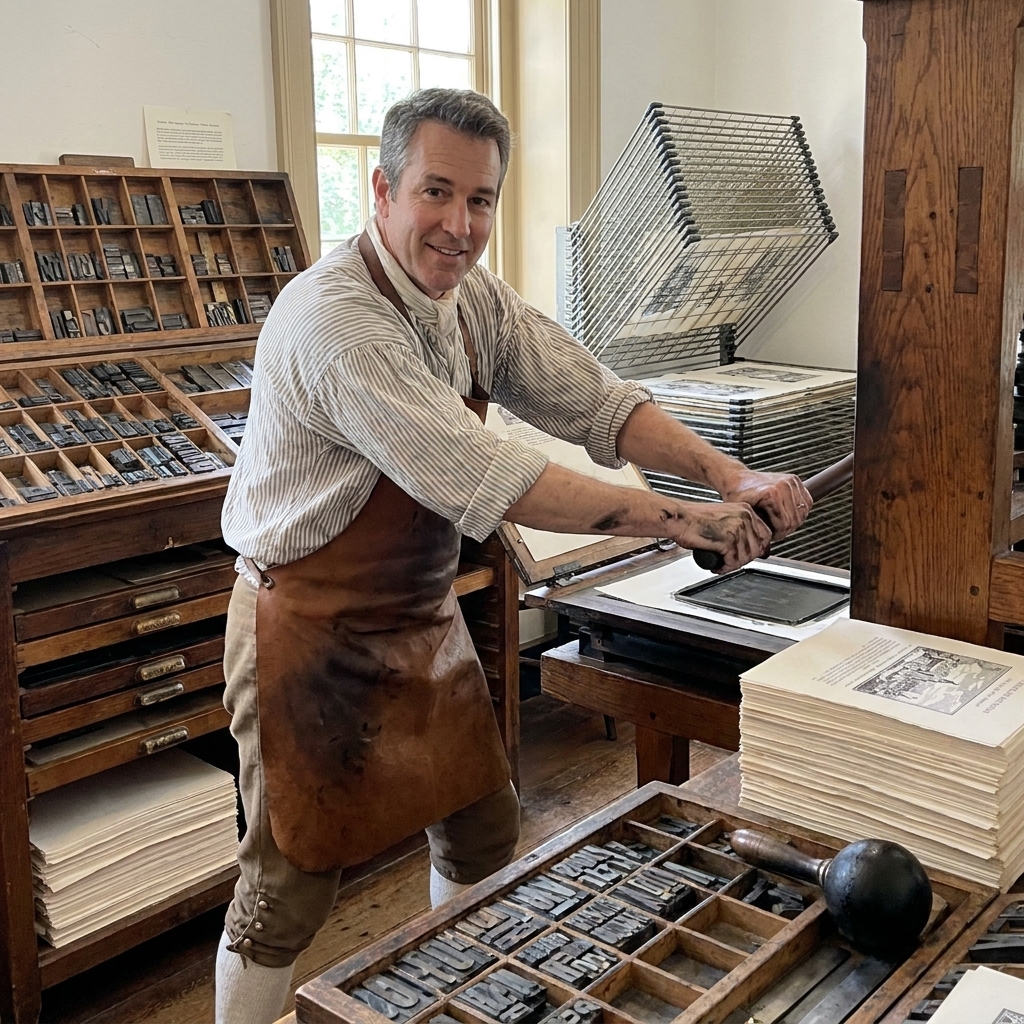
These are often the most reliable stops for seeing the whole workflow: composing, locking type, inking, pressing, drying, and sometimes folding.
- What you may see: Hand-set type, a proof pulled for correction, and small jobs like broadsides or notices.
- Questions worth asking: How expensive paper was, who supplied ink, how type was sourced and reused, and how quickly news could travel.
City history sites
Printing feels especially vivid in places where political organizing and information networks were dense. A simple definition helps if you are new to this world: a broadside is a single printed sheet, meant to be posted or read aloud, and it was one of the quickest ways to push news and opinion into the street.
If Philadelphia is on your list, you can mix trades, street-level history, and the larger Revolutionary story in Beyond Independence Hall: Hidden Revolutionary Philadelphia Walk. Even if your day is focused on crafts, the city context helps you understand why printed words mattered.
And yes, pamphlets really could light a fuse. In the years leading into open war, crisis-era pamphleteering and newspaper exchanges helped turn local arguments into shared colonial debates that people could quote, copy, and carry.
Libraries and special collections
Not every collection runs a press, but many have exhibits that show what printers handled: type, paper, bindings, and surviving prints with ink variations, corrections, or wear. If you can combine a print demo with viewing original newspapers or broadsides, you get both the how and the why in the same afternoon.
What to watch in a smithy
If you have never lingered in a forge, here is the quick field guide I wish I had on my first visit.
- Color and timing: The smith is working heat. Dull red, bright orange, near-yellow. The metal tells you what it will tolerate.
- Tool variety: Look beyond the hammer. Tongs for different stock sizes, punches, chisels, hardy tools, swages, and bending forks are where the trade gets interesting.
- Repeatability: In the 18th century, a shop survived on volume work. Jigs and gauges are not “cheating.” They are how you make 50 matching hinges without losing your mind.
- The soundtrack: Hammer blows change depending on whether the smith is drawing out, upsetting, or planishing. If you listen closely, you can often tell when the piece is nearly finished.
Traveling with kids? My favorite trick is giving them a mission: spot the bellows, find the slack tub, and count how many different kinds of tongs they can see. It keeps them engaged without turning the visit into a lecture.
What to watch in a print shop
Printing is a trade of patience and tiny decisions that add up.
- Type cases and layout: Printers store letters in cases that are organized for speed, not alphabetically. Ask why certain letters live where they do.
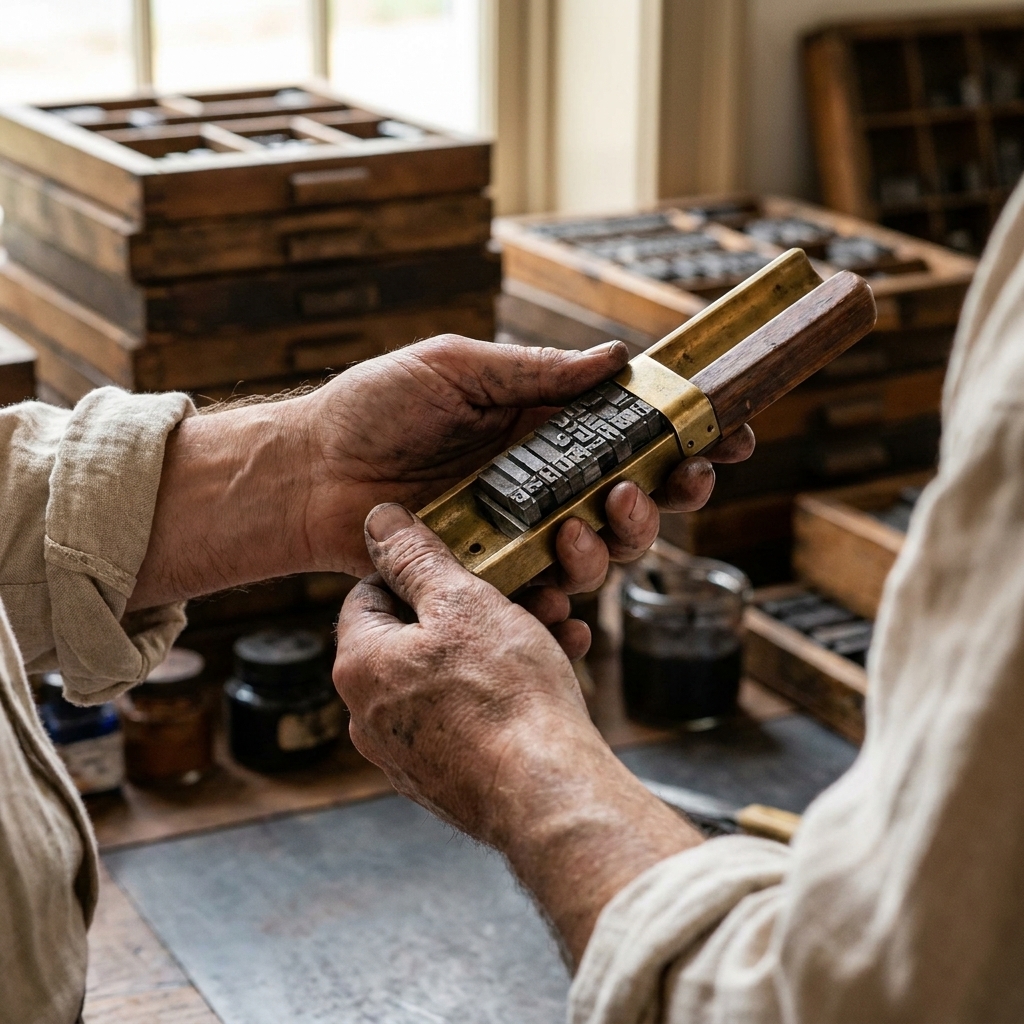
- Composing stick technique: Watch the compositor’s hands. The rhythm is part muscle memory, part constant error-checking.
- Lock-up and pressure: Once type is set, it is locked into a chase. Then the press pressure has to be just right. Too much pressure can crush type or slur the impression. Too little and the ink will not bite evenly.
- Impressions and imperfections: Look at a freshly printed sheet. Slight variations in ink and pressure are normal and make hand printing feel alive.
Build your day
Itinerary 1: One site, two trades
This is the simplest way to guarantee both trades in one place.
- Arrive at opening and go straight to the smithy first. Morning demos are often more active and less crowded.
- Catch a printing run late morning when the shop is running, then ask to see type cases up close.
- After lunch, return to whichever shop was hottest. Projects change by the hour, and you might catch a different job the second time.
Itinerary 2: Fort plus town
Pair a fort (for the supply and military angle) with a nearby historic town (for the civilian economy and politics).
- Start at the fort and focus on the practical reality of keeping a post running.
- In the afternoon, drive into the nearby town area and look for printing interpretation, tavern culture, and civic life.
If your trip planning includes multiple stops across a region, it helps to think in themes like this. I do the same thing when I am hopping between battle sites and encampments, as in Following Washington’s Crossing: Trenton and Princeton.
Named stops to consider
I intentionally plan around categories first, then fill in the map with specific stops. If you want a few concrete anchors to start with, these pair well with the kinds of routes many of us take anyway.
- Lake Champlain corridor: Fort blacksmithing and military logistics at Fort Ticonderoga. Use it as a base, then layer in other regional historic sites using the Historic Sites guide.
- Boston area day trips: If you are already following early-war sites around the siege lines, build a colonial life day into your trip planning alongside Conquering Bunker Hill: Visitor’s Guide to Siege of Boston Sites.
- Philadelphia base camp: Mix print culture and street history with Hidden Revolutionary Philadelphia, then branch out to other themes from the Colonial Life guide.
- Mohawk Valley and the New York frontier: Fort-focused interpretation can be a strong match for trades and supply talk. If you are already in the region, Exploring Fort Stanwix is a natural puzzle piece.
- Carolinas battle loop: If your trip swings through the southern campaign, it is easy to combine battlefield mornings with hands-on history afternoons. Start with The Battle of Cowpens and Battle of Kings Mountain as your spine and look for nearby living history days to break up the driving.
How to judge authenticity
You do not need to be a snob about it. Some compromises are normal, especially for safety and durability. What I look for is transparency and intent.
- Ask what is original and what is reproduction: A good interpreter will tell you plainly, and the answer is often interesting.
- Watch the workflow: Even with a few modern concessions, a real start-to-finish process teaches you more than a row of static tools.
- Listen for trade-offs: If a shop uses a modern substitute, the best interpreters explain why, and what the period version would have been.
Questions that get good answers
- For blacksmiths: What is the most common item you make for this site? What tool in your shop is the hardest to replace? How do you decide when iron is hot enough?
- For printers: How long does it take to set a full page? What is the most common mistake beginners make? What did apprentices do first?
- For both: What would surprise a modern visitor about the pace of work? What part of the job is hardest on the body?
Those questions usually move the conversation away from trivia and into the real texture of the trade, which is exactly what you came for.
Practical tips
- Dress for smoke and soot: Smithies can be smoky, especially on damp days. If you have asthma sensitivities, keep a little distance and pick moments when the shop doors are open.
- Mind the heat: Forges are hot even in shoulder seasons. Bring water and take breaks.
- Plan for sound and crowds: Hammering can be intense, and popular demos can pinch into tight doorways. If someone in your group is sound-sensitive, hang back and rotate in for shorter looks.
- Ask about photo rules: Some sites allow photos but restrict flash or close-range shots. Always follow interpreter guidance.
- Accessibility varies: Uneven floors and tight doorways are common in historic buildings. For broader planning, my accessibility roundup is Wheelchair-Accessible Revolutionary War Sites on the East Coast.
Why these trades matter
When I am standing on a battlefield, I am always thinking about what you cannot see anymore: the nails in the barracks, the hinges on the doors, the wagon tires, the printed orders, the broadsides, the newspapers, the receipts and supply lists. Blacksmiths and printers sit right at that intersection of war and daily life.
If you want to go deeper into how everyday people carried the Revolution, take a look at the broader Colonial Life guide. It is the closest thing to a map of the human side of the era that I can offer.
In a working smithy or print shop, the Revolution stops feeling like a story told from a podium and starts feeling like a world built by hands.
Quick checklist
- Check the site calendar for live trade demonstrations, not just open hours.
- Arrive early and ask where and when hot work or press runs usually happen.
- Plan for two short visits to each shop rather than one long one.
- Bring a small notebook if you love details. Tool names and printing terms are easy to forget.
- Leave time for the in-between moments. The best conversations often happen when the artisan is cleaning up or resetting for the next run.