

The first time I walked through Fort Stanwix, it hit me the way a good battlefield does. Not with sweeping views or dramatic cliffs, but with angles. Bastion corners that force you to think like an 18th-century engineer. Low timber walls that make you realize just how close an enemy would have to get before musket fire became personal.
Fort Stanwix National Monument sits in modern Rome, New York, right where the Oneida Carrying Place once connected the Mohawk River to Wood Creek, and from there on toward Oneida Lake, the Oswego River, and Lake Ontario. In the Revolution, that short portage was a strategic hinge for the whole region. Hold it, and you help keep the Mohawk Valley tied to the patriot cause. Lose it, and the frontier unravels.
One practical note before we jump into the history: this is an easy site to fit into a day. It is right in downtown Rome, with the visitor center and reconstructed fort laid out for a straightforward, on-foot loop. I like to treat it as a compact walk with a big story.
Why Fort Stanwix mattered
Stanwix began as a British fort built in 1758 to control that crucial portage during the French and Indian War. By the time the Revolution rolled into the Mohawk Valley, the old fort site still mattered for the same simple reason. Roads and rivers decided what armies could do, and this was the doorway between east and west.
In 1777, while Burgoyne pushed down from Canada and the fighting raged on the roads that led to Saratoga, British forces and their allies aimed to pressure New York from multiple directions. Fort Stanwix, rebuilt by the Continental Army and renamed Fort Schuyler in 1776 (a name you will see often, though not always universally used), became the patriot stopper in that western doorway.
The siege in August 1777 is the headline moment. The fort held out under pressure, and that stubborn defense tied directly into the nearby Battle of Oriskany and helped undermine the wider British plan in New York. That larger story is complicated and shaped by more than one decision and more than one army, but standing on these ramparts makes one point feel very clear: this post refused to give way when it mattered.
The phrase you will hear and feel repeated here is simple: the fort never surrendered in the 1777 siege.
What you are seeing today
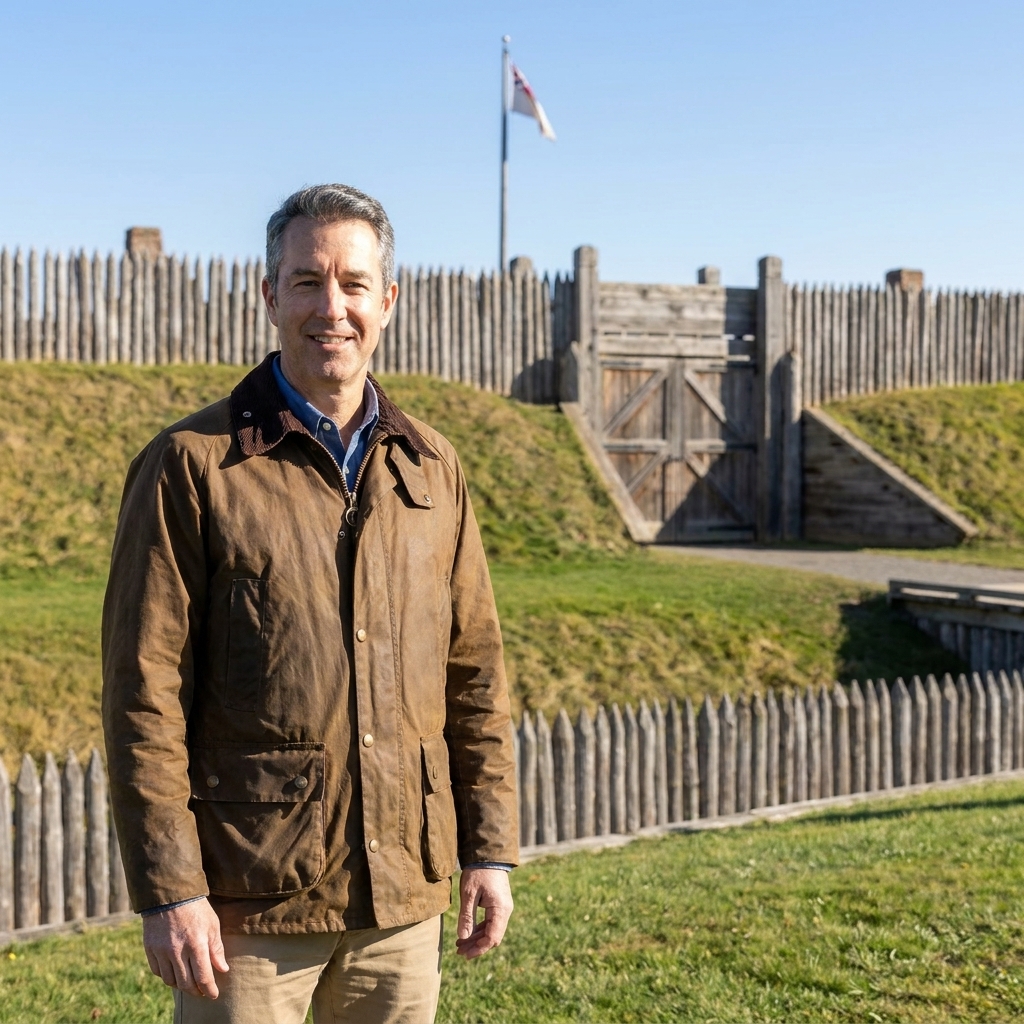
The fort you visit is a meticulous reconstruction, and that is a big part of the appeal. At some sites, you are asking your imagination to do most of the work. At Fort Stanwix, the geometry is right in front of you.
You will see a classic star fort layout designed for overlapping fields of fire, with bastions, ramparts, interior buildings, and a parade ground that helps you picture daily routine under siege conditions. Even if you have toured larger stone fortifications, there is something uniquely instructive about timber and earth. It looks temporary, and then you realize it was strong enough to help change a campaign.

How to tour it well
Start at the visitor center
I always recommend beginning indoors, even if the weather is perfect. The exhibits give you the cast of characters and the stakes, which makes every stop on the ramparts more meaningful. When you step outside afterward, you are not just admiring carpentry. You are tracing where siege lines and gun positions had to make sense on the ground.
Walk the ramparts slowly
On paper, a bastion is just a shape. In person, it is a lesson in sightlines. Take your time on the elevated walkways and look out from multiple angles. Try to spot where attackers would have needed to approach, where defenders could rake the ground with fire, and where a blind spot might have made everyone nervous at night.
Ask about the 1777 siege and Oriskany
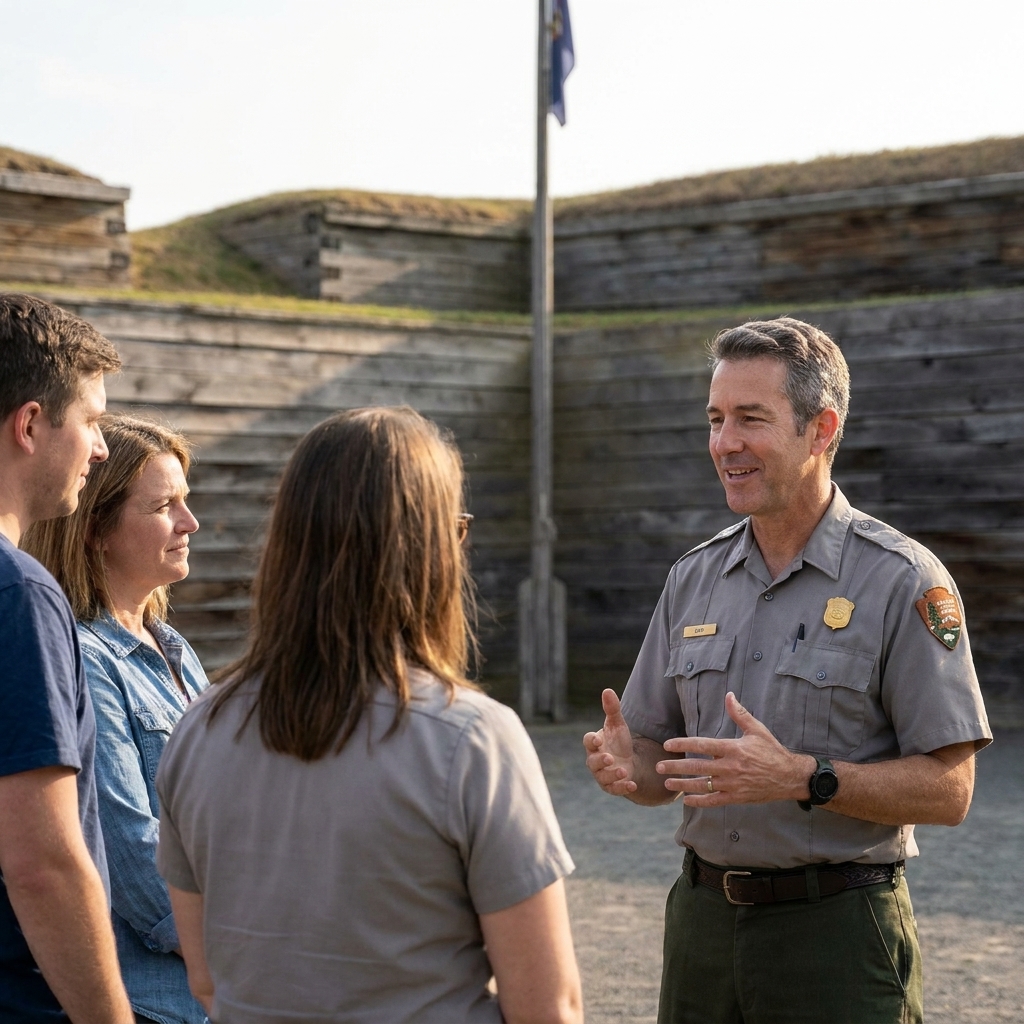
Fort Stanwix is one of those places where a ranger conversation can change your whole visit. The siege is not just a fort story. It is a Mohawk Valley story, tied to militia mobilization, Native diplomacy and alliance, and the bloody shock of Oriskany.
One expectation-setter that helps: Oriskany Battlefield is not next door. It is a separate site a short drive away, and thinking of it as a paired stop (fort plus battlefield) makes the 1777 story click.
If you only have one question to ask, make it this: what did holding this fort prevent the British from doing next?
Save time for the details
Reconstructed forts shine in the everyday objects and spaces. Look for how rooms are sized, where supplies would be stacked, and how quickly a quiet courtyard can start to feel crowded once you imagine a garrison living there for weeks. Those are the moments that make kids start asking the best questions too.
Ranger programs
Fort Stanwix is at its best when you catch it in action. Ranger talks and demonstrations turn the fort from a place you look at into a place you experience. Depending on the day and season, programs often focus on siege life, military engineering, weapons and tactics, or the larger Mohawk Valley campaign.
My advice is simple: build your visit around a scheduled program if you can. Even one half-hour talk can give you the mental framework to understand the fort’s design and the human reality of defending it.
Before you go, check the National Park Service page for current hours and program schedules.
Artifacts and questions
Even in a reconstructed fort, artifacts and original material culture are what keep you anchored in the 1770s. As you move through exhibits and furnished spaces, keep an eye out for items that hint at siege reality: supply constraints, repairs, and the constant chore of staying ready.
Good questions to ask
- How was the fort supplied? The answer is a geography lesson about waterways, portages, and vulnerability.
- What was the garrison’s daily routine? Once you hear it, the rooms and work areas make more sense.
- What did the attackers hope to achieve here? This ties Fort Stanwix directly to the 1777 campaign and the wider frontier war.
- Why do some sources call it Fort Schuyler? The naming story is a great reminder that history is also politics and morale.
Planning your time
If you have 45 to 60 minutes
- Quick pass through the visitor center exhibits
- Walk the parade ground and interior rooms
- One lap around the ramparts for the big picture
If you have 90 minutes to 2 hours
- Visitor center first, then a full fort tour at an unhurried pace
- Double back to the bastions to compare sightlines
- Time your visit around a ranger program if available
If you have half a day
- Attend at least one ranger talk
- Re-walk the ramparts after the program, when the story is fresh
- Use the fort as your anchor for exploring the Mohawk Valley’s 1777 story beyond the walls
If you enjoy building trips around multiple stops, my broader planning approach is laid out here: Plan a Revolutionary War site visit.
Visiting with kids
Fort Stanwix is family-friendly in the best way: it is contained, tangible, and built for movement. Kids can understand “defense” immediately when they are standing on a rampart looking down at the approach.
How to keep it engaging
- Make it a mission: Ask them to find the best lookout point in each bastion.
- Give them one problem to solve: “How would you get food into this fort during a siege?”
- Let them lead: The fort’s layout naturally encourages exploration and backtracking.
If you are building a bigger itinerary designed for younger travelers, you might like: Top battlefields to visit with kids.
Pair it with more New York history
Fort Stanwix makes the most sense when you treat it as a doorway to the frontier war in New York. The Mohawk Valley was a contested landscape where alliances, raids, supply lines, and local loyalties mattered as much as formal battles.
For a bigger-picture companion trip in the same state, consider reading my take on touring the frontier story through one of its most important leaders and places: Joseph Brant and the Iroquois Confederacy sites in New York. And if you are weighing which major New York turning point to visit first, I also break down the travel decision here: Saratoga vs. Yorktown.
Tips for a smooth visit
- Arrive early if you can. The fort feels most authentic when you have space to linger and listen.
- Wear shoes with decent grip. You will want to climb, loop, and re-loop the ramparts.
- Do one rampart lap twice. Once for the views, once for the story after you have the context.
- Bring a small notebook if you are a map person. Fort Stanwix is a site that rewards sketching angles and approach routes, especially if you enjoy old plans the way I do.
If maps are your favorite way to understand what you are seeing on the ground, this will help you get more out of any fort or battlefield: How to read Revolutionary War battlefield maps on site.
In one sentence
Fort Stanwix is where you go to feel how the Revolution looked from the frontier: close, complicated, and defended one angle at a time.
It is a place built around a chokepoint, tested in 1777 by a siege it did not yield to, and remembered for holding fast when the frontier could have snapped. If you want a Mohawk Valley site where the landscape still teaches, even inside a modern city grid, this is the one I send people to first.