

The first time I drove up to Fort Ticonderoga, I understood why people in the 1700s fought so hard over this place. The land pinches down between Lake Champlain and Lake George, and the fort sits right where the north and south want to shake hands. You can feel the geography doing the talking.
This is not a quick stop if you want to do it right. Fort Ticonderoga is one of those rare Revolutionary War sites where you can get your boots dusty, watch interpreters work, and still find quiet corners to stare at the lake and imagine how a wooden boat, a cannon, or an army column looked from the same ridge.
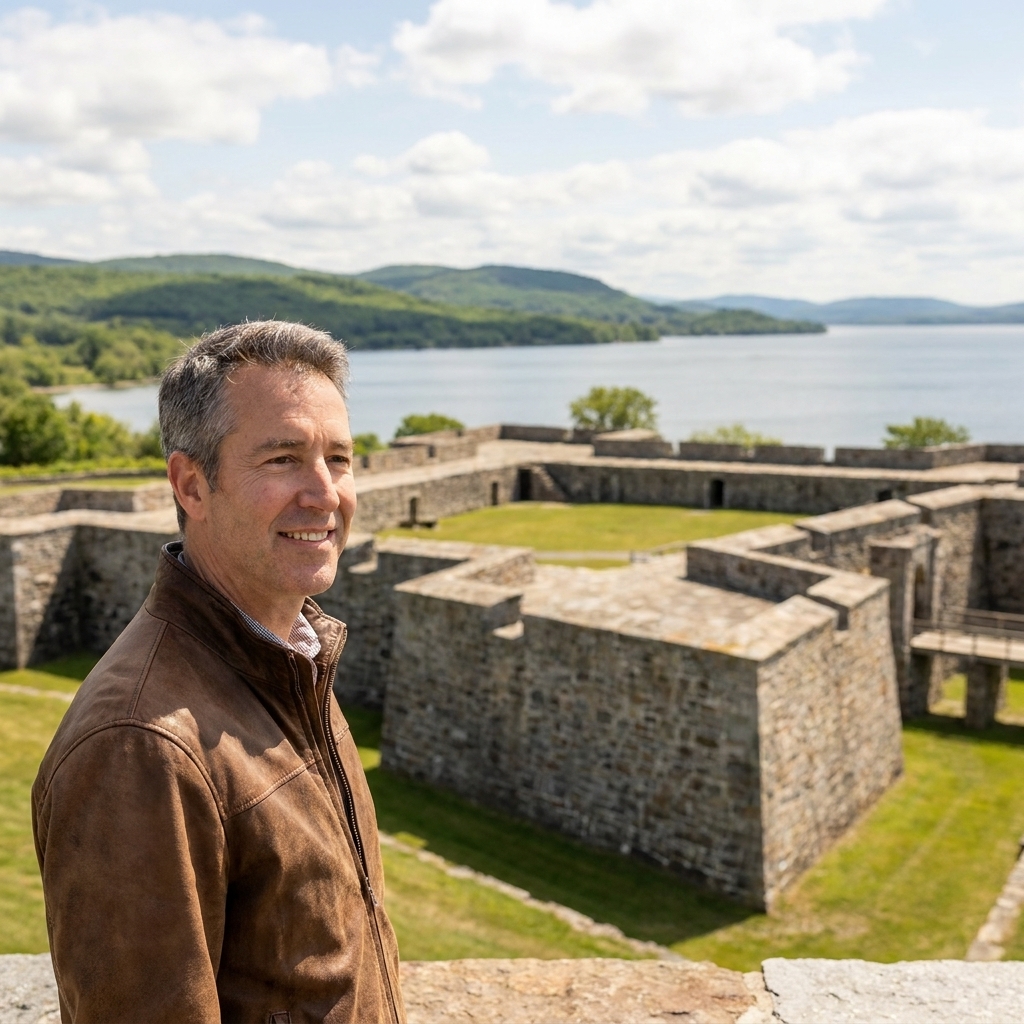
Below is how I’d plan a full weekend, what to prioritize inside the fort, and where to go for the best Lake Champlain viewpoints.
Why it mattered
Fort Ticonderoga’s story is bigger than its walls. This narrow water and portage corridor was the main travel route linking Canada to the Hudson Valley region. Movement here was never one simple, continuous river ride. It was lakes, short carries, and chokepoints that decided who could move men and supplies, and who could threaten major towns.
In May 1775, Ethan Allen, Benedict Arnold, and the Green Mountain Boys took the fort by surprise. The “who gets the credit” question is part of the story, but the result is the point for visitors: the Patriots suddenly had artillery they desperately needed.
Those cannons later became part of Henry Knox’s winter transport to Washington, and they helped make Dorchester Heights defensible and force the British to reconsider holding Boston.
If you want to follow Arnold’s complicated thread through the war, I’ve got more context in Following Benedict Arnold. Seeing Ticonderoga in person adds weight to those early-war choices.
And Ticonderoga does not end in 1775. In 1777, during Burgoyne’s campaign out of Canada, the British hauled artillery onto the surrounding heights, including Mount Defiance. Once guns could look down into the fort, the American position became untenable. That single fact, high ground beats even strong walls, is one of the clearest on-site lessons you can take home.
Before you go
How much time you need
- Minimum: 3 to 4 hours for the fort and a quick look at the grounds.
- Better: 1 full day to catch demonstrations, exhibits, and viewpoints without rushing.
- Ideal: A full weekend so you can include the mountaintop view, the gardens, and slower, deeper museum time.
Simple logistics that help
- Hours and programs vary by season: Treat the daily schedule as part of the experience and plan your loops around it.
- Terrain is real: Expect uneven stone, packed earth, grass, and some stairs. If anyone in your group has mobility concerns, build in extra time and more sitting breaks.
- Tickets and entry flow: Busy weekends can feel different than quieter weekdays, so arriving earlier makes everything smoother.
What to bring (my “site day” basics)
- Comfortable walking shoes with traction. Stone, packed earth, and grass add up fast.
- A light layer, even in summer. Lake wind has a way of sneaking into your plans.
- Water, sunscreen, and bug spray for the outer paths and viewpoints.
- If you’re traveling with kids: a small notebook for “things I noticed” and a snack strategy. It makes museum time smoother.
If you like building trips around a place instead of a checklist, my general approach is in Plan a Revolutionary War Site Visit.
What to see inside
Fort Ticonderoga rewards people who slow down and let the details do their work. Here are the core experiences I’d build your visit around.
1) The fortifications
Start with the walls, gates, and angles. Star forts were designed to reduce blind spots, and once you notice how the lines of fire overlap, the whole structure starts to make sense. Walk the perimeter and look outward, not inward. Ask yourself what an approaching force would have seen.
2) Military life up close
This is a site where interpretation often feels physical. You are not just reading labels. You’re watching skills in motion, like musket drill, artillery routines, camp tasks, and the small habits that turn a crowd of men into a unit that can hold a position.
If you’ve visited places like Valley Forge, you’ll recognize the idea that training and discipline could be as decisive as gunpowder. For that broader lens, see Baron von Steuben at Valley Forge.
3) The museum exhibits
Make time for the indoor exhibits. My rule is simple: when the weather is gorgeous, everyone crowds the walls. Use that to your advantage. Duck into the museum spaces mid-day, then return outside later when the light improves and some families head out.

Live demos
Fort Ticonderoga is at its best when you plan around the day’s schedule. Demonstrations vary by season, but the rhythm is often similar.
- Arrive early so you can orient yourself and be in place for the first major program.
- Ask a staff member what they think is the can’t-miss event that day. The best tip is usually human, not printed.
- Watch from two angles if you can. For anything involving formations or firing demonstrations, the experience changes when you can see both the front and the side.
And a small thing that makes a big difference: after a program, linger for two minutes. Interpreters are often happy to explain the “why” behind what you just saw, and those are the details you remember on the drive home.
Best viewpoints
Lake Champlain is not background scenery here. It’s the main character. These are the viewpoints I build into a weekend.
From the walls
The most accessible panoramic views come right from the fortifications. Walk until you find a quieter stretch and just look. You’ll notice how the water corridor guides the eye north and south like a long, natural road.
Mount Defiance
If you only do one “outside the walls” viewpoint, make it Mount Defiance. Today, depending on season and conditions, you may be able to drive up for the overlook or tackle it on foot if you want to earn it. Either way, the point is the same: it gives you a map-like understanding of why the fort sits where it does, and why 1777 turned on artillery getting to the high ground.

On the grounds
Even without a major hike, the grounds provide smaller, quieter lake glimpses. These are great for families because they feel like mini-adventures without becoming a long trek.
Two-day plan
If you want a weekend that feels full but not frantic, here’s a structure that works well.
Day 1: Fort first
- Morning: Arrive early, walk the fortifications, and get your bearings.
- Late morning to early afternoon: Prioritize at least one major live program and then spend focused time in the exhibits.
- Late afternoon: Re-walk your favorite sections of wall when the crowds thin.
- Evening: Chase the best light for photos and lake views. The fort can be striking at golden hour.
Day 2: Views and details
- Morning: Do Mount Defiance early for cooler temps and clearer air.
- Midday: Return to the site for anything you missed: a second demonstration, a slower museum pass, or a more deliberate walk with your camera.
- Afternoon: End with a “last lap” around the fort, picking one question to follow, like how supply moved, how the fort covered approaches, or what daily life required.
With kids
I’ve brought families to a lot of battlefields and forts, and I’ve noticed something: kids do best when they have a mission, not a lecture. At Ticonderoga, I like to give them one or two spotting challenges.
- Find the strongest corner of the fort and explain why it feels strong.
- Look for places where soldiers would have needed to hurry, carry, or haul.
- Pick one object in the museum and invent its story, then check the real label.
If you’re building a larger family history road trip, you may also like Top 5 Revolutionary War Battlefields to Visit With Kids.
Make it click
When you’re standing on the walls with Lake Champlain shining behind you, it’s easy to get swept up in the postcard view. Try anchoring your visit with a few “notice this” details:
- Lines of sight: Where can you see far? Where does the terrain hide movement?
- Distances: How long would it take to move supplies from water to fort to higher ground?
- High ground: Look up at the surrounding heights. Ticonderoga teaches the hard lesson that even the best walls in the world are vulnerable when someone can look down into them.
If you enjoy interpreting landscapes on-site, you might also like my guide to reading terrain and positions in How to Read Revolutionary War Battlefield Maps On-Site.
FAQ
Is it worth it if I only know the basics?
Yes. In fact, it’s one of the best places to learn because the landscape explains the strategy for you. The waterways, chokepoints, and surrounding heights are easy to grasp once you are standing there.
Can I see it all in one day?
You can see the highlights in one day, especially if you arrive early and plan around demonstrations. A weekend is what turns the visit from highlights into understanding.
What’s the single best view?
For the grand, “now I get it” perspective, Mount Defiance is hard to beat. For a constant, atmospheric presence, the views from the fort walls give you Lake Champlain as the backdrop to everything you’re learning.
One last thought
Fort Ticonderoga is sometimes introduced as a fort, a battle, or a famous capture. I think of it as a hinge. Stand on those walls and you can feel how North America’s roads used to be made of water and portage, and how a single narrow corridor could shape decisions from Boston to Quebec.
Take your time, watch the light move over the lake, and let the place tell you why it was called the Gateway of the Continent.