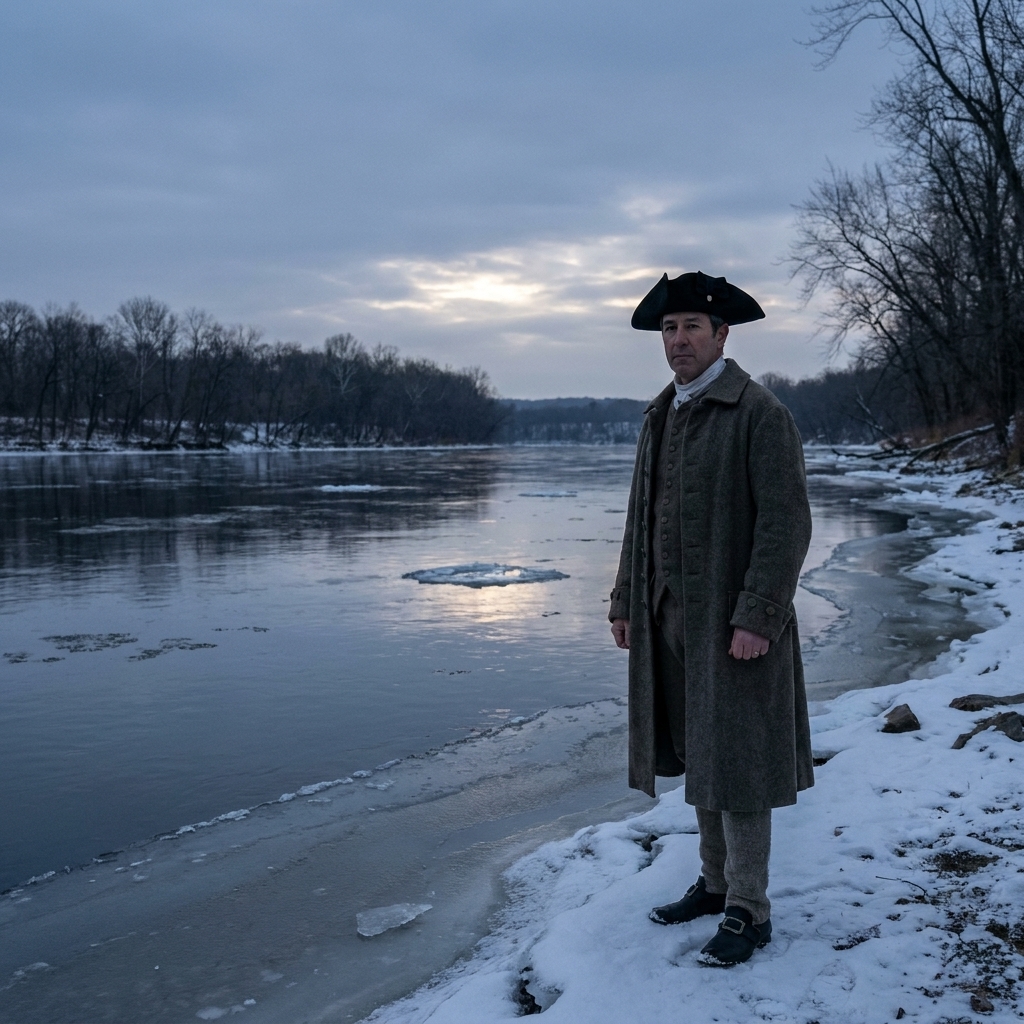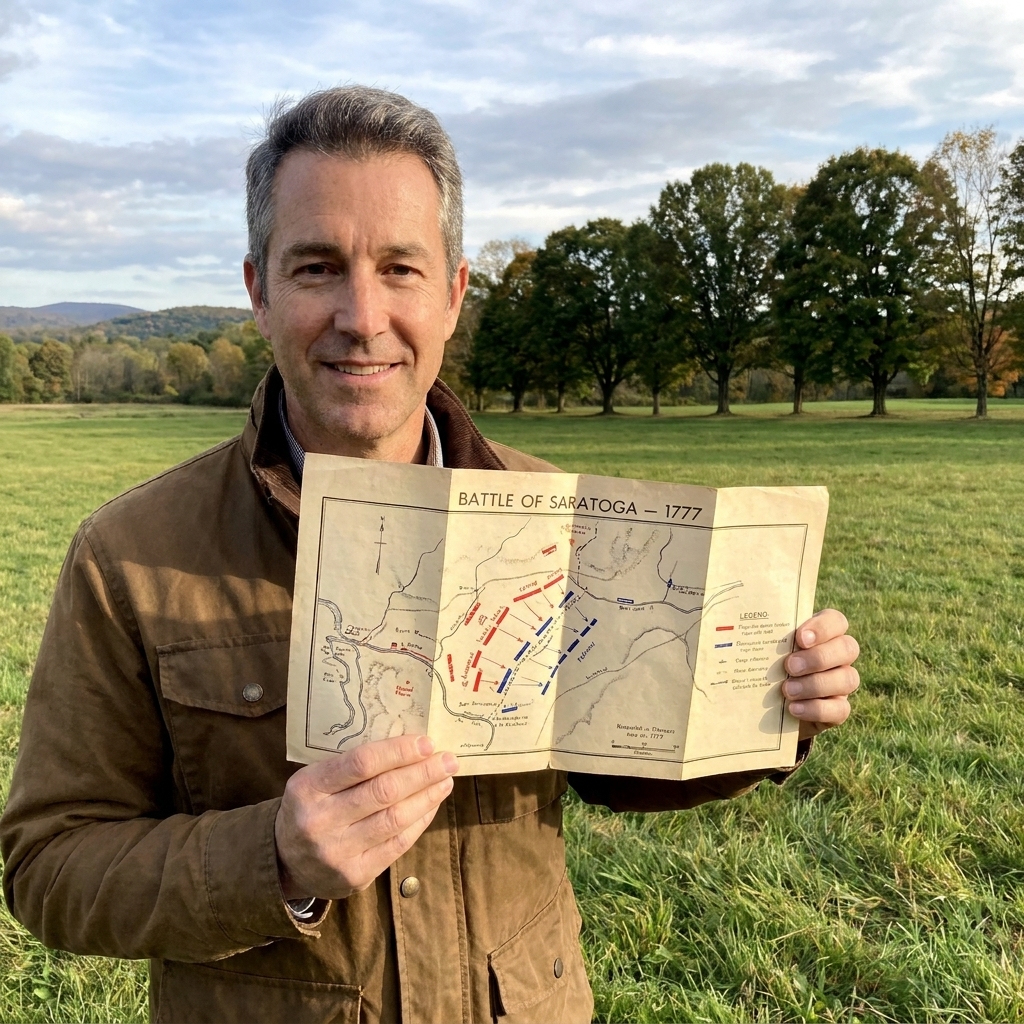

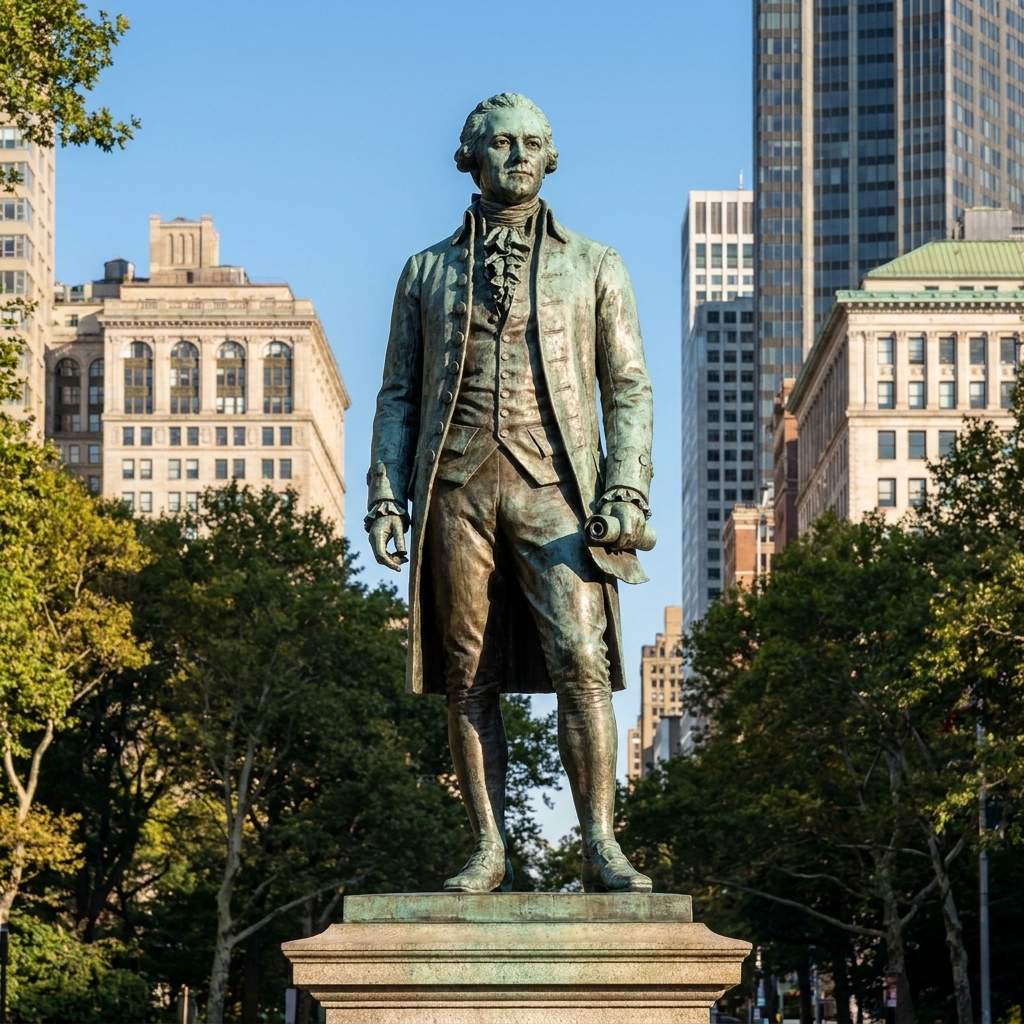
I love the musical as much as anybody, but the first time you stand on a real Revolutionary War landscape tied to Alexander Hamilton, something shifts. The lyrics fall away, and you start noticing the details Hamilton would have noticed: the angle of a hill, the distance to a river crossing, the way a gun position can dominate a road.
Hamilton’s wartime story is not one long montage. It is an actual working military career that moved from early artillery service in the 1776 New York campaign, to years of staff work at Washington’s side, and finally to a violent, close-range assault at Yorktown.
Below are five places where you can step into that career with your own two feet, with a practical sense of what to look for on site.
1) Battery Park, NYC (harbor perspective)

If you want the start of Hamilton’s military arc, you want Lower Manhattan and the harbor, at least as an orientation. Hamilton organized and led an artillery company in 1776, and the defense of New York revolved around water approaches, roads, and where guns could actually influence movement.
A quick reality check helps here: the shoreline and the fortifications around the tip of Manhattan were different in 1776 than they are today. Battery Park is a modern vantage point, not a claim that you are standing on Hamilton’s exact gun line. What it does give you is the best simple view of the problem that shaped the whole campaign.
What to do when you’re there
- Start at the waterline. Walk the promenade edge and scan the harbor. Think lanes of approach, not heroics. Where can a ship go, and where would you want to discourage it?
- Pick two points and connect them. Choose a visible harbor channel and then choose a spot inland. Now imagine trying to coordinate fire and movement between them with smoke, noise, and confusion.
- Turn inland and look for the subtle rise. From the park edge, head a short distance into the street grid and pay attention to small elevation changes. Even after centuries of grading and fill, you can still feel why the southern tip of Manhattan was an awkward place to defend and an even harder place to escape.
Travel note: This stop is easy to do in an hour, but it becomes much more meaningful if you slow down long enough to picture visibility and range, rather than just checking off a landmark.
2) Harlem Heights, Manhattan (morale terrain)

After the defeats around New York in 1776, the Continental Army desperately needed a moment that proved it could stand and fight. The Battle of Harlem Heights did not end the campaign, but it mattered for morale.
Hamilton served in the New York campaign that season, and Harlem Heights is one of the best landscapes in New York City to visit if you want to understand the psychological side of the war: the part where an army learns, painfully, how to survive. I treat this stop as an interpretive window into that phase of the war, not as proof that Hamilton stood on one exact patch of grass you can point to today.
What to notice on the ground
- Rises that force decisions. “Heights” is not poetry. Even modest elevation changes decide who can see, who can be seen, and where skirmishing can flare.
- Crest to hollow. Walk from a high point down into a low spot and then back up. That simple up and down teaches you how quickly a line can lose contact and how easily a chase becomes a trap.
- Edges and transitions. Look for places where open ground gives way to cover. Those transitions are where confidence, caution, and chaos meet.
- Distance, honestly measured. Walk longer than you planned. A huge visitor mistake is underestimating how far a “short” fight can stretch across broken ground.
If you enjoy reading terrain in person, you will get more out of this stop if you review the basics before you go. My on-site approach to interpreting the land is laid out here: How to Read Revolutionary War Battlefield Maps On-Site.
3) Morristown, NJ (headquarters life)
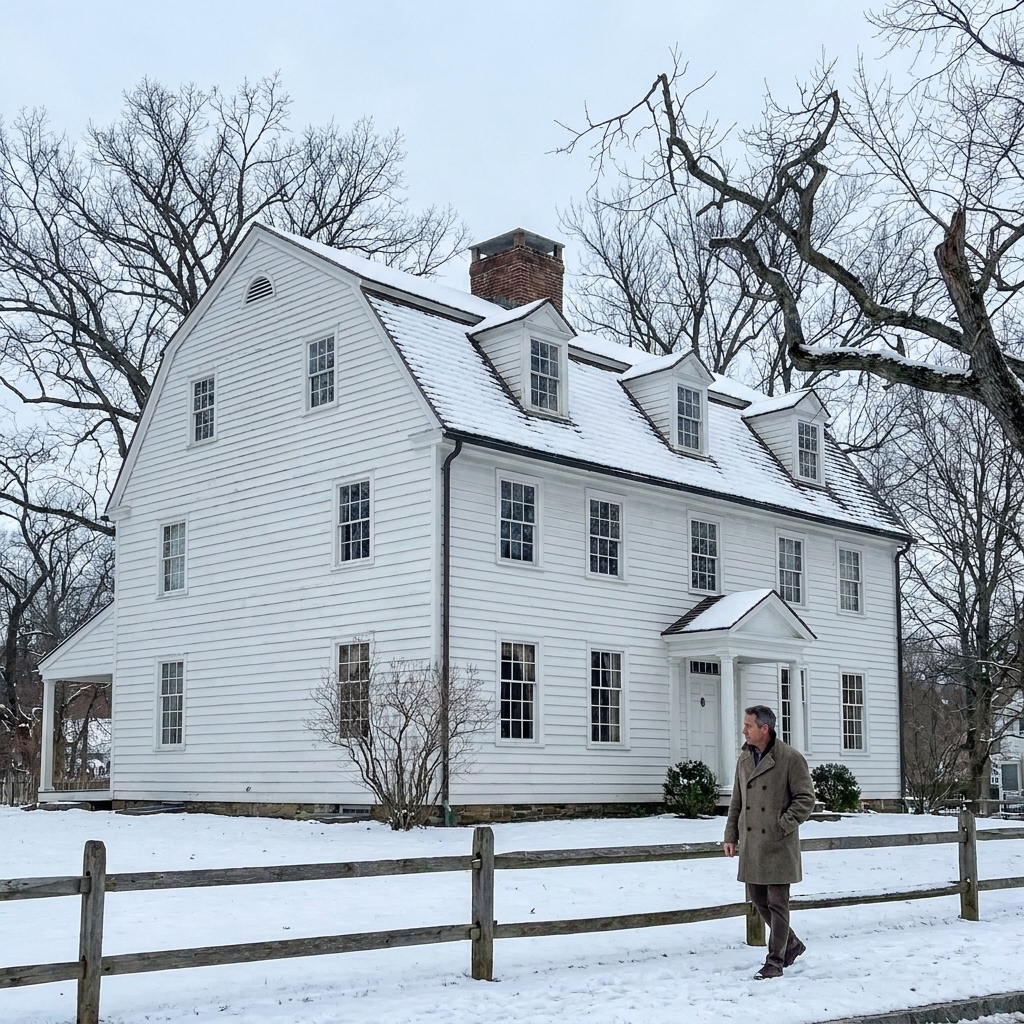
When Hamilton became Washington’s aide-de-camp in 1777, he entered the nerve center of the war. Staff work is not glamorous, but it is where campaigns become real: orders drafted, intelligence weighed, logistics argued over, tempers managed, and decisions locked in.
Morristown is one of my favorite places to feel that headquarters side of the Revolution. Even if you are not trying to pin Hamilton to a specific doorstep on a specific day, it is an outstanding place to understand the kind of environment Washington’s staff worked in: cramped rooms, constant paperwork, and decisions made with winter outside the window.
How to visit with Hamilton in mind
- Think paper, not powder. In headquarters settings, picture Hamilton writing, copying, and carrying, then rewriting again after Washington changes a line.
- Stand in a doorway and listen with your eyes. Look into a small room and imagine multiple officers talking at once, under pressure, on deadline, with lives attached to every sentence.
- Follow the “in and out” path. Move from the main rooms toward the edges and back again. Headquarters work is constant interruption. You are trying to feel the rhythm of urgent messages arriving, getting shaped into orders, and going back out.
- Count the daily essentials. Food, shoes, forage, wagons, intelligence. The war makes more sense when you imagine the daily list that had to happen before anyone could fight.
Planning note: If you are building a trip around sites like this, I put my general approach to pacing, timing, and what to prioritize here: Plan a Revolutionary War Site Visit.
4) Trenton and Princeton (artillery campaign)

If you want to meet Hamilton before the staff years, meet him with the artillery. His early reputation was built around competence and speed, and the late 1776 to early 1777 turnaround depended on exactly that: moving men and guns through miserable conditions, then making them count when the moment opened up.
Because unit movements and exact participation can get technical fast, I treat Trenton and Princeton as a way to understand the kind of artillery war Hamilton came out of, and the campaign geography that shaped the army he later served on Washington’s staff. These stops are the best “feel it in your legs” experience I know for understanding the war as motion rather than as a single battlefield postcard. If you want to follow the geography in a coherent way, I recommend using this route-based guide: Following Washington’s Crossing: Trenton and Princeton.
What to focus on
- Roads that choose for you. Ask yourself where a column has to go, not where you would like it to go. Rivers, bridges, narrow lanes, and town streets decide what is possible.
- Corners and choke points. When a road bends or narrows, stop. Look forward, then look back. Picture a gun trying to get through with infantry pressing behind it.
- Gun problems, not just gun glory. When you see a rise or a tight street, ask: Could you get a piece up there? Could you get it back down? Could you feed it ammunition in bad weather?
- Time and cold. Stand still for a minute and imagine doing the next five miles in winter conditions, then fighting at the end of it.
5) Yorktown, VA (Redoubt 10)
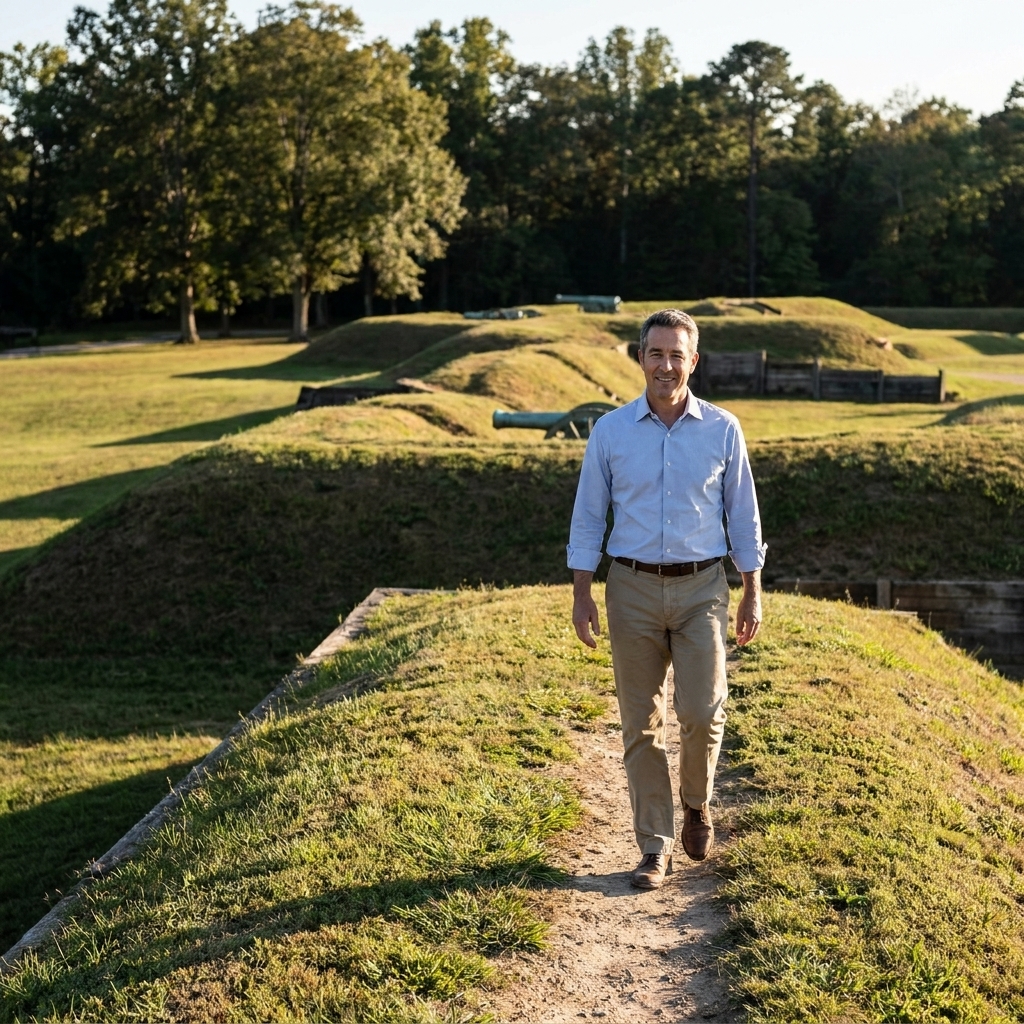
If you only visit one Hamilton site, make it Yorktown. In October 1781, after years of staff duty and earlier combat experience, Hamilton got the kind of independent, high-stakes combat command he had been pushing for. During the Siege of Yorktown, he led American troops in the nighttime assault on British Redoubt No. 10, a key position that helped tighten the noose around Cornwallis.
This is one of those places where the ground itself does the storytelling. You can look at the distance, the angles, the sudden closeness of it, and understand why the assault became legend.
How to stand there and really see it
- Approach in stages. Walk toward the earthwork, then stop, then walk again. Let the distance shrink the way it would have for the attackers in the dark.
- Walk the line, then face outward. Once you are up near the work, turn around and look back the way the attackers came. That reverse view clarifies what “exposed” actually means.
- Get down at embankment level. From a distance, an earthwork looks manageable. Up close, it becomes a wall that has to be climbed while someone shoots at you.
- Remember the larger machine. Yorktown was French and American pressure working together. Hamilton’s moment sits inside a much bigger operation.
Trip building tip: If you are weighing major turning point destinations, I wrote a comparison that helps frame expectations and time commitment: Saratoga vs. Yorktown: Which Turning Point Battlefield Should You Visit First?
Two simple itineraries
Itinerary A: Hamilton in New York (1 to 2 days)
- Day 1: Battery Park for harbor orientation, then head uptown for Harlem Heights terrain and a “fight for morale” perspective.
- Day 2 (optional): Give yourself time to walk longer routes, recheck sightlines, and revisit the ground that made the most sense to you on foot.
Itinerary B: Hamilton’s finale (2 days in Virginia)
- Day 1: Yorktown earthworks and siege lines, unhurried.
- Day 2: Return to the key points in better light. It is amazing how much more you notice on a second pass, especially with earthworks.
What the sites teach
Hamilton’s real story is not just ambition. It is distance, terrain, paperwork, fatigue, and then sudden violence when the moment finally arrives.
The musical gives you the emotion and the arc. The sites give you the scale. Once you have stood where a harbor approach comes into view, where ridgelines force decisions, and where earthworks turn a few yards into a deadly obstacle, you start reading Hamilton differently. More human, more complicated, and frankly more impressive.
If you want more people-focused trips like this, you can browse my hub here: Guide to Revolutionary War People. For broader trip inspiration, I keep my site planning approach here: Guide to Historic Sites.