

I still remember the first time I stood on a quiet ridge at Brandywine in Pennsylvania and tried to picture a young French nobleman riding into musket smoke like he owned the place. The Marquis de Lafayette had money, connections, and a name that opened doors in Europe. In America, he earned something harder: trust. And if you want to understand why Americans loved him and why Washington relied on him, you do not start with a statue. You start where Lafayette got shot, where he learned to command, where he retreated in good order, and where he helped close the trap at Yorktown.
This guide is built as a trip you can actually take. It follows Lafayette’s most important American battlefields and a few campaign context stops in roughly the order that makes sense on the road. Think of it as a “walk the war” route: Mid-Atlantic beginnings, a detour into New England, then the long Virginia campaign that made Lafayette more than a symbol.

Before you go: If you are new to walking battlefields, start with my field-friendly primer on reading battlefield maps. It will make every stop below click faster once you are on the ground. How to read Revolutionary War battlefield maps on site.
Lafayette’s story in one minute
Lafayette arrived in 1777, offered to serve without pay, and proved quickly he was not just a rich kid chasing glory. He was wounded at Brandywine, held his nerve, and turned that injury into instant credibility. Over the next few years he became Washington’s trusted lieutenant, fought at Barren Hill and Monmouth, served as a key liaison during the Rhode Island campaign, and later took a central role in Virginia in 1781, shadowing Cornwallis, refusing a ruinous fight, and buying time until the Franco-American hammer fell at Yorktown.
If you visit only a few places, prioritize the sites where his role is clearest: Brandywine for the beginning, Virginia for the maturity, Yorktown for the finish.
The itinerary at a glance
- Day 1 to 2 (Pennsylvania): Brandywine and Philadelphia Campaign context
- Optional add-on (Pennsylvania): Barren Hill, a sharp lesson in escape
- Optional add-on (New Jersey): Monmouth Court House
- Day 3 (Rhode Island): Battle of Rhode Island, the alliance stress test
- Day 4 to 6 (Virginia): Richmond region, the Cornwallis chase, Green Spring, and Yorktown
Not every traveler has a week. If you have three days, do Brandywine plus Yorktown. If you have five, add at least one Virginia campaign stop between them.
For general trip-planning basics, parking expectations, and what I keep in my car for site days, see Plan a Revolutionary War site visit.
Stop 1: Brandywine (Pennsylvania)
Why it matters for Lafayette: This is where Lafayette earns his place in the story. On September 11, 1777, the British outflanked Washington near Chadds Ford. Lafayette, newly arrived and still new to American command culture, was wounded but stayed in the saddle and helped rally troops during the retreat. That mix of bravery and steadiness under pressure is exactly what Washington valued.
Age note: Lafayette had arrived in America at 19, but he had just turned 20 days before Brandywine, on September 6.

How to visit it like a battlefield
- Stand near the crossing points and think in terms of movement, not monuments. Where could an army cross? Where could it be surprised?
- Look for lines of sight. Lafayette’s first campaign was full of partial information, bad roads, and guesses. What can you see from a rise? What disappears behind trees and folds in the land?
- Give yourself time for the retreat story. Brandywine is often described as a defeat, but it is also a lesson in how armies survive. Lafayette’s reputation began in the moments after things went wrong.
Easy add-on nearby
If you want Brandywine to feel like the opening chapter of a larger campaign, add a second stop that day that is not a battlefield at all. Drive into Philadelphia and walk a few blocks with occupied-city questions in mind: How would an army feed itself here? Where would prisoners go? What happens to ordinary life when the war moves in for a season? You will come back to Brandywine with better instincts for why Washington could not simply “try again tomorrow.”
Pair it with: For framing the war’s impact on everyday people, my jumping-off point is Guide to Colonial Life.
Stop 2 (optional): Barren Hill (Pennsylvania)
Why it matters for Lafayette: Barren Hill (May 1778) is the kind of episode that never quite becomes a famous painting, but it tells you what Lafayette was really becoming: a commander who could keep his head when the map went bad. British forces attempted to cut him off. Lafayette slipped his command out through tight ground and bad options and lived to fight another day.
What to look for: Think about routes more than positions. Where can a small force move without being seen? Where do roads pinch? When you stand on a rise, ask yourself what you would assume if you were the British, and then look for the “unreasonable” way out that actually works.
Stop 3 (optional): Monmouth (New Jersey)
Why it matters for Lafayette: Monmouth (June 28, 1778) shows the Continental Army growing into itself after Valley Forge. Lafayette plays a key role in the opening phases and, just as importantly, in keeping the army coordinated when command confusion threatened to unravel the day. If Brandywine is Lafayette’s dramatic entrance, Monmouth is him operating inside the machine.
How to experience it well: This is a battlefield where heat and distance are part of the story. Build in extra walking time, bring water, and try to follow the action in sequence. This is where having even a simple map and the patience to stop and orient yourself pays off.
If you are traveling with kids: Monmouth can be a lot of ground. For family-friendly pacing ideas that work on big sites, see Top 5 Revolutionary War battlefields to visit with kids.
Stop 4: Rhode Island (Aquidneck Island)
Why it matters for Lafayette: Rhode Island (August 1778) is one of the most important “almost” victories of the war. The Americans attempted to coordinate with the French fleet to capture Newport. Weather and miscommunication turned the campaign into a difficult retreat and a hard fight. Lafayette’s role here is not “overall command.” It is influence. He is a key go-between, trying to keep an alliance functional under stress.

What to look for
- Coastal geography. This campaign is shaped by water, wind, and naval realities. Stand where you can see the shoreline and ask what a commander could or could not do once storms scattered ships.
- Retreat routes. Like Brandywine, part of the story is how an army gets away intact.
- The alliance at human scale. Rhode Island is a reminder that Lafayette’s superpower was not only courage. It was persuasion.
Stop 5: Virginia campaign
In 1781, Lafayette is no longer learning the war. He is running it, at least a critical slice of it. Virginia is where you can track him making grown-up decisions: when to fight, when to withdraw, when to threaten supply lines, and how to keep Cornwallis from swallowing the state before help arrives.
This part of the trip is less about a single fenced battlefield and more about a campaign landscape. Treat it as a chain of stops, each one explaining a piece of the chessboard.
Virginia Stop A: Richmond and the James River
Why it matters: Richmond and the surrounding river routes were strategic arteries. Lafayette spent much of this campaign protecting supplies, keeping his smaller force intact, and denying Cornwallis an easy, decisive victory.
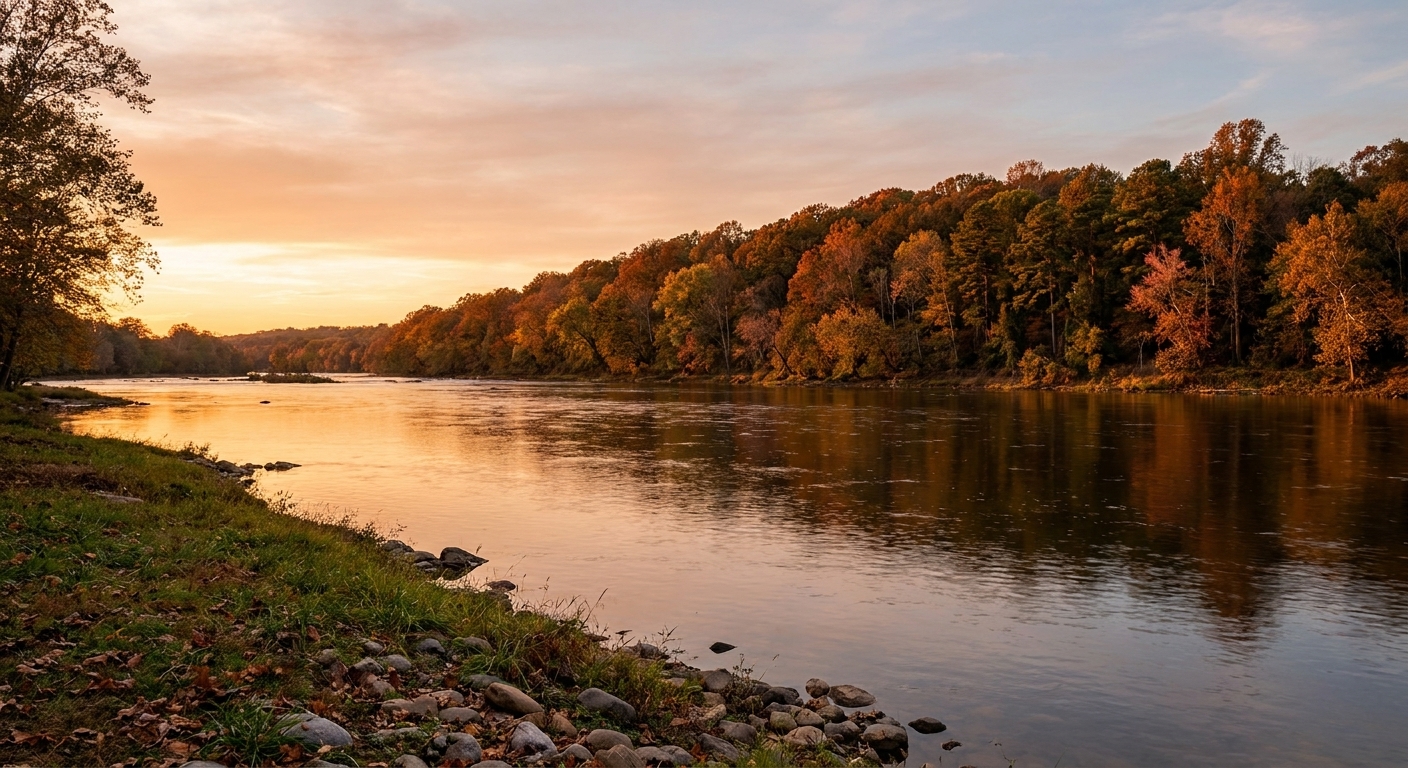
- Do this on site: Find a view of the river and trace it with your eyes like it is a road. Ask where an army could cross quickly and where it would bottleneck.
- Watch the distances: Virginia is where you start to feel how exhausting it is to keep an enemy at arm’s length for weeks.
- What Lafayette is doing here: Delaying. Surviving. Forcing Cornwallis to chase shadows.
Virginia Stop B: Green Spring (near Williamsburg)
Why it matters: Green Spring (July 1781) is one of the clearest examples of Lafayette’s caution paying off. Cornwallis used terrain and timing to offer bait and set a larger trap. Lafayette probed, sensed the danger, and pulled back before committing his whole force. If you want a single episode that explains why Washington trusted him with independent command, it is this: he did not throw away an army for pride.
On-site mindset: Look for tight terrain, limited approaches, and places where a commander could be lured forward. Even if modern development has changed the views, the lesson remains. In Virginia, Lafayette learned to assume the enemy was offering bait.
Virginia Stop C: The road to Yorktown
Once Cornwallis moved to Yorktown, Lafayette’s job became containment. He kept pressure on the British, watched for breakouts, and coordinated with the arrival of French forces and naval power that made escape far harder. In travel terms, this is where your Virginia trip stops being scattered and starts pointing like an arrow.
- Do this on the drive: Notice how often water and low ground dictate the easiest routes. The peninsula geography is part of the siege before the first trench is dug.
- Ask one question: If you were Cornwallis, where would you try to slip away, and what would you need for that to work?
Stop 6: Yorktown (Virginia)
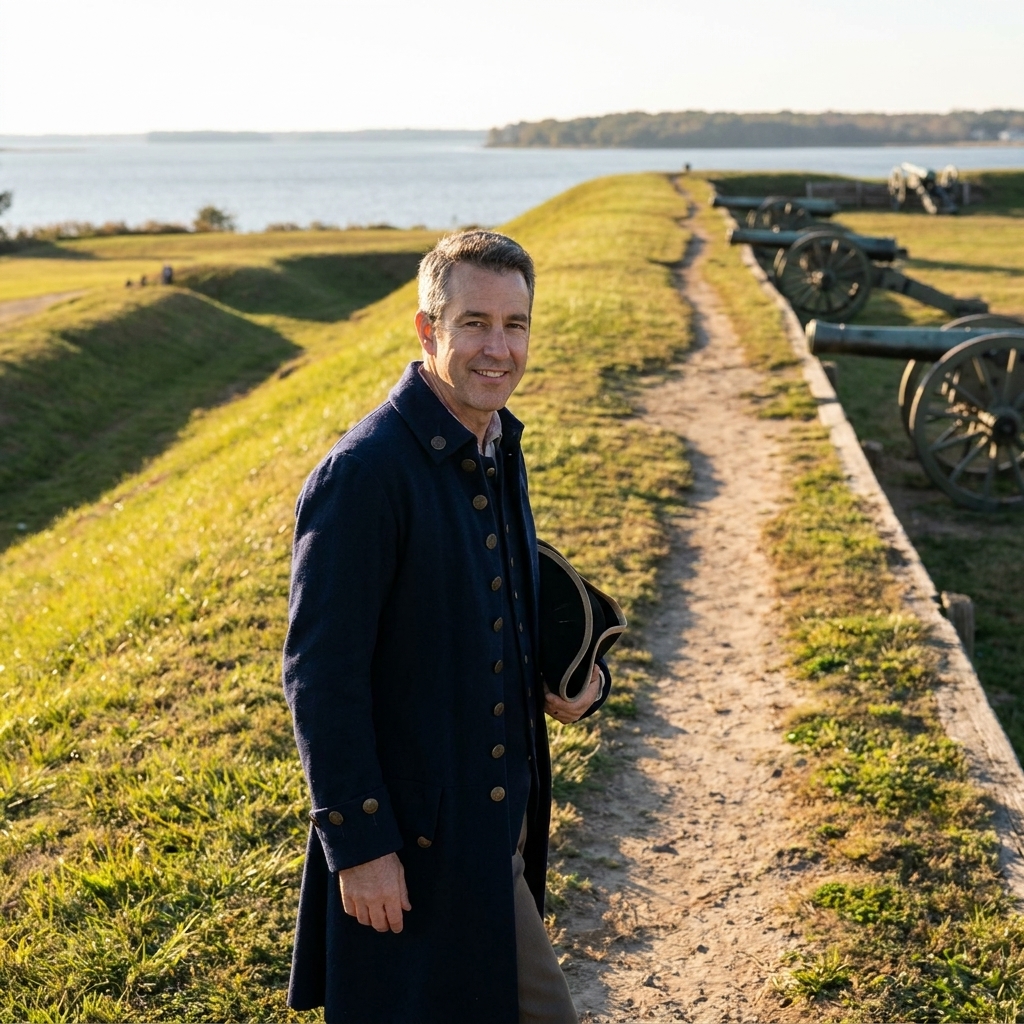
Why it matters for Lafayette: Yorktown is the culmination of years of relationship-building and hard lessons. Lafayette commanded troops in the siege lines, including light infantry, and helped keep pressure on British positions as the Franco-American plan tightened. If you have never visited, prepare yourself for how compact it feels. This was a world-changing event fought in a surprisingly small area.
How to visit Yorktown
- Spend time at the siege lines. You will understand the siege faster by walking the earthworks than by reading a dozen signs.
- Think like an engineer. Where would you place guns? Where would you dig? Where would you hide movement at night?
- Do not skip the context drive. Yorktown makes more sense if you also explore how forces moved in and out of the peninsula landscape.
If you are deciding which turning point battlefield to prioritize on a first big trip, I wrote up my honest take on how Yorktown compares with Saratoga as a travel experience here: Saratoga vs Yorktown: which turning point battlefield should you visit first?
Two mini-trips
Mini-trip 1: First blood (Pennsylvania)
- Day 1: Brandywine battlefield landscape and Chadds Ford area
- Day 2: Philadelphia Campaign context, either a second look at Brandywine from a new angle or a walk in Philadelphia with “occupation logistics” in mind
Mini-trip 2: The closer (Virginia)
- Day 1: Richmond and James River context, then an evening in Yorktown
- Day 2: Yorktown siege lines and battlefield stops with time to walk, not just drive
Habits that help
- Arrive early. You want low traffic and good light. It is easier to read terrain when you are not rushed.
- Carry a simple paper map or saved screenshots. Cell service is not guaranteed in the spots where you most want it.
- Walk one ridge line or one road segment on purpose. Even fifteen minutes of intentional walking teaches more than an hour of hop-in, hop-out driving.
- Let the place be quiet. Lafayette’s story is not only the big moments. It is also the long miles between them.
For more site ideas beyond Lafayette, my starting hub pages are Guide to People, Guide to Battles, and Guide to Historic Sites.
FAQ
What is the single best Lafayette site to visit?
If I had to pick one place where you can feel the shape of his whole arc, I would choose Yorktown, then read backward through the trip. If you want the best origin moment, choose Brandywine.
How old was Lafayette at Brandywine?
He was 20 at Brandywine. He arrived in America at 19, and he had just turned 20 five days before the battle.
Is this itinerary good for first-time battlefield visitors?
It is, as long as you give yourself permission to go slow. These are big landscapes and you do not need to collect every marker. If you are new to this kind of travel, start with my practical planning guide: Plan a Revolutionary War site visit.