

I grew up in Pennsylvania, and some of my earliest history memories are not from museums. They are from creaky floorboards, low ceilings stained by centuries of smoke, and the particular hush you feel when a building has heard too much to ever be truly quiet.
Revolutionary War taverns were more than places to drink. They were the community bulletin board, the courthouse hallway, the recruiting office, and the rumor mill. You could walk in for a mug of ale and walk out with a cause, a commission, or a coded message.
Below are seven taverns and inns you can still visit today. A few are preserved or restored. A few are legacy stops where the original structure is gone, but the story still lives in the street grid and the nearby waterfronts. Each one, in its own way, helps you feel how the Revolution traveled: by road, by rumor, and by whoever happened to be sitting close enough to overhear.
What feels authentic
Before we dive into the list, here is what I look for when I am deciding whether a place feels like a true Revolutionary War stop or just a modern restaurant wearing a tricorn hat.
- A surviving 18th-century structure or, at minimum, a documented room, footprint, or foundation tied to the period.
- Documented wartime use such as quartering troops, hosting officers, serving as a meeting place, or appearing in local records and letters.
- A sense of place like original beams, uneven stairs, thick stone walls, or a street layout that has not changed much.
- Context nearby such as a battlefield, waterfront, courthouse green, or crossroads that explains why people gathered there.
If you want to build a whole trip around places like this, start with my broader planning page: Plan a Revolutionary War site visit.
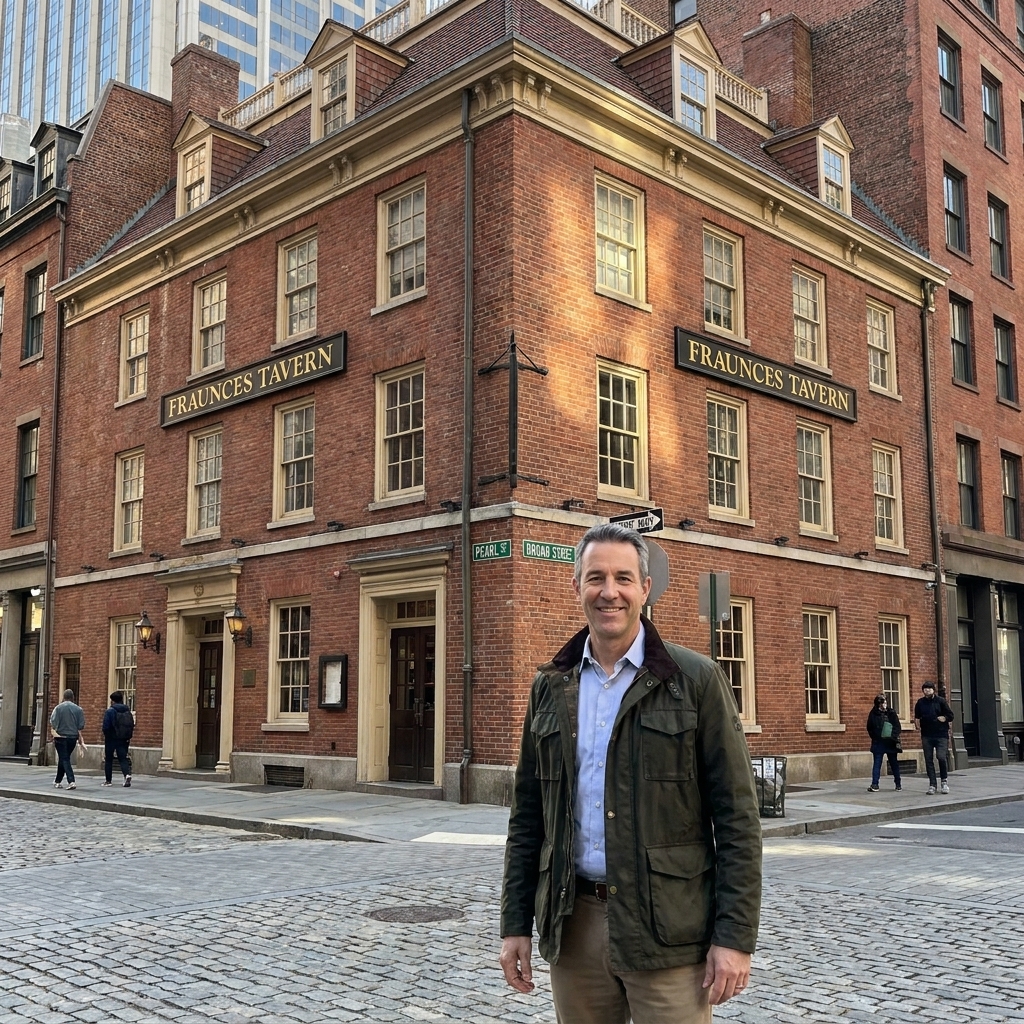
1) Fraunces Tavern (New York City, New York)
If you want a tavern where the Revolution feels close enough to touch, Fraunces is the classic. This is the spot most visitors associate with Washington's farewell to his officers. Even knowing the building has a long life story, with preservation and restoration along the way, the rooms still carry the right kind of weight.
Why it matters: Fraunces Tavern served as a gathering place for patriots and a key Revolutionary era landmark in New York. Washington’s farewell is the headline, but the deeper story is that this building sat at the pulse point of a city that changed hands and loyalties constantly.
What you see today: A working tavern and a museum in a landmark building, with interpretive spaces that help you connect objects to place.
Don’t miss: Take a slow lap through the museum spaces if you can. Even if you came for a pint, the artifacts add weight to the wood and brick.
My tavern tip: Order something simple and sit for ten minutes without your phone. Listen to the room. The best “audio tour” here is just letting the place be old.

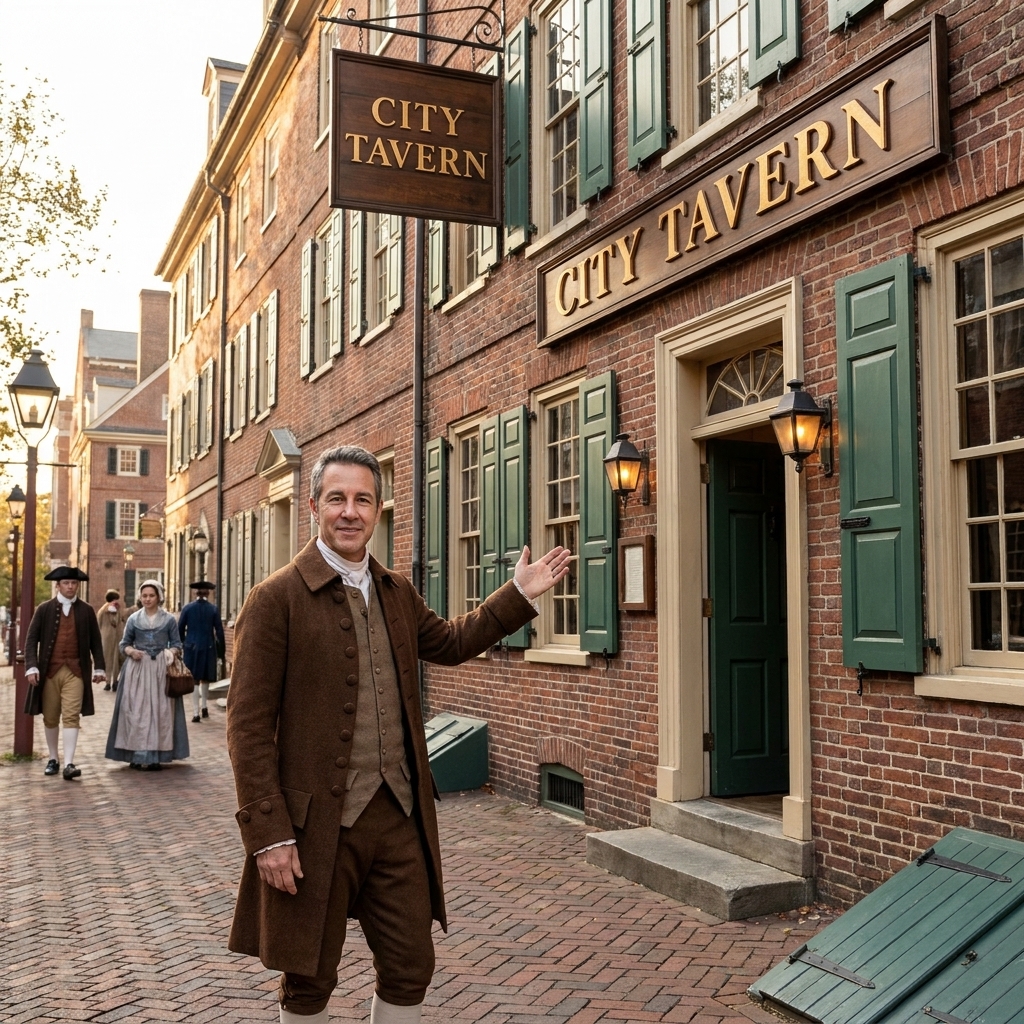
2) City Tavern (Philadelphia, Pennsylvania)
Philadelphia is full of Revolutionary addresses, but taverns were the city’s unofficial meeting rooms. City Tavern is famous for that role, and even knowing the building you visit is a reconstruction, it is still a powerful stop. It sits in the exact geography of Revolutionary Philadelphia, a short walk from where the political temperature was always boiling.
Why it matters: City Tavern is widely associated with the era’s political and military heavy traffic. It is easy to picture delegates and officers using a place like this to trade news, test alliances, and quietly measure who was in the room.
What you see today: A reconstructed historic tavern experience designed to match the 18th-century setting and feel of the original site.
Pair it with: A walking day through Old City, then a deeper dive into the war’s “human logistics” by reading up on daily life and travel: Guide to Colonial Life.
My tavern tip: Ask where the “public” spaces are, then think about who could overhear you. In the 1770s, privacy was a luxury and eavesdropping was a hobby.
3) Tun Tavern legacy (Philadelphia, Pennsylvania)
I am including Tun Tavern with a careful footnote. The original tavern, famous for its ties to early Marine Corps lore, no longer survives. But the story of Tun Tavern belongs on any Revolutionary tavern list because it captures how these places worked: recruiting, networking, dining, and organizing all under one roof.
Why it matters: Taverns were where institutions formed fast. People arrived as strangers and left as shipmates, militia members, or political allies.
What you see today: This is more of a “stand where it happened” stop. Think of it as visiting the old city fabric near Philadelphia’s original waterfront rather than walking into a preserved interior.
Build the day: Combine it with sites connected to the Continental Navy and maritime war-making: John Paul Jones and the Continental Navy.

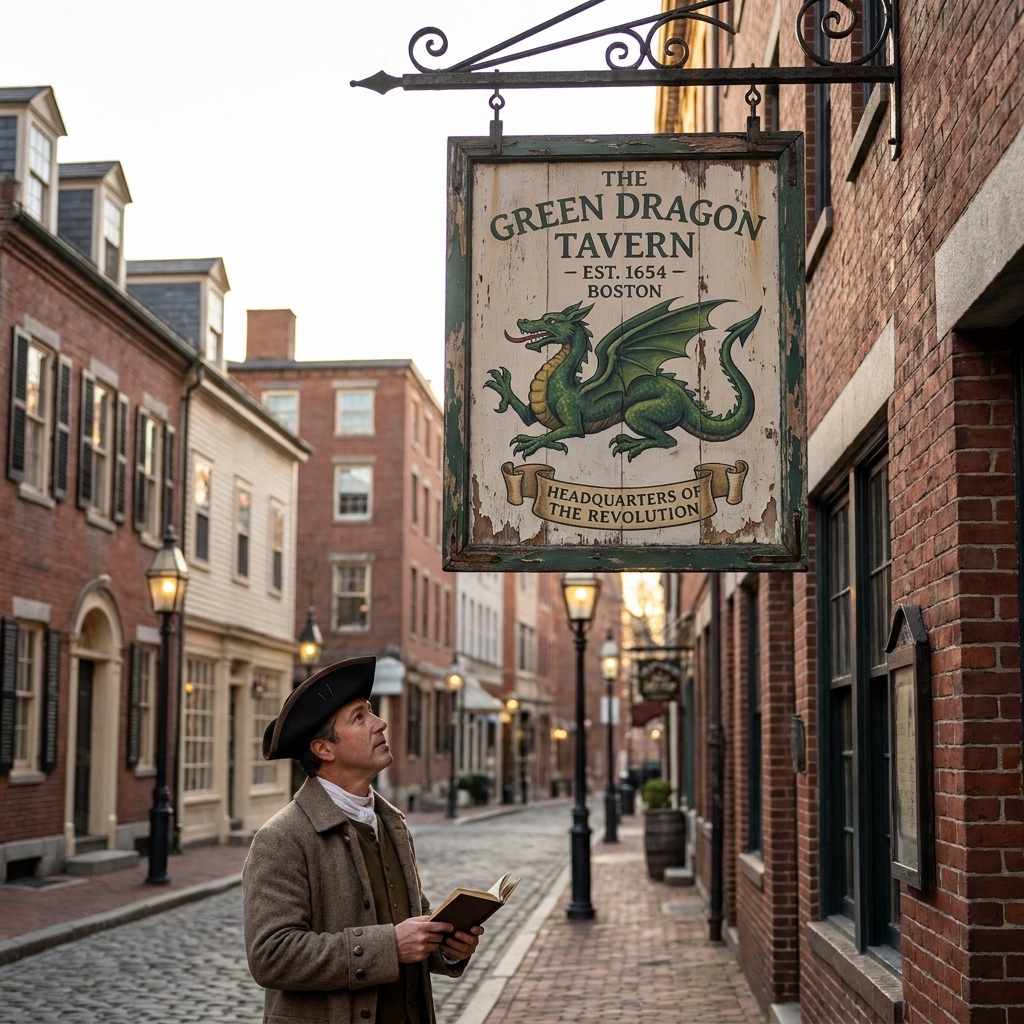
4) Green Dragon legacy (Boston, Massachusetts)
Boston taverns were political engines, and the Green Dragon is the name people remember because it has become shorthand for the Sons of Liberty era atmosphere. Here is the honest caveat: the original Green Dragon Tavern was demolished in 1832. What you can visit today is a modern interpretation that keeps the name alive, not a preserved Revolutionary era room.
Why it matters: Even as a legacy stop, it helps you understand something real about Boston. A city like this ran on meeting spaces. News moved by voice, and plans moved by foot, from table to table.
What you see today: A contemporary tavern experience with a historical through-line. Use it as a spark, not as a time capsule.
How to do it well: Treat the Green Dragon as a prompt, then go read the ground. Boston makes more sense when you connect tavern talk to the siege landscape and the routes people actually walked.
Pair it with: Tie your stop to the physical siege geography: Bunker Hill and Siege of Boston sites.
My tavern tip: Look for corners, not center tables. Revolutions, like gossip, thrive where the light is dimmer.
5) Wayside Inn (Sudbury, Massachusetts)
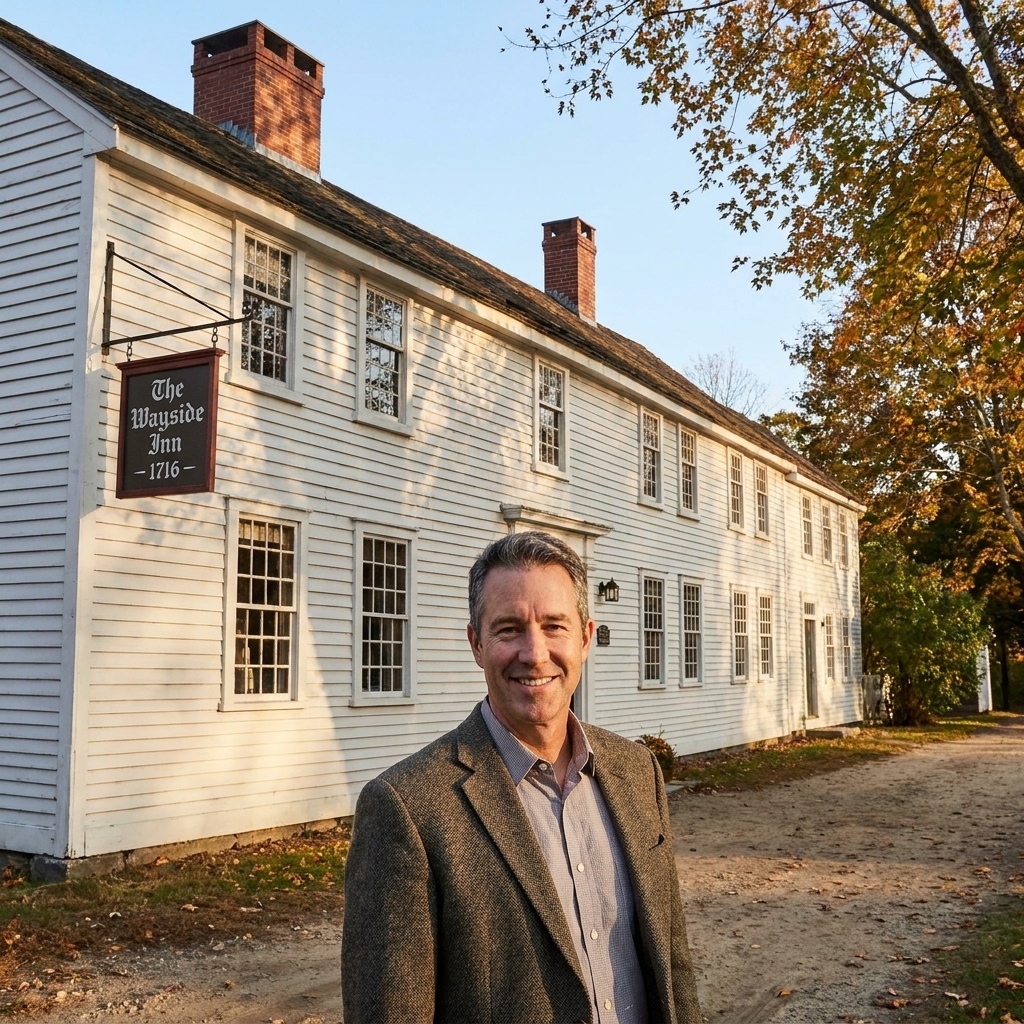
If your idea of a Revolutionary tavern is a long, low inn with a yard that seems made for hitching horses, the Wayside Inn delivers. Many visitors know it as Longfellow’s Wayside Inn, and its story stretches earlier than the Revolution. That is part of what makes it useful for a war trip: it shows you the kind of road culture the Revolution depended on.
Why it matters: Inns like this were the connective tissue between towns during the Revolutionary era. Couriers, militia men, and ordinary travelers moved on meals, beds, and the latest road news. In wartime, that news could be better than any newspaper.
What you see today: A historic inn property with period atmosphere, interpreted rooms, and grounds that help you imagine travel as it actually worked.
Don’t miss: Walk the grounds slowly. Even when rooms are restored, the landscape often keeps the truest memory.
My tavern tip: Ask what is original, what is restored, and what stories locals tell. The overlap is where the best history conversations start.
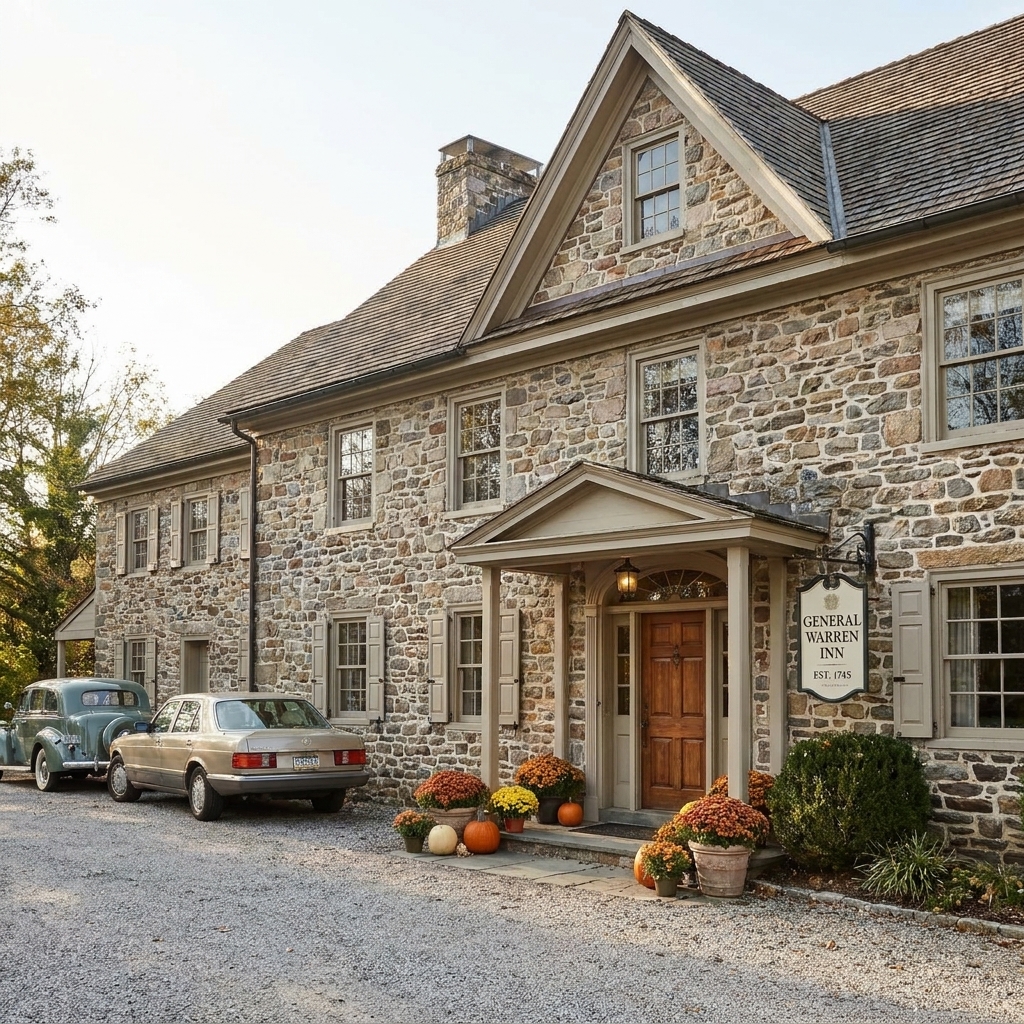
6) General Warren Inn (Malvern, Pennsylvania)
This is one of those Pennsylvania stops that quietly rewards you. The General Warren Inn is in Malvern, not on the Massachusetts coast, and it is the kind of place where the building does a lot of the talking. Parts of the structure date to the Revolutionary era, and even if you come for dinner, you will feel that older spine in the proportions and the stone.
Why it matters: Southeastern Pennsylvania was a busy Revolutionary landscape. Armies and supplies moved through the region, and inns along key roads were where you could pick up fresh horses, fresh information, or both.
What you see today: A historic inn that operates as a restaurant, with period character that still reads clearly once you slow down and pay attention.
Pair it with: If you are building a Pennsylvania day, think in terms of movement and logistics, not just battle lines. The war is easier to picture when you follow the roads and the rhythms of travel: Guide to Colonial Life.
My tavern tip: When you sit down, look at the room the way a courier would. Where could you warm up fast, eat fast, and leave fast if you had to?
7) Raleigh Tavern legacy (Williamsburg, Virginia)
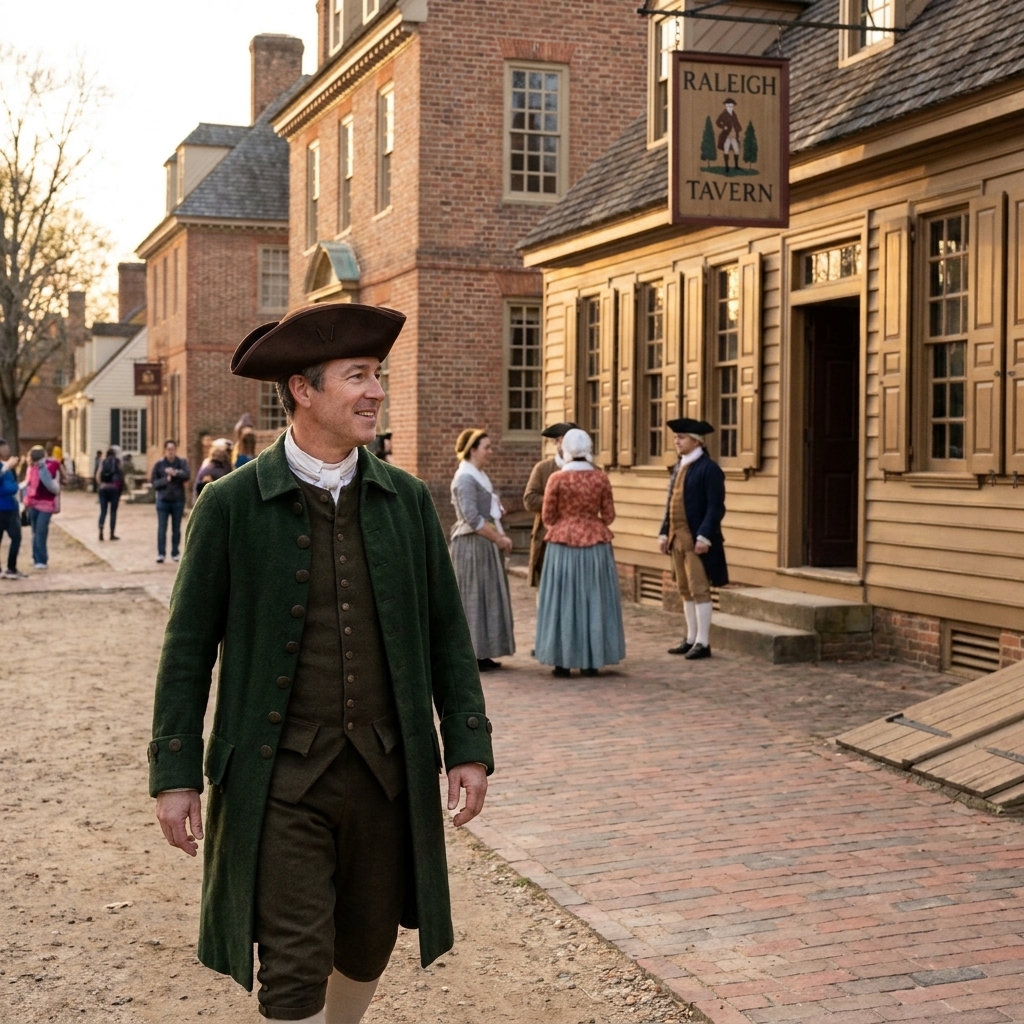
Like Tun Tavern, the original Raleigh Tavern in Williamsburg is a legend even though what you experience today is interpretive. It belongs on this list because it represents something essential: the tavern as a political pressure valve.
Why it matters: In Williamsburg, the line between “public house” and “public business” could blur fast. When formal political spaces shut their doors, tavern rooms often opened wider.
What you see today: An interpreted story within Colonial Williamsburg’s broader streetscape. Think reconstruction, markers, and context more than an untouched tavern interior.
How to visit well: Use it as an anchor story, then spend time walking Williamsburg with an eye for where people actually moved, talked, and listened. I always get more out of places like this when I treat the streets as the main exhibit.
My tavern tip: Think about who served the food and carried the messages. Taverns are full of famous names, but they were run by working people who saw everything.
Make it feel real
You do not need a full costume or a scripted tour to get something real out of these places. Here are a few habits that have made my own visits deeper over the years.
- Arrive early or late. The atmosphere changes when the room is not crowded.
- Look up. Beams, joists, and ceiling height tell you more about age than decor does.
- Study the crossroads. Taverns sit where traffic makes sense. If you want to understand the tavern, understand the road.
- Ask about the cellar. Storage, safety, and smuggling all live below the floorboards.
- Read the war like a traveler. Officers and couriers experienced the Revolution one meal and one night’s lodging at a time.
If maps are your thing, you will enjoy my field approach to reading battle maps and landscapes: How to read Revolutionary War battlefield maps on site.
Tavern etiquette
- Remember it is a business first. Buy something and tip like you mean it.
- Ask before photographing staff or other guests.
- Be gentle with old spaces. No leaning hard on fragile railings or squeezing into blocked off corners.
- Keep your voice down in museum rooms. A lot of these places mix dining areas with historic exhibits.
One more stop
Most tavern trips naturally pair with bigger “anchor” sites. If you are building an itinerary for families or first timers, I would connect a tavern evening to one of these day plans:
- Follow the Minutemen on the Lexington and Concord Battle Road
- Follow Washington’s Crossing: Trenton and Princeton
- Track the Battle of Brooklyn in modern New York
That rhythm works for me every time: walk the ground in the daylight, then end the day in a room where people once argued about what that ground should mean.