

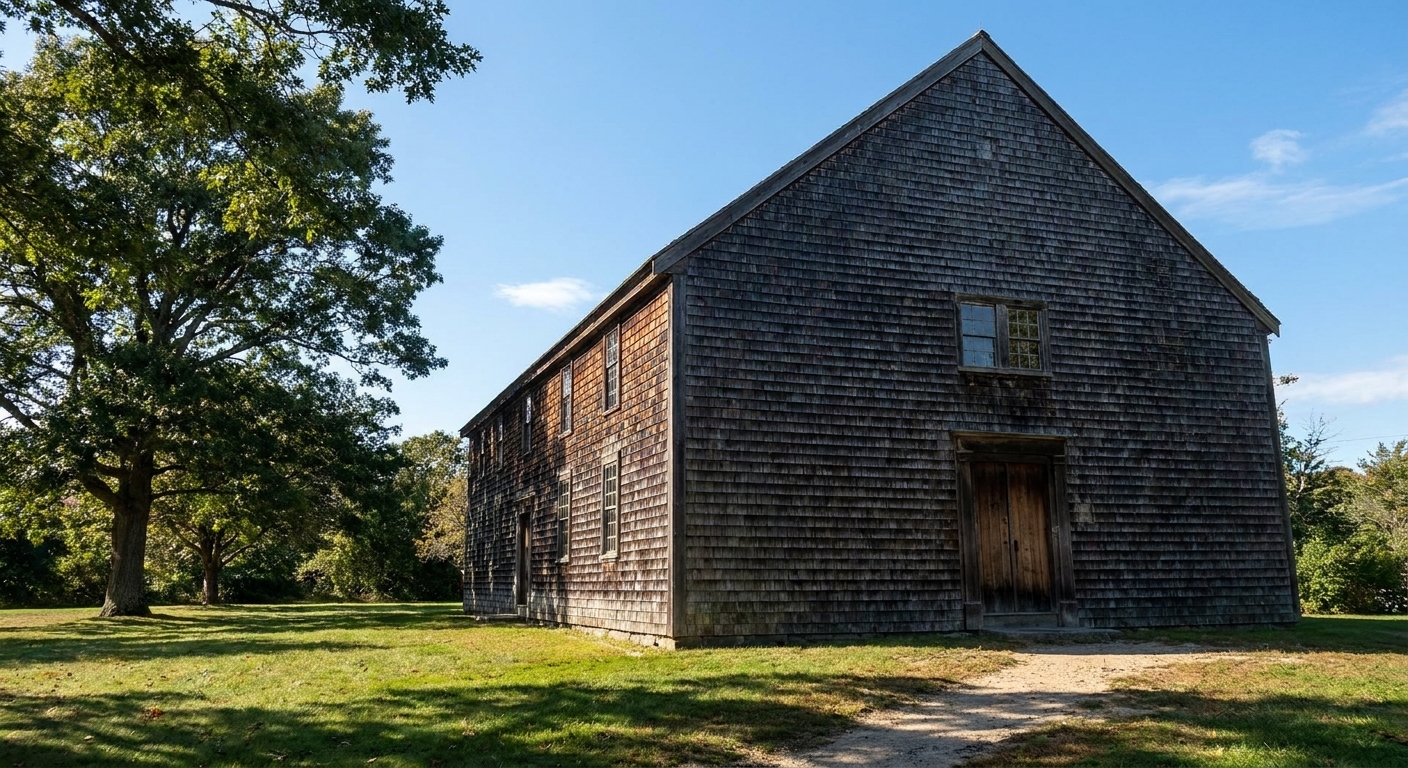
I grew up in Pennsylvania thinking of churches as quiet places you visited for an hour and then left behind. Colonial meeting houses are something different. They were the beating heart of a town. A place to worship, yes, but also to vote, levy taxes, debate roads, read proclamations, and sometimes hear the thunder of politics roll straight off the pulpit.
When you step into a real surviving meeting house, the details do the talking. Box pews that look like little wooden rooms. High galleries where kids and servants were often sent. A sounding board that could fling a preacher’s voice to the back wall. Then, outside, a graveyard that reads like a family ledger carved in slate and sandstone.
Here are seven historically significant colonial meeting houses and churches you can still visit today, chosen for what they preserve: architecture you can touch, community stories you can still trace, and burying grounds that make the Revolutionary era feel startlingly close.
What to notice first
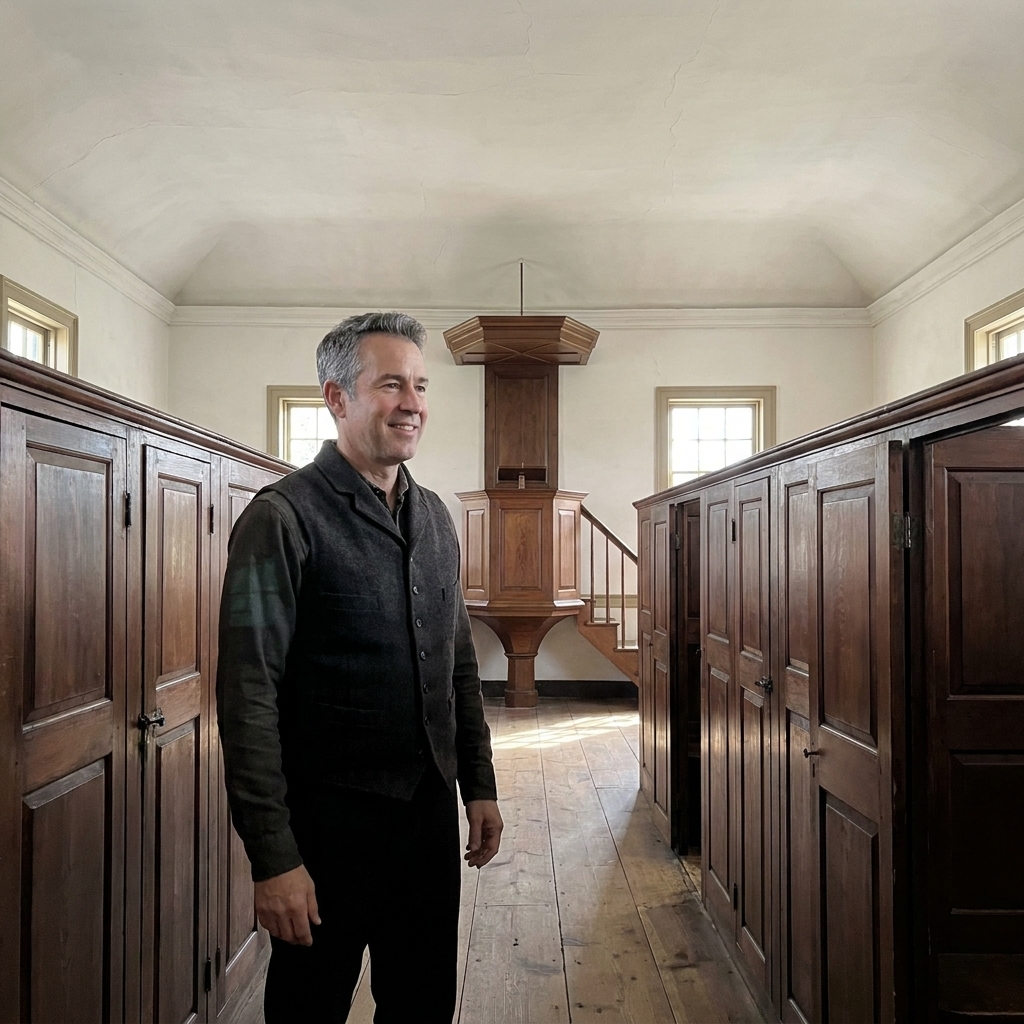
- Box pews: Often rented or owned by families. In many places, your seat said as much about your status as your coat did.
- Galleries: Balconies on one or more sides, sometimes used for overflow seating, sometimes for groups the community wanted kept separate.
- Pulpit placement: In Puritan and Congregational traditions, the pulpit dominates. The sermon was the centerpiece.
- Heating and light: Look for later stoves, or hear stories about foot warmers and long, cold services.
- Burying ground symbolism: Winged skulls, cherubs, willows and urns. In many burying grounds, you can practically watch cultural ideas about death change as you walk.
Most of the very oldest survivors cluster in New England and parts of New York, simply because wood-frame buildings last longer when communities keep repairing them and development pressure is not relentless. If you want to fold these stops into a broader heritage trip, my planning checklist is over here: Plan a Revolutionary War site visit.
1) Old Ship Church (First Parish), Hingham, Massachusetts (1681)
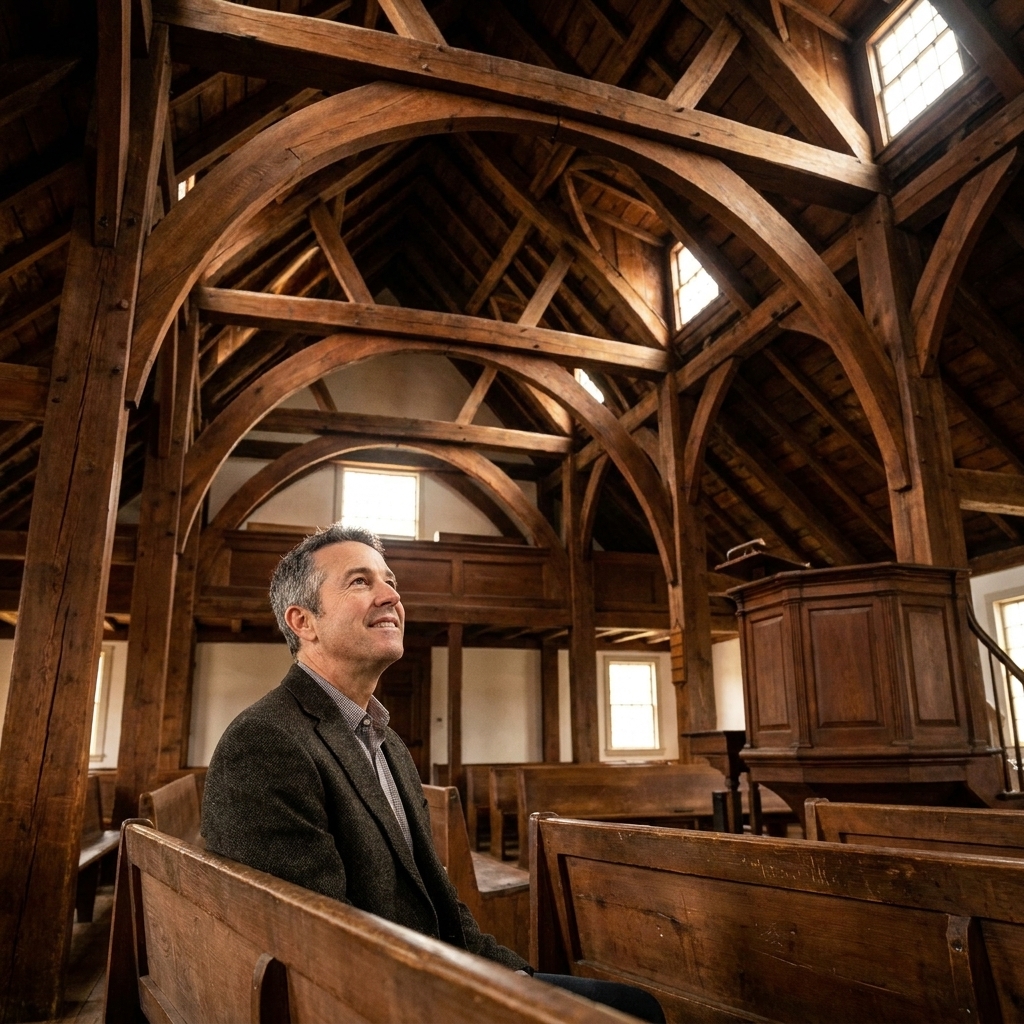
Old Ship is the meeting house I bring up whenever someone tells me, “A church is a church.” Built in 1681, it is often cited as one of the oldest continuously used church buildings in the United States. Even if you’ve toured plenty of colonial sites, this one hits differently the second you see the roof structure. The heavy timber framing feels more like a ship’s hull than a sanctuary, which is exactly where the building gets its nickname.
Why it matters: Old Ship preserves the plainspoken New England meeting house tradition that shaped so much of Revolutionary era civic life. These were spaces designed for community cohesion and community control.
Do not miss: Stand under the framing and look up for a full minute. It is a masterclass in how early communities built durable public buildings with local materials and local skill.
Planning note: This is one of those places that is easiest to appreciate with an interior visit, so it is worth checking for tour days.
2) Old North Church (Christ Church), Boston, Massachusetts (1723)
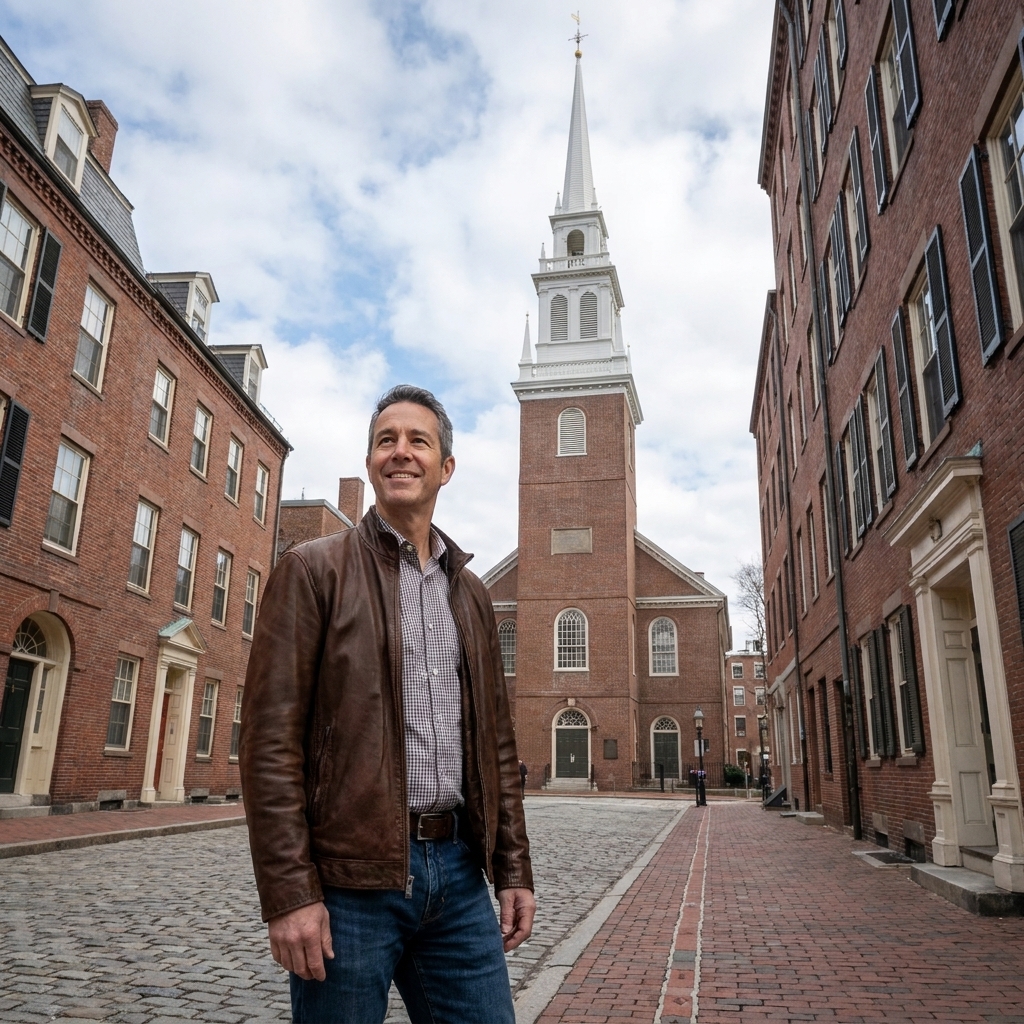
Puritan meeting houses tell one side of colonial religious life. Anglican churches tell another, and in port cities like Boston they also tell the story of empire. Old North Church is famous for the lantern signal associated with the Revere alarm network, but the building itself is worth the trip even if you’ve heard the legend a hundred times.
Why it matters: Old North is a window into colonial Boston’s tension between Crown and colony, and into the social world of an Anglican congregation in a town with deep Congregational roots.
Pair it with: A day around Boston’s Revolution sites, especially if you like connecting church history to military history. Start here: Visitors guide to Siege of Boston sites.
3) Trinity Church, Newport, Rhode Island (1726)
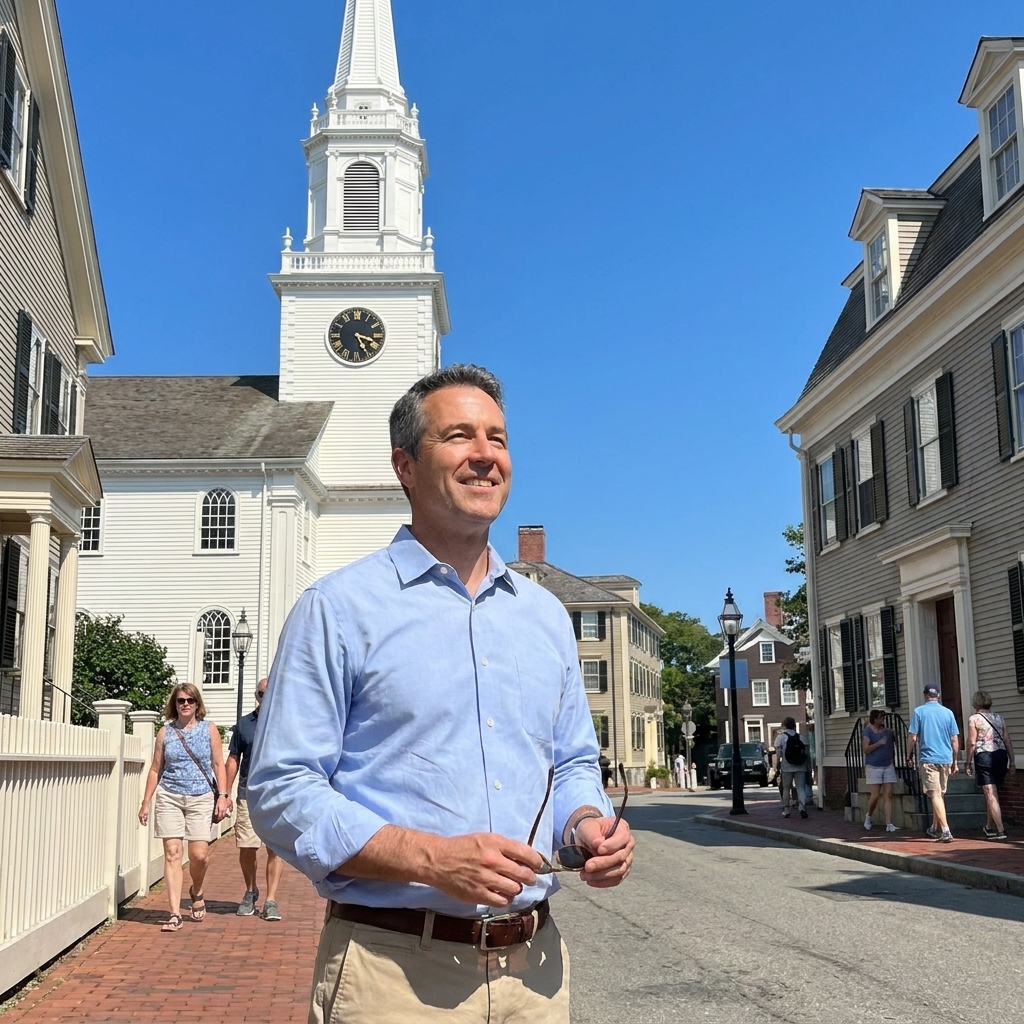
Newport in the colonial era was prosperous, maritime, and internationally connected. Trinity Church reflects that confidence. Rhode Island’s religious landscape was famously diverse, and Newport in particular could feel like a patchwork of faiths stitched together by trade winds and dock schedules.
Why it matters: This church stands in one of the most historically layered colonial towns in America, and it reminds you that the Revolution played out in communities that were not religiously uniform. Newport also lived the war up close, with occupation and disruption pressing in from the harbor and the wider Atlantic world.
Look for: The interior woodwork and the way the whole building feels tuned to a seaport town that expected visitors, commerce, and news to arrive constantly. Then step outside and let Newport’s streets do what they do best: make the 18th century feel walkable.
Planning note: Newport can be seasonal, so an interior visit often depends on when tours are offered.
4) St. Michael’s Church, Charleston, South Carolina (1751 to 1761)

Charleston’s colonial story is not interchangeable with Boston’s, and walking into St. Michael’s makes that point in a hurry. This is an Anglican landmark in a city where the Revolution, slavery, Atlantic trade, and lowcountry culture all collide. The architecture is elegant, confident, and very much part of a world tied to the British Empire, even as that world began to fracture.
Why it matters: St. Michael’s anchors you in the southern Revolution, which had its own tempo and its own stakes.
Look for: The memorial tablets and the way the church sits in the old city fabric. You feel, physically, how close civic power, commercial power, and religious power could sit to one another in an 18th-century port.
Make it a bigger trip: If you are heading through the Carolinas, link your church stops with battlefield landscapes. My favorite way to keep the story balanced is to do both. Start with: The Battle of Cowpens and Battle of Kings Mountain.
5) The Old Meeting House, Sandown, New Hampshire (c. 1773 to 1774)
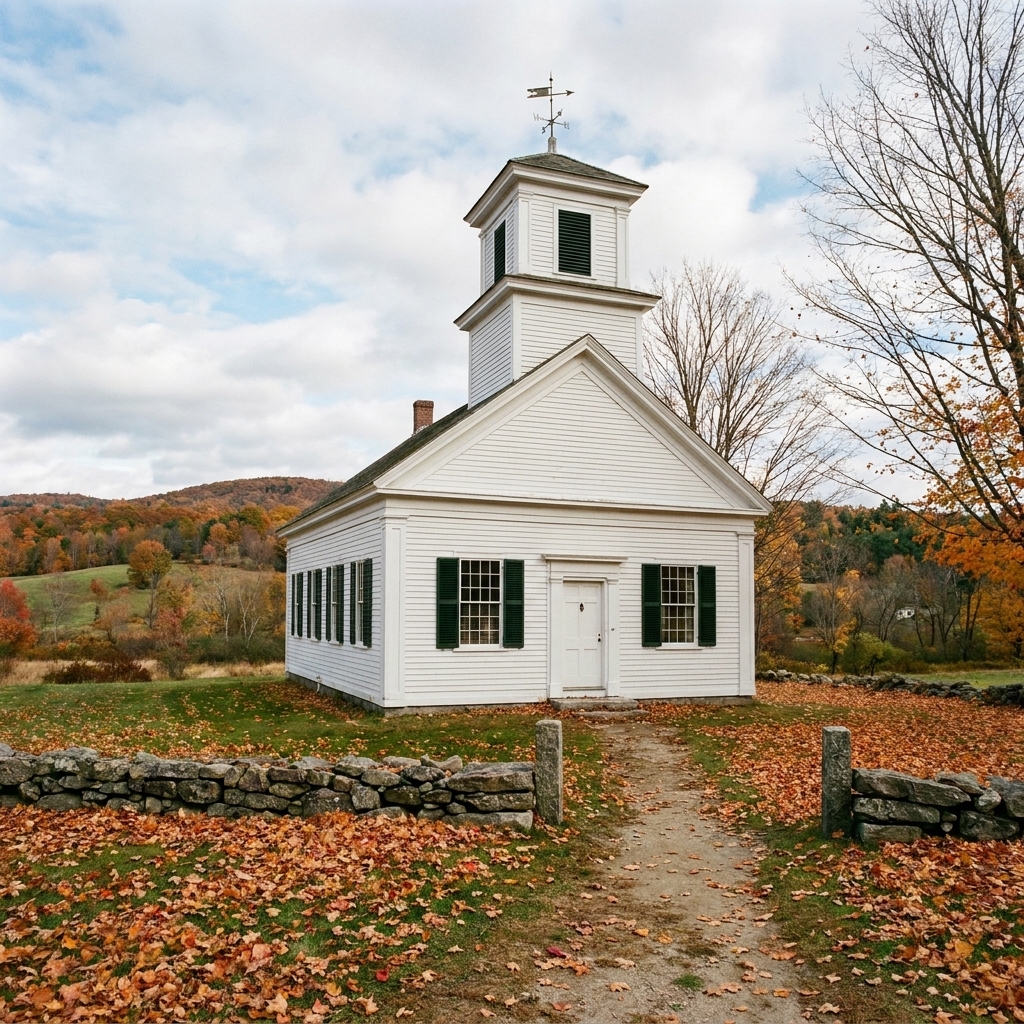
Not every significant surviving meeting house sits in a major city. Some of the most affecting ones are out in smaller towns, where the building still looks like it belongs to the landscape that raised it. The Old Meeting House in Sandown is the kind of place where you can imagine boots stomping snow off at the threshold, then neighbors settling into their places to hear news, doctrine, and town business all in one day.
Why it matters: It represents the civic side of religion in colonial New England. These buildings were community tools, as much as they were sacred space. It is also very much a Revolutionary-era survivor, built right on the edge of war and used by a community trying to decide how it would live through it.
Do not miss: The room shape and sightlines. Meeting houses like this were designed so a single speaker could command the room, which tells you a lot about authority in the 18th century.
Planning note: Smaller-town meeting houses can have limited public hours. If you can get in for a guided tour, the interpretation tends to be excellent.
6) St. Paul’s Chapel, New York City, New York (1766)
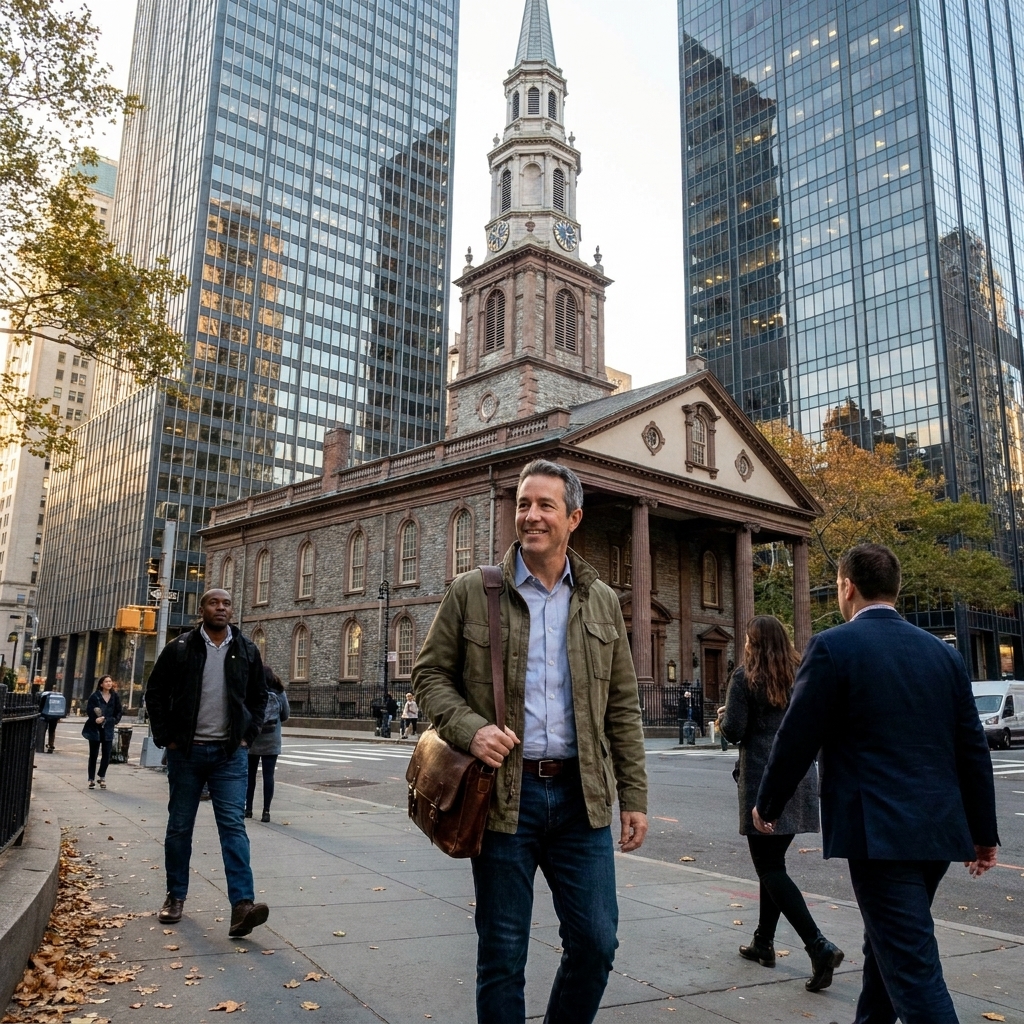
If you want a colonial building that makes time compress, St. Paul’s Chapel delivers. It sits in lower Manhattan like a stubborn memory, surrounded by the vertical rush of the modern city. Built in 1766, it is widely described as Manhattan’s oldest surviving church building.
Why it matters: It is a rare colonial survivor in a place that constantly rebuilds itself. It also connects naturally to the Revolutionary era city story, where politics, protest, and occupation all left their marks.
Make a day of it: Pair it with a deep dive into Revolutionary New York. I map out a great starting point here: Tracking the Battle of Brooklyn in modern New York.
7) Old Dutch Church of Sleepy Hollow, New York (1697)
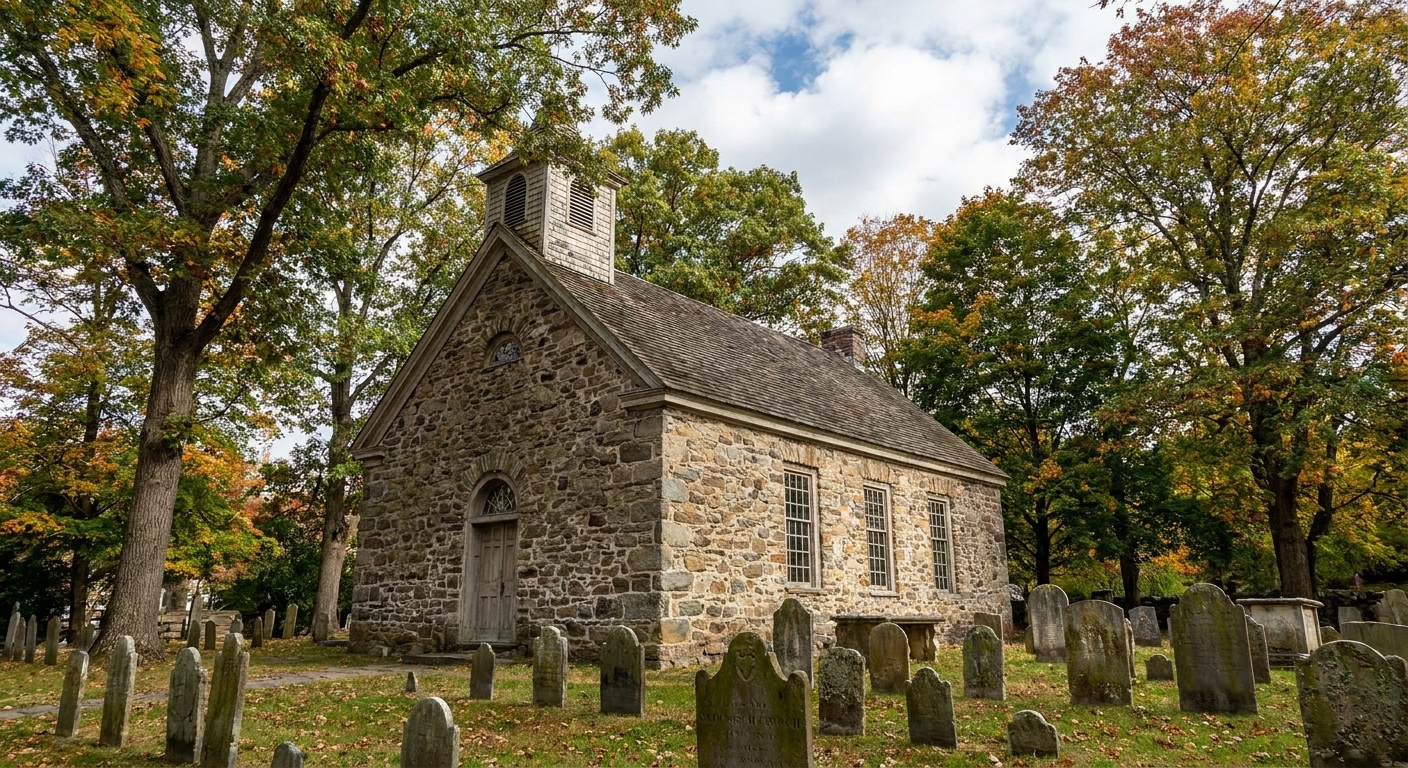
Stone walls, thick shadows, and a graveyard that looks like it has been telling stories longer than anyone alive has been listening. The Old Dutch Church is older than the Revolution, but that is part of the point. The congregation dates to the 1680s, and the stone church you visit today was built in 1697. When you visit colonial meeting houses and churches, you realize the Revolution happened in communities that already had deep roots, older fears, older rivalries, older burial grounds.
Why it matters: It preserves the Dutch colonial thread that runs through the Hudson Valley and reminds you that “colonial America” was never a single culture.
Do not miss: The cemetery. This is where the “graveyards” part of this article really earns its keep. Walk slowly and read the stones like paragraphs.
Reading a colonial graveyard
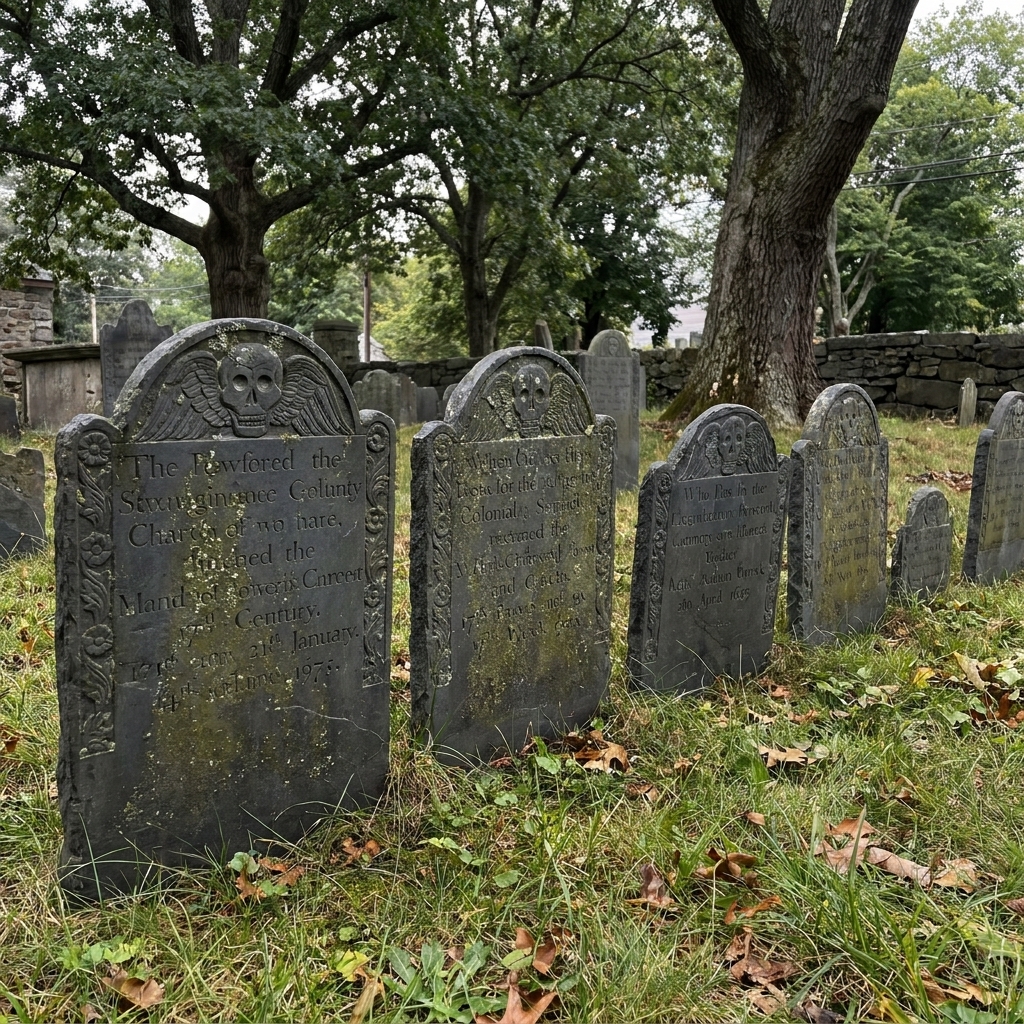
- Start with the stone itself: Slate is often crisp and dark, sandstone softens faster. Marble can blur into sugar over time.
- Look at iconography: In many New England burying grounds, winged skulls tend to appear earlier, cherub faces become more common later, then willows and urns in early republic style.
- Note clusters: Family plots reveal epidemics, infant mortality, and remarriage patterns without a single textbook page.
- Read the wording: Earlier stones can be stark. Later inscriptions may add sentiment, virtue, or longer epitaphs.
One of my favorite ways to connect the dots is to visit a meeting house and a battlefield on the same weekend. You get the home front and the front line in a single trip, which is closer to how people actually lived it. If you are traveling with kids, these kinds of contrast days work especially well: Top battlefields to visit with kids.
Visiting tips
Hours and etiquette
Many of these sites are still living churches, not museums. That is part of the magic, but it also means hours can be limited. Arrive with flexibility, and remember that weddings, funerals, and services come first.
Ask about tours
Docent-led tours are where you hear the best details: who sat where, when the stove was added, which repairs were done after storms, and which local families show up again and again in the cemetery.
Bring the right small gear
- Good walking shoes for uneven burying-ground paths
- Bug spray in warm months
- A small flashlight for reading interior details in darker corners, if permitted
If you like building trips around architecture and daily life, you will probably enjoy my Colonial Life hub: Guide to Colonial Life.
Why these places matter
It is easy to think of the Revolution as something that happened at famous battlefields and in famous rooms. But for most people, the Revolution arrived the way news usually arrives. In a familiar building, among familiar faces, under familiar rules about who spoke and who listened. That is what makes these meeting houses so powerful to visit now.
If you have a favorite colonial meeting house or church that still feels like the town’s anchor, I would genuinely love to hear about it. My contact page is here: Contact.