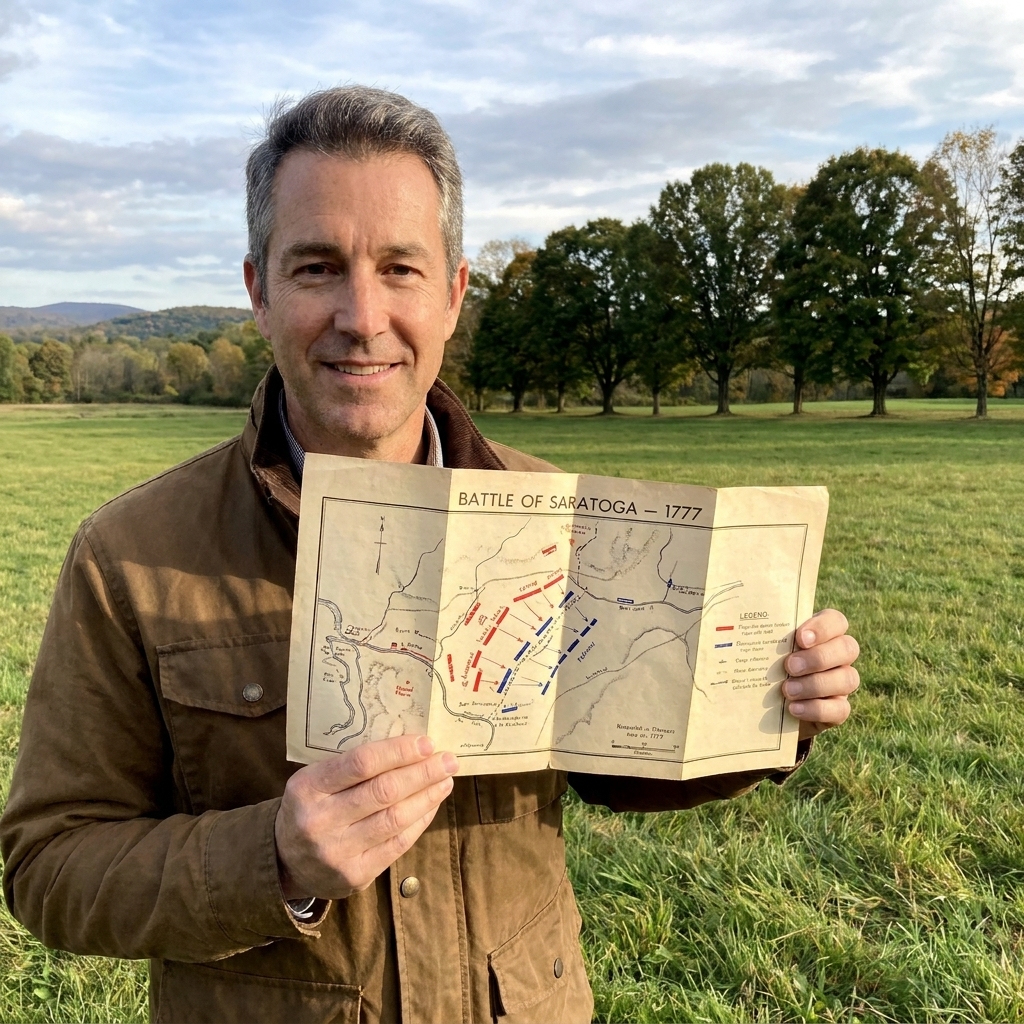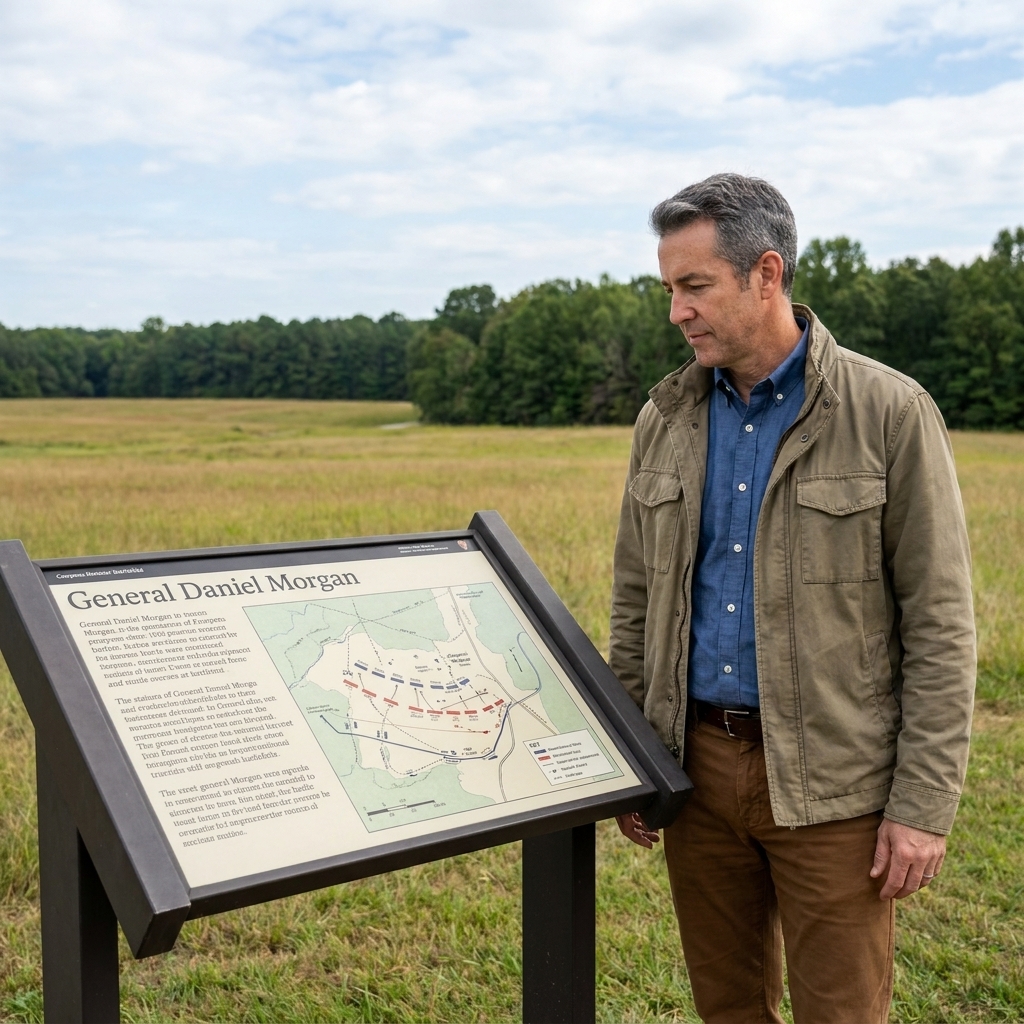

The first time I walked Valley Forge with an antique map mindset, I caught myself doing what I always do at Revolutionary War sites: looking for the practical spaces, not the statues. Where did men line up? Where did officers stand so their voices could carry? Where did the routine of an army finally start to feel like, well, an army?
If you want to follow Baron Friedrich Wilhelm von Steuben’s footsteps, that is the trick. Von Steuben’s genius at Valley Forge was not a single dramatic moment. It was repetition. He took a freezing, underfed, undersupplied force and gave it something it desperately needed: a common language of drill, discipline, and battlefield movement. The landscape at Valley Forge still lets you feel that transformation if you know where to stand and what to picture.
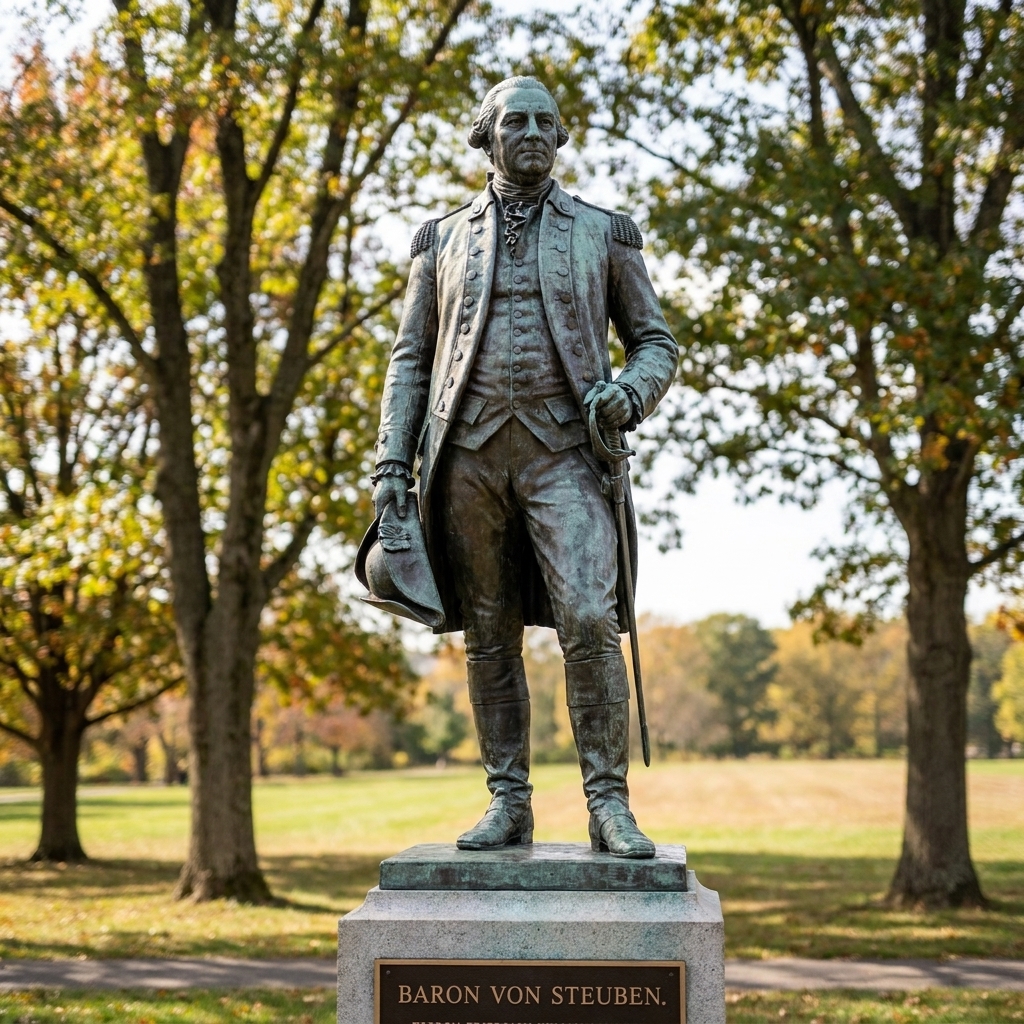
Why von Steuben mattered here
By the time von Steuben arrived in February 1778, the Continental Army’s problem was not courage. It was consistency. Units from different colonies drilled differently. Commands varied. Maneuvers that should have been automatic turned into confusion. That confusion kills armies.
Von Steuben, a Prussian-trained officer who had served in staff roles and knew how to turn theory into muscle memory, cut through the chaos with a simple approach:
- Build one model company that learns the drill correctly.
- Use that company as a teaching engine, spreading the method outward through the camp.
- Document the method into clear regulations the army could adopt and standardize later.
The result, later known through the drill regulations sometimes nicknamed the “Blue Book,” gave the Continental Army a standardized system. When you visit the park today, you are not just touring huts and headquarters. You are walking the ground where an army learned to move as one.
Who he was before and after
If you arrive at Valley Forge only knowing the name, here is the quick version I keep in my head while I walk. Von Steuben came to the American cause as a European professional soldier with a reputation for training. He impressed Washington and the senior officers not by telling war stories, but by offering something the army could use immediately: a workable system that could be taught fast, repeated daily, and checked for mistakes.
After Valley Forge, that training did not stay trapped in the winter camp. It became part of how the army ran. Von Steuben went on to serve in a formal training and inspection role, pushing standard practice across units, so later campaigns could lean on shared habits instead of improvisation.
Start with the right mindset
It is easy to come to Valley Forge expecting a battlefield. It is not a set-piece battlefield. It is a fortified encampment and a proving ground for professionalism.
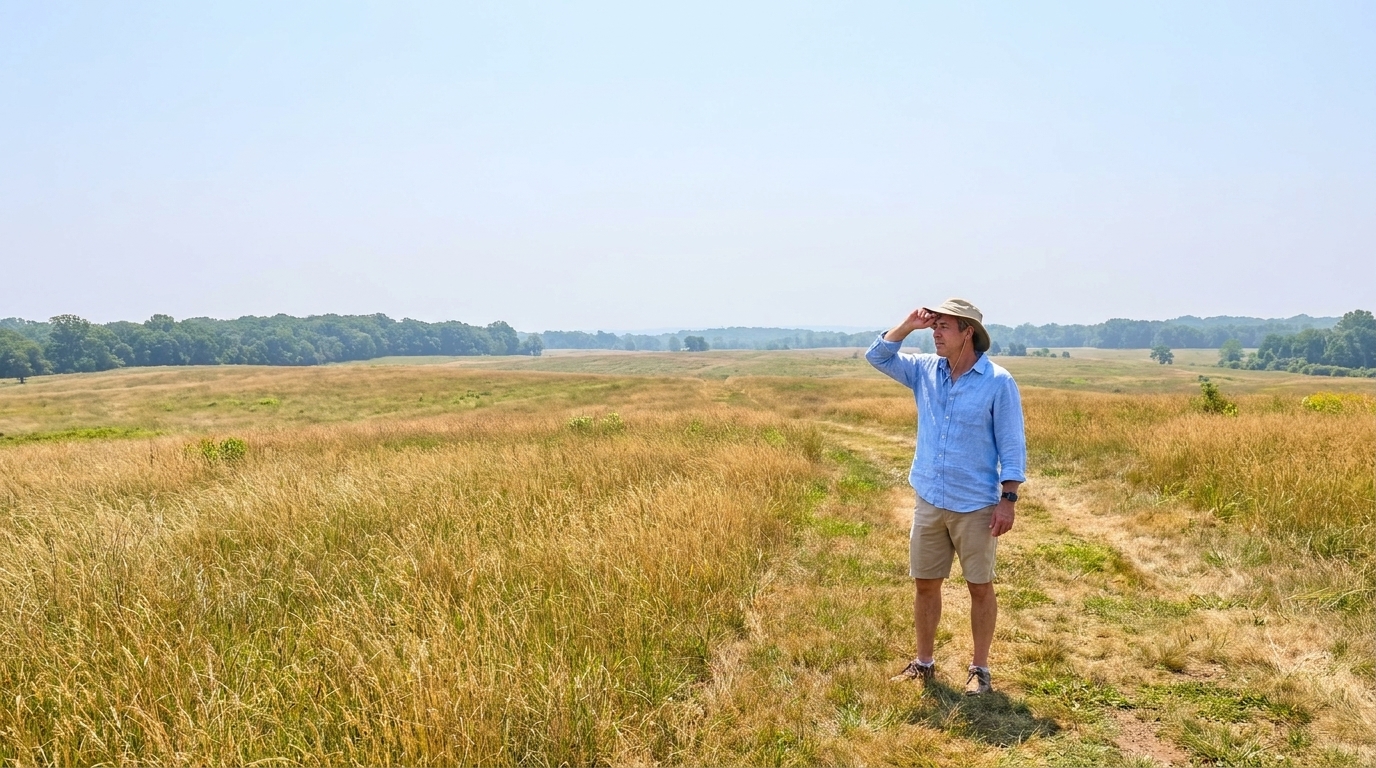
My favorite way to experience von Steuben’s story is to think like he did: find open space, imagine lines forming, and ask yourself what would have been visible and audible. Drill requires room. Officers need vantage. Soldiers need the same motions, over and over, on ground that does not change much from day to day.
If you want a broader strategy for making any visit click, I recommend starting with my planning approach here: Plan a Revolutionary War site visit.
Where to look for his footprints
Von Steuben did not leave behind a single cabin you can point to and say “this was his.” What he left is more like a set of clues. You are looking for spaces that make sense for drilling, teaching, and supervising.
1) Open ground for drilling
Von Steuben’s method depended on repetition and visibility. Picture a compact unit forming, wheeling, and re-forming while officers and observers watch. You are looking for:
- Wide, relatively flat ground where lines can dress (straighten) and keep alignment.
- Clear edges where onlookers and additional squads could gather without interrupting movement.
- Proximity to hut areas so training could be integrated into daily routine.
As you walk, stop and choose a line: tree to tree, fence line to fence line, path to path. That becomes your “rank.” Then imagine how many bodies fit shoulder to shoulder. Suddenly you can feel how quickly small errors multiply and why von Steuben obsessed over basics.
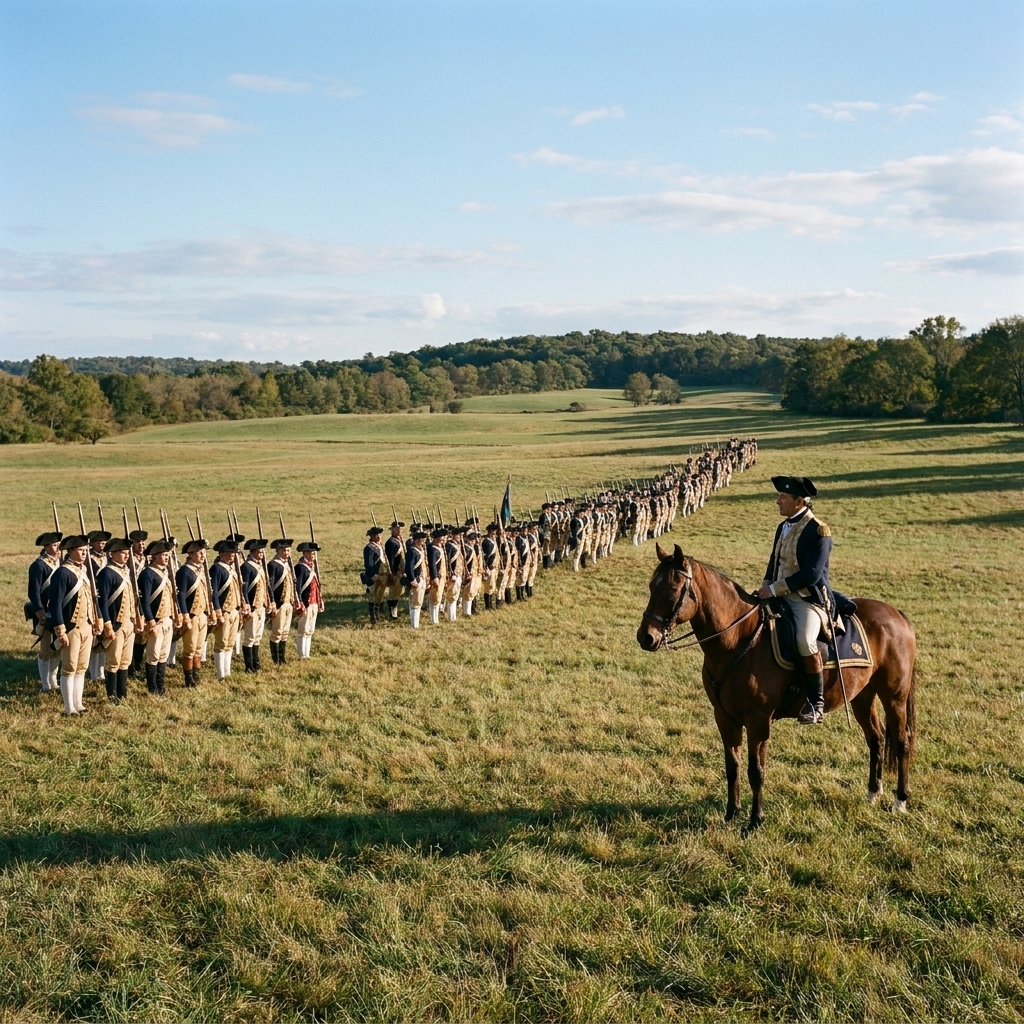
2) Vantage points for instructors
Training is theater in the best sense. It requires sightlines. Von Steuben was known for hands-on instruction and direct correction. Whether he was personally drilling a model company or directing officers, the best teaching spots share a few traits:
- Slight elevation to see lines and intervals.
- Firm ground near the action so an instructor can move along the front.
- Clear routes between training space and the main flow of camp life.
When you find a small rise overlooking open ground, pause. Look across the field and picture how commands would ripple outward. If the wind is up, you will immediately understand why consistency of movement mattered as much as hearing the words.
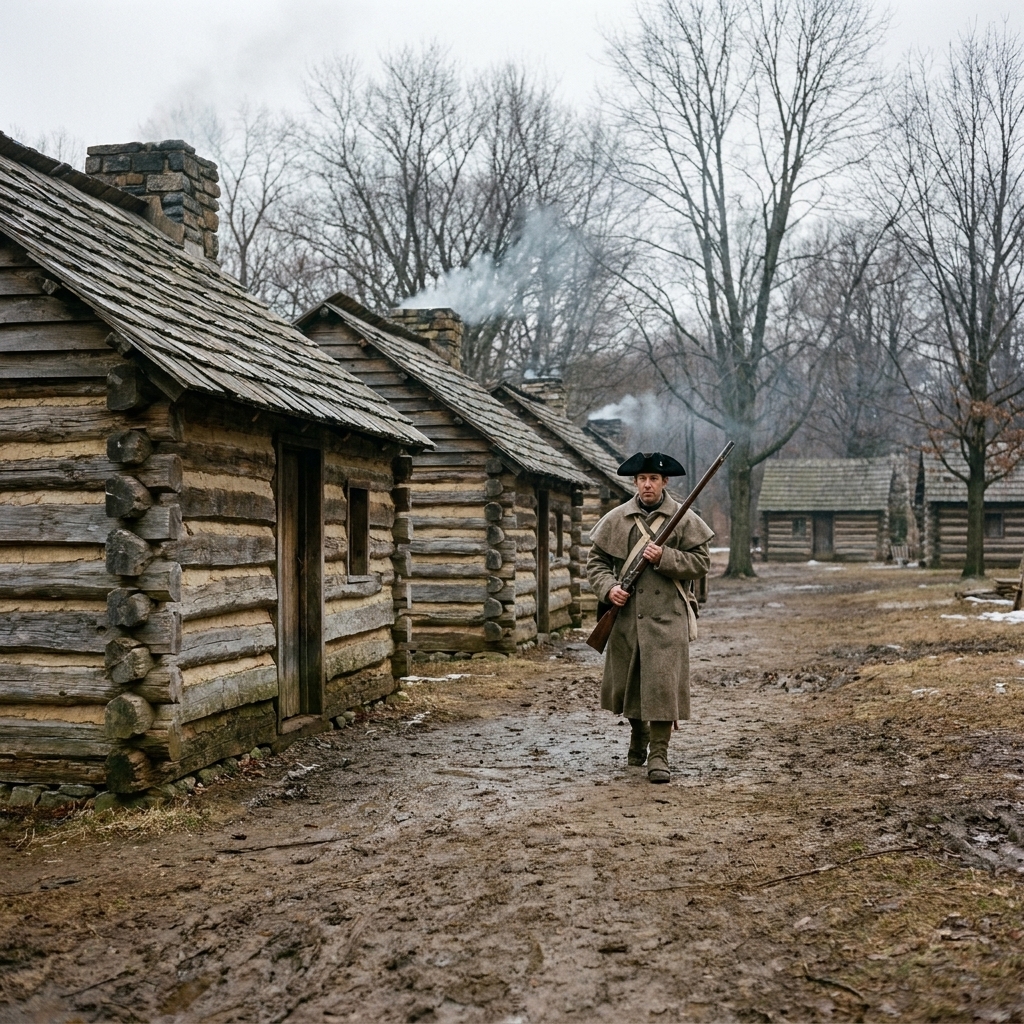
3) Hut lines and the human reality
It is tempting to separate “training” from “suffering,” but Valley Forge ties them together. Drill was not a luxury. It was one of the tools Washington had to keep the army from splintering under hunger, cold, and sheer frustration.
Walk through reconstructed hut areas and think about the rhythm of a soldier’s day. Cold mornings, scarce food, ragged clothing, then assembly and repetition. Structure matters when nearly everything else is uncertain.
If you like exploring the lived experience side of the war, my broader guide is here: Guide to Colonial Life.
Read the ground like a drillmaster
Here is a simple on-site exercise I use, especially when I am visiting with family members who want something more hands-on than a plaque.
Three-step visualization
- Pick a baseline. Choose a straight visual reference like a path edge, fence, or treeline. That is where the front rank tries to stay straight.
- Mark an imaginary interval. Hold your arms out slightly and imagine the elbow-to-elbow spacing of a line. Now extend that spacing across the field.
- Imagine a wheel. A formation pivots while trying to keep alignment. If the ground slopes, if the grass is thick, if visibility is broken by brush, you can feel why training mattered.
Want to go deeper on making terrain make sense? This is the skill that changed how I visit battlefields and camps alike: How to read Revolutionary War battlefield maps on site.
Watch the story, not just scenery
Valley Forge can blur together if you only look for “old things.” Von Steuben’s story becomes vivid when you watch for a few themes.
Standardization
Imagine multiple units arriving with different habits, then being made to speak the same tactical language. When you see open ground near camp circulation routes, that is your clue. Training had to be repeatable and easy to spread.
Speed under stress
Drill is not about looking pretty. It is about doing the right thing when you are tired, scared, and half frozen. As you walk on a windy day, let the weather do its work. Valley Forge still has the power to remind you that competence is earned.
Leadership up close
Von Steuben was not a distant theorist. The accounts that stick with me show a man involved in the details. When you stand close to where lines would form, picture an instructor moving along the front correcting posture, spacing, and timing.
A practical route
Because Valley Forge is a large, modern park with multiple points of interest, I like to visit with a simple arc: introduce the man, find the training spaces, then end with reflection in the hut areas.
- Begin at a central interpretive area so you have the winter-encampment context and can orient yourself to the landscape.
- Seek out broad open ground and spend time there. This is where the transformation story really lives.
- Walk through hut reconstructions to connect drill to daily hardship and morale.
- Finish with a quiet loop where you can look back across open space and picture movement, not misery.
If you are stitching Valley Forge into a bigger road trip, my general trip-building hub is here: Guide to Historic Sites.
Travel tips
Give time to empty space
Most people rush from stop to stop. For von Steuben’s story, the open ground is the stop. Plan at least one stretch where you do nothing but walk the edges of a field and imagine lines forming and reforming.
Bring a small notebook
I jot down questions like “Where would I put 100 men?” or “What is the nearest high point?” It sounds small, but it turns a pleasant walk into an active investigation.
Try shoulder season
Late fall and early spring have the right feel. The trees are thinner, sightlines open up, and the wind does a better job of reminding you what winter training demanded.
Connect it to what came next
If Valley Forge is the training ground, the next chapter is proof. After the encampment, the Continental Army increasingly showed an ability to maneuver and hold under pressure. I do not treat that as magic, or as something you can pin to one man alone, but it is hard to miss the difference once you start watching for it.
Two places I like for that “before and after” mental comparison are:
- The Battle of Cowpens, where timing and coordinated movement are everything.
- Surviving the heat at Monmouth Battlefield, where endurance and leadership collide in brutal conditions.
And if you want more character-driven travel stories like this one, my people hub is here: Guide to People.
Quick FAQ
Did von Steuben write the drill manual at Valley Forge?
Valley Forge is where the system was taught, tested, and improved in real time. The formal drill regulations associated with von Steuben were compiled and published later, after the army had lived with the method and proved it worked.
Is there one training field you can point to?
Valley Forge is best understood as a training landscape rather than one pinpoint spot. Look for open fields near the camp areas that make sense for repeated drilling and instruction.
How do I explain von Steuben to kids?
Tell them he helped the army learn to move together like a team. Then take them to an open field and have them try a simple line-up exercise: straight line, equal spacing, turn together. It is instantly relatable, and it makes the story stick.