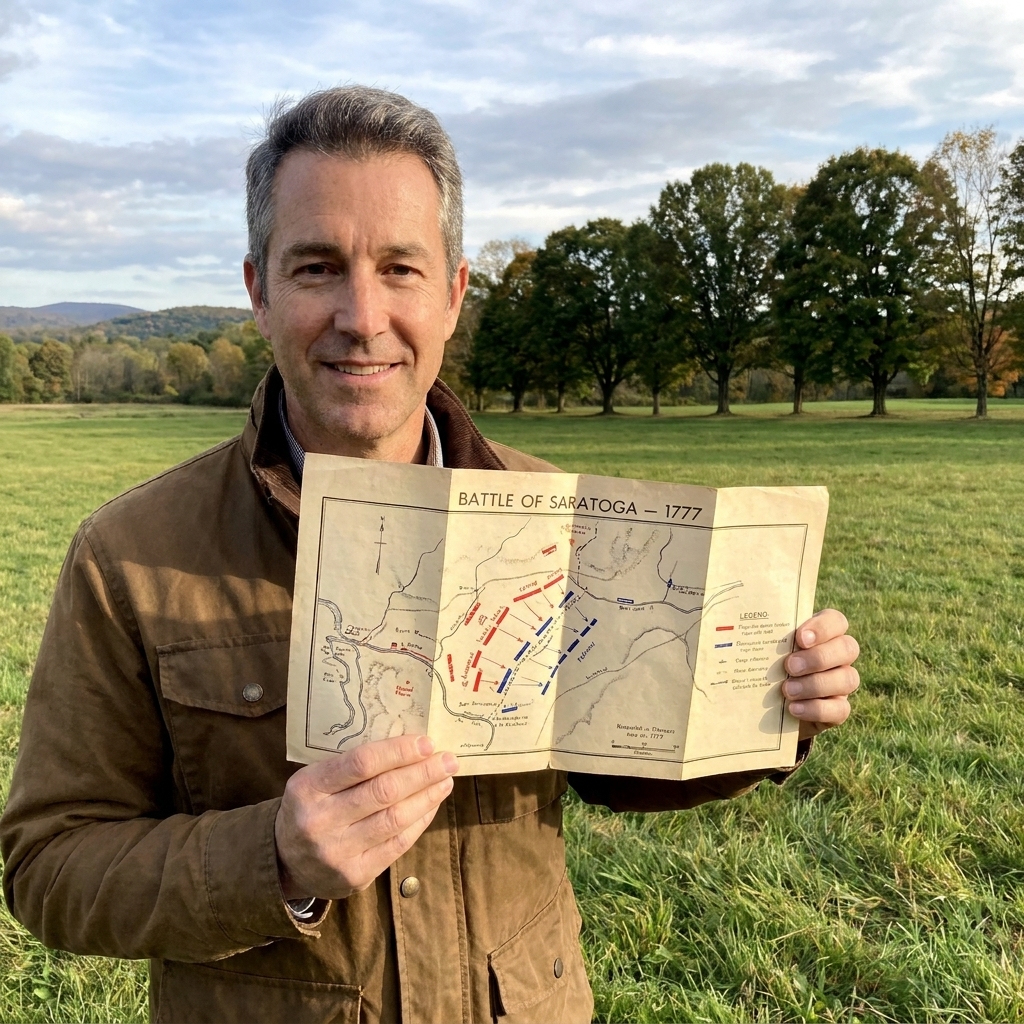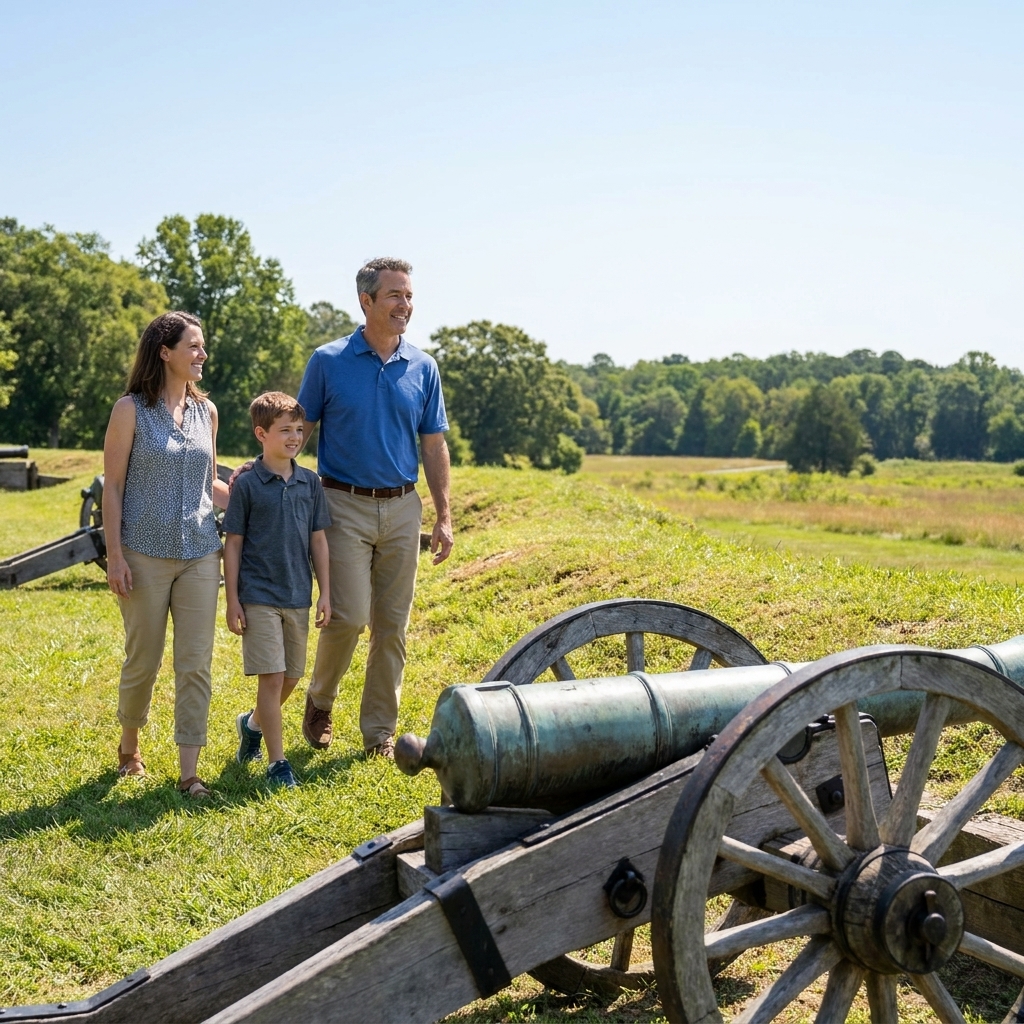

The first time I showed up to a battlefield workday, I expected something close to a ceremonial sweep of the visitor center parking lot. What I found instead was the real, unglamorous work that keeps Revolutionary War landscapes readable. Trail edges get reclaimed by brush in a single season. Stone walls slump. Fence lines sag. Invasive plants creep into sightlines that once mattered on the day of battle.
Park Day is your invitation to step into that behind-the-scenes world. If you have ever stood on a ridge at Saratoga or walked a wooded trace line and thought, How do we keep this from disappearing? this is how.
What Park Day is and why it matters
Park Day is the American Battlefield Trust’s annual volunteer program that brings people out to help care for historic places across the United States, including many Revolutionary War battlefields and related sites. Most events land in spring, often in April, but dates and locations vary by site.
Many Park Day projects happen at parks, preserved tracts, and historic sites that rely on a mix of staff, friends groups, and community volunteers to keep the landscape healthy and visitor-ready.
That last part is the key. Battlefields are not just parks. They are outdoor primary sources. When a sightline is opened back up, you can suddenly understand why a commander chose a position. When a trail is stabilized, a fragile area stops eroding into the creek. When invasive vines are pulled, native plants and wildlife rebound. The history gets easier to see, and the land gets easier to protect.
What you’ll do on Park Day
Projects vary by site, but most fall into a handful of hands-on categories. You do not need to be an expert. The site leads will show you how to do the work safely and in a way that protects the resource.
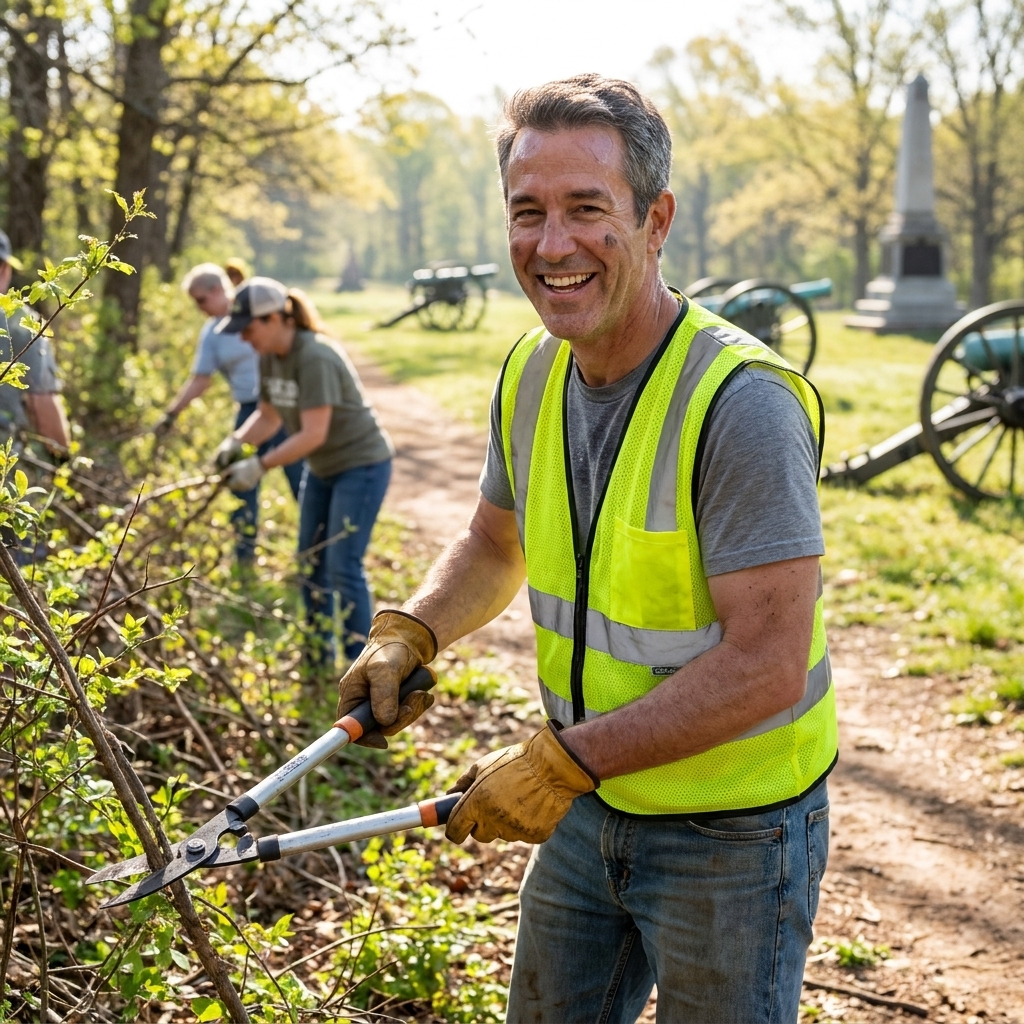
- Brush and invasive removal: Cutting back saplings, clearing thorny growth, and removing invasive plants that choke out native species.
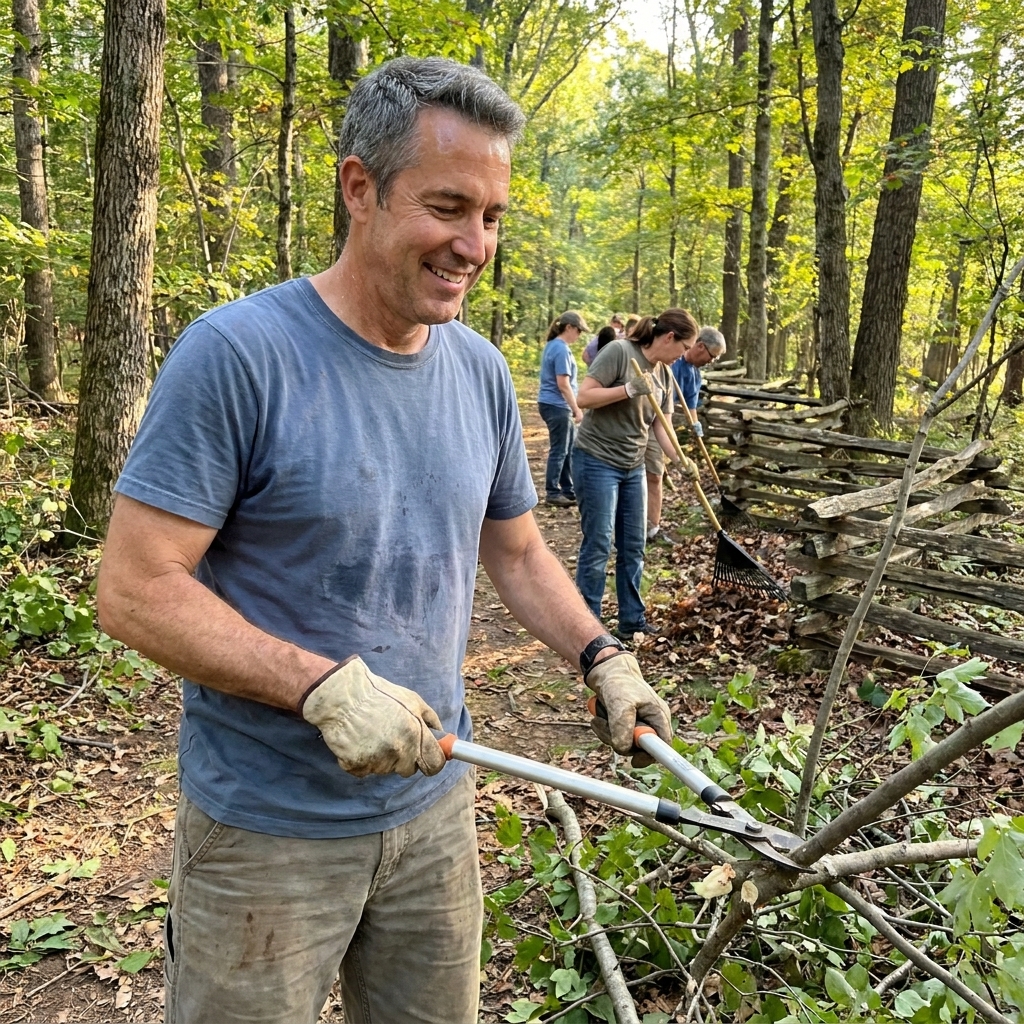
- Trail work: Raking, lopping back encroaching branches, improving drainage, spreading mulch or stone where appropriate, and tidying trail edges.
- Trash and debris cleanup: The unromantic stuff that still matters, especially after winter storms.
- Fences and basic landscape maintenance: Repairing split-rail or post fencing, painting, or stabilizing small features under supervision.
- Memorial and cemetery area care: Often groundskeeping, edging, and careful vegetation control around monuments and markers. If any stone cleaning is allowed at all, it is typically limited to approved methods under direct guidance.
Expect to be outdoors for a few hours, moving at a steady pace, and to end the day pleasantly tired. The best Park Days feel like a barn-raising, just aimed at an 18th-century landscape.
How to find a Park Day event
The easiest route is to start with the official Park Day listings and work outward from your region. Many Revolutionary War sites participate through partners and friends groups, and even when a specific battlefield is not on the list, a nearby historic site often hosts a similar spring workday.
- Check the official Park Day listings: https://www.battlefields.org/park-day
- Scan the calendar of your target site: National Historical Park units and other NPS sites, state parks, and local historic sites often post volunteer days as seasonal events.
- Ask locally: Friends groups and historical associations frequently organize workdays that mirror Park Day projects.
If you are in trip-planning mode, I like to treat Park Day the way I treat any site visit: pick a place you want to understand better, then build the day around it. My planning approach is the same one I use for battlefield travel in general, and it works just as well here. Start with Plan a Revolutionary War site visit and then plug Park Day into your itinerary.
Signing up: what to expect
Every site is a little different, but most registrations ask the same basics: your name, how many are coming with you, and whether you have any limitations (like needing a lighter-duty task). Some sites accept walk-ups, but I always recommend registering when possible. It helps them plan tools, safety briefings, and project teams.
If you have mobility concerns or you are bringing someone who does, reach out ahead of time. Many sites can accommodate a range of abilities, but they need notice to match people with the right job.
Typical schedule
- Check-in: You sign a waiver, meet the coordinators, and get assigned to a project.
- Safety brief: Tool use, ticks and poison ivy, boundaries, and what to do if you find something sensitive.
- Work period: Often 2 to 4 hours, sometimes with a break.
- Wrap-up: Tools returned, quick recap, and often an optional walk or talk.
One small but important point: sites often define where volunteers can and cannot go. That is not about controlling you. It is about protecting archeological resources, sensitive habitat, and sometimes active research areas.
Also, keep an eye on your email (or the site’s social posts) the morning of the event. If severe weather rolls in, some sites delay, shorten, or reschedule rather than push through unsafe conditions.
What to bring (and what not to)
Showing up prepared makes the day smoother for you and for the site staff. Here is my standard checklist from years of turning up at muddy trailheads and brushy fence lines.
Bring this
- Work gloves you do not mind getting dirty
- Sturdy closed-toe shoes or boots with traction
- Long pants for briars and ticks
- Layers since spring mornings can start cold
- Water bottle and a small snack
- Sun protection (hat, sunscreen)
- Bug and tick protection appropriate for your comfort level
- A small daypack to keep hands free
Usually provided by the site
- Loppers, rakes, trash bags, and other tools
- Safety glasses or basic protective gear if needed
- Instructions and on-site supervision
Avoid bringing
- Metal detectors or digging tools (even if you are curious, do not be that person)
- Power equipment unless the site specifically requests it
- Anything that looks like collecting gear, including bags meant for artifacts
If you want to brush up on reading the ground the way battlefield staff do, my favorite primer is learning how landscapes and lines tell the story when you are standing in the field. I walk through that approach in How to read Revolutionary War battlefield maps on-site.
First-timer tips
- Introduce yourself to the project lead. Tell them your comfort level. They will place you well.
- Work the edges first. Many projects focus on trail margins, fence lines, and transitions between woods and field. Those are the places that change fastest.
- Ask before you move stones or “cool looking” objects. Stone piles and old iron can be features, not debris.
- Stay within the flagged or described boundaries. It protects sensitive areas and keeps the team coordinated.
- Take photos at the start and end, but keep your phone pocketed while working. You will enjoy the day more, and you will be safer with tools in hand.
Kids, teens, and scouts
Many Park Day events welcome families, and some are perfect for teens who need service hours. The trick is choosing the right site and the right project. A steep ravine full of multiflora rose is not the place for a first-grade helper. A trail cleanup or a light litter sweep often is.
If you are traveling with kids, I also recommend building in something fun and interpretive after the work portion: a ranger talk, a short walk, or a quick stop for local food. I wrote a bunch of family-friendly battlefield ideas in Top 5 Revolutionary War battlefields to visit with kids, and the same mindset applies on volunteer days.
Make a weekend of it
This is where Park Day becomes one of my favorite ways to travel. You can volunteer in the morning, then spend the afternoon seeing the site with new eyes because you helped care for it.
- Plan a short post-work walk: Stick to one loop or one key viewpoint. Your legs will thank you.
- Bring an antique map mindset: Try to match the ground to what you read on waysides and maps. Even a modern brochure can do this job well.
- Pair with a nearby Revolutionary War stop: If you are in a region dense with sites, add one more location rather than five.
If you want ready-made inspiration for building a trip around a site experience, browse Historic Sites and pick a battlefield or town that has been on your list.
Safety and stewardship
Historic landscapes come with responsibilities. Even well-meaning visitors can cause damage if they treat a battlefield like a normal woods walk.
- No collecting. Ever. If you find something that looks historic, do not disturb it. Note the spot (a quick photo, a GPS pin, or simply pointing it out) and tell staff.
- Mind the monuments and markers. Do not climb on them, lean tools against them, or stack gear on them.
- Respect habitat. Many preserved sites include sensitive species and wet areas that are easy to trample.
- Ticks are part of the reality. Do a check afterward and know your own comfort level for prevention.
In other words, Park Day is conservation work, not just cleanup. The goal is to leave the site healthier and more interpretable than you found it.
If you cannot make Park Day
Not everyone can travel on the right weekend. If you miss it, there are still good ways to support preservation without inventing your own project.
- Join another scheduled workday offered by the same park or friends group
- Practice low-impact visiting by staying on trails and following site rules
- Report problems like downed trees across trails or vandalism to park staff
- Visit smaller sites that depend on local attention, not just big-name parks
Sometimes the most helpful thing you can do is simply show up, learn the landscape, and become the kind of visitor who notices when something is at risk.
Quick FAQ
Do I need experience with tools?
No. Most Park Day projects are designed for volunteers of mixed experience, with instruction provided on-site.
Is Park Day only for Revolutionary War battlefields?
No. Many participating sites interpret multiple eras. But a good number of projects take place at Revolutionary War landscapes and related historic sites.
Will I get a tour?
Many sites add an optional interpretive walk or short talk. Even when they do not, you can explore afterward on your own, and you will understand the site differently once you have worked on it.
Can I go solo?
Absolutely. Park Day is one of the easiest ways to meet people who care about the same places you do, without it feeling forced.