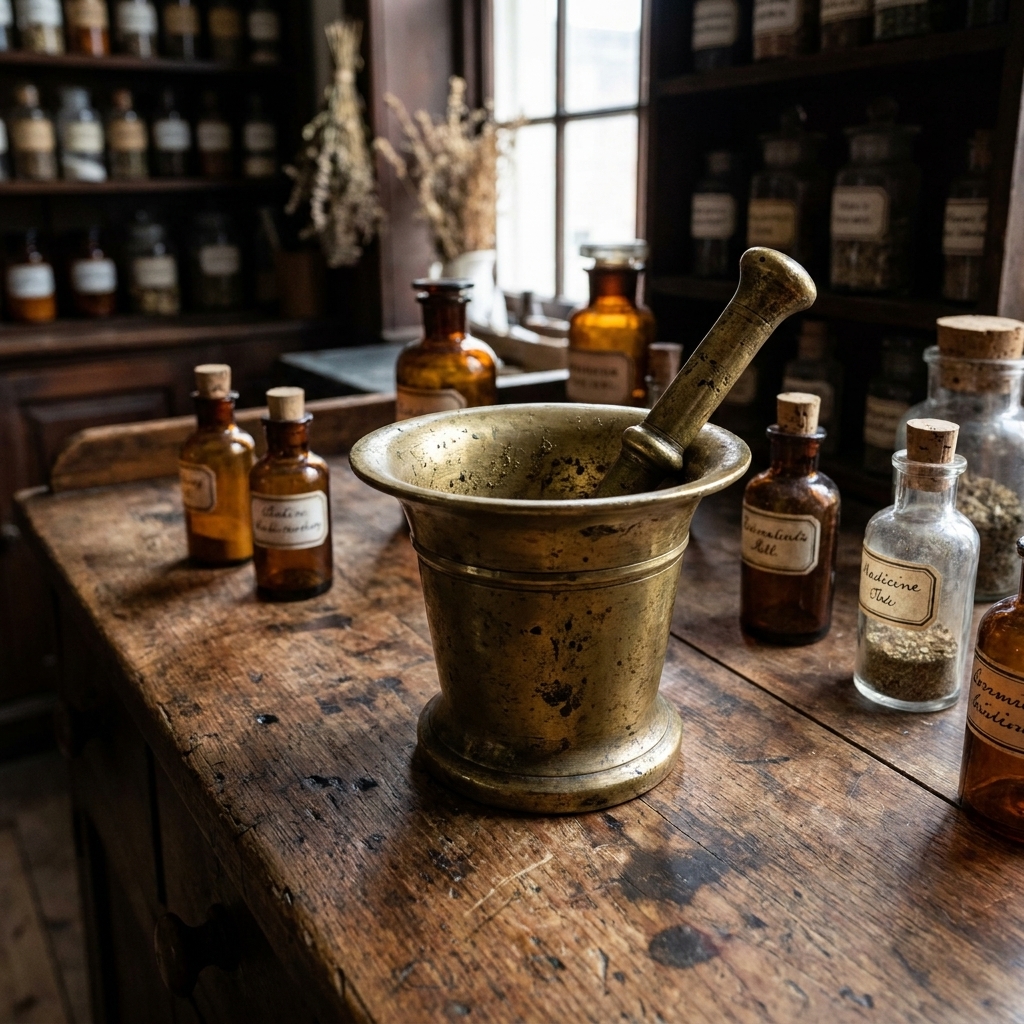

One of my favorite moments in a colonial town is that quiet second when you realize the past is not behind glass at all. It is sitting right there on a shelf. A squat ceramic jar. A stoppered bottle gone wavy with age. A handwritten label you can barely make out. In the 18th century, that was healthcare, measured in spoonfuls and pinches, mixed at a counter that smelled of herbs, alcohol, wax, and smoke.
Colonial medicine can feel distant when you read about it. But when you stand in front of an apothecary cabinet, it suddenly becomes intensely human. Someone had a fever. A child was coughing through the night. A soldier needed his wounds washed and dressed. And a local practitioner reached for what they had: plants, minerals, animal products, and a medical worldview that blended experience, tradition, and a lot of guesswork.
What an apothecary was
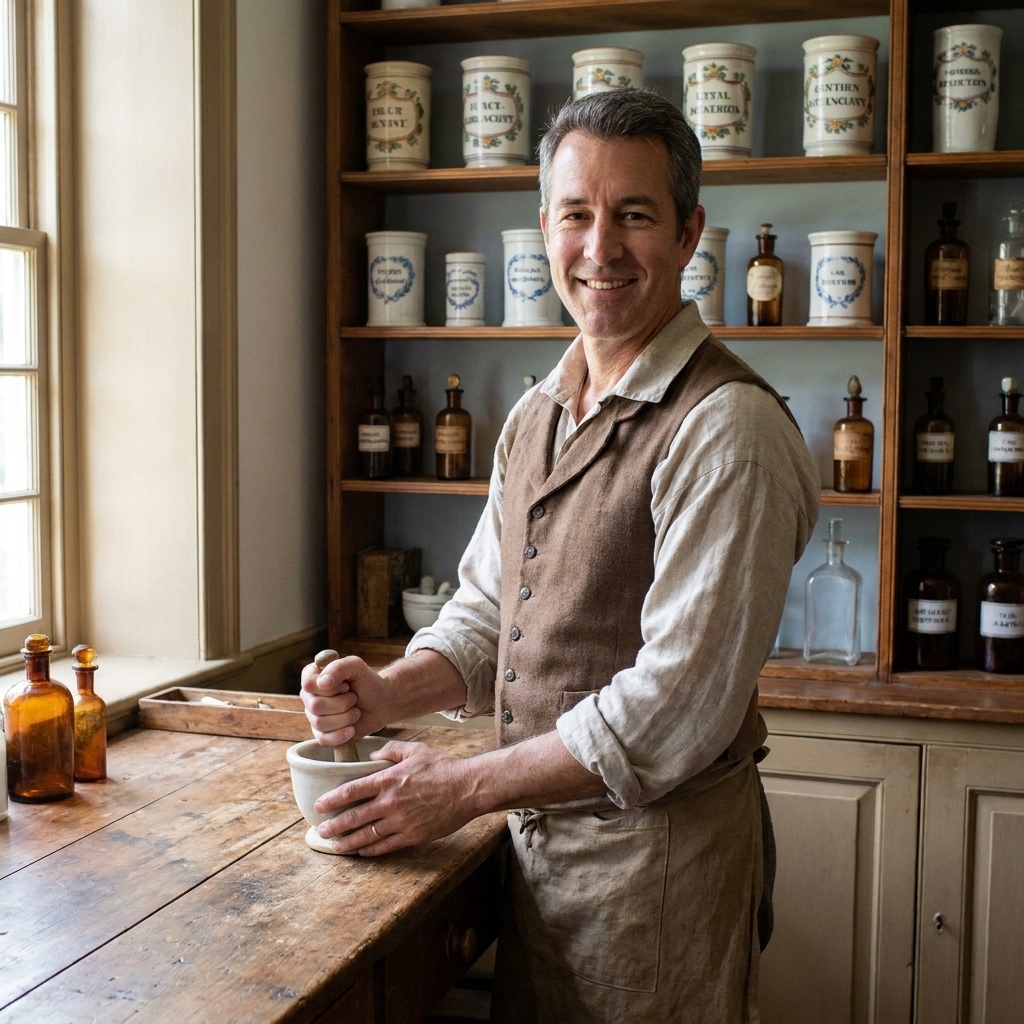
In the 1700s, the lines between doctor, pharmacist, and general practitioner were not nearly as firm as they are today. In many communities, the “apothecary” might be a dedicated shopkeeper who compounded medicines, or it might be a physician who dispensed remedies as part of their practice. In rural areas, it might be a household skill, led by a mother or grandmother with a well-used receipt book and a small garden.
In port cities and larger towns, apothecary shops became hubs for both local care and imported supplies. They stocked ingredients that came through Atlantic trade networks, along with regional botanicals gathered close to home. You also see the overlap with military life. Armies needed materials for washing and dressing wounds, salves, bandages, and purges as reliably as they needed flour and musket flints.
What you will see on site
- Drug jars and bottles: ceramic albarelli-style jars, clear and green glass, and big storage containers for bulk ingredients.
- Mortars, pestles, and scales: the tools that turned roots and resins into powders and tinctures.
- Remedy names that sound familiar and unfamiliar at once: “bitters,” “cordials,” “elixirs,” and “balsams,” plus Latin labels that hint at older European traditions.
- Everyday medical hardware: bleeding tools, dressing supplies, and (in some collections) enema and wound-irrigation syringes, ointment pots, cloth, and basic wound care tools.
If you want to pair this kind of visit with other hands-on colonial life experiences, I keep a running set of trip ideas and site types over on our Colonial Life guide.
Understanding remedies
It is easy to laugh at old cures until you remember what they did not have: antibiotics, germ theory, reliable anesthesia, and modern lab testing. Colonial practitioners worked in a world where infections could turn deadly fast, childbirth was risky, and outbreaks moved through towns like brushfire.
Some apothecary staples were genuinely useful. Others were neutral at best. A few were actively harmful. What makes apothecary history so fascinating is that you can watch people try to systematize care with the tools and theories available to them.
The medical framework
Most colonists inherited a medical mindset shaped by humoral theory and related “hot” and “cold” ideas. Health was often described as balance, and illness as imbalance. That is why you see so much emphasis on purging, sweating, and bleeding in period sources. Add in older beliefs about “bad air” and environmental causes, and you get a system that could be observant and practical in one moment, then dangerously misguided in the next.
Care also depended on who you were and where you lived. Midwives, barber-surgeons, and family caregivers did enormous amounts of day-to-day work. Enslaved people and Indigenous healers carried deep medical knowledge, too, even as access to safe care was shaped by coercion, inequality, and violence. A good museum will acknowledge that reality, not just the pretty jars.
A quick translator
- Infusions and teas: steeped herbs for digestion, sleep, or mild pain relief.
- Tinctures: herbs preserved in alcohol, which helps extraction and stores well.
- Salves and poultices: topical preparations for wounds, swelling, and skin irritation. A simple poultice might be bruised plant material mixed with fat, honey, or a little alcohol, then wrapped in cloth.
- “Physick” and purges: laxatives and emetics used under the belief that expelling imbalance could restore health.
- Tonics and bitters: general-purpose formulas, often aimed at digestion, appetite, and “strength.” “Bitters” frequently meant strongly flavored botanicals infused in spirits.
When you are on site, the best question to ask is not “Did this work?” but “What problem were they trying to solve, and what evidence did they trust?” That mindset helps you read an apothecary cabinet like a diary.
Where to see it
If you want the strongest “I am standing inside the 1700s” feeling, look for four kinds of places: living history museums (where remedies are part of daily life), preserved historic districts (where shops and households are set in context), apothecary museums (where the room itself is the artifact), and medicinal gardens (where you can meet the plants face to face).
1) Living history museums
These are my top recommendations for families and first-timers because interpreters can demonstrate tools and explain why a particular herb mattered. You will see kitchen medicine alongside more formal practice, which is the real story of colonial care.
- Colonial Williamsburg (Williamsburg, Virginia): you can step into trade spaces and programs where medicine is part of daily life and wartime reality.
- Old Sturbridge Village (Sturbridge, Massachusetts): a strong fit if you like seeing how household work, seasonal illness, and practical remedies fit into ordinary routines.
- Look for scheduled programs on herbalism, surgery, military hospitals, or domestic medicine.
- Ask whether the site maintains a medicinal herb garden and if it is labeled.
- Time your visit for a quieter day so you can linger and ask questions.
2) Apothecary museums and intact shops
This is the most direct way to see the cabinet itself, and it is also the easiest way to understand the business side of medicine: what was imported, what was local, what was fashionable, and what was expensive.
- Stabler-Leadbeater Apothecary Museum (Alexandria, Virginia): one of those rare places where the shelves, bottles, and workspace pull you in fast.
- Hugh Mercer Apothecary Shop (Fredericksburg, Virginia): a good stop for understanding how an apothecary fit into a busy town on the eve of war.
3) Historic towns and museum districts
Even when a town does not have a fully preserved apothecary shop, museums often display the objects that would have sat behind a counter: jars, scales, imported ingredients, and remedy books. In port cities especially, apothecary history ties neatly into trade and shipping, because medicine moved through the same Atlantic networks that carried rum, sugar, textiles, and everyday household goods. In wartime, those same sea lanes were contested, interrupted, and sometimes reshaped by naval conflict and privateering, which meant medical supplies could become scarce, expensive, or unpredictable.
For a classic port-city context, Strawbery Banke Museum in Portsmouth, New Hampshire is worth considering if you like moving through preserved buildings and everyday material culture with strong interpretation.
If you are planning a wider heritage weekend, start with Plan a Revolutionary War site visit and build in at least one slower museum morning. Apothecary exhibits reward unhurried reading.
4) Medicinal gardens
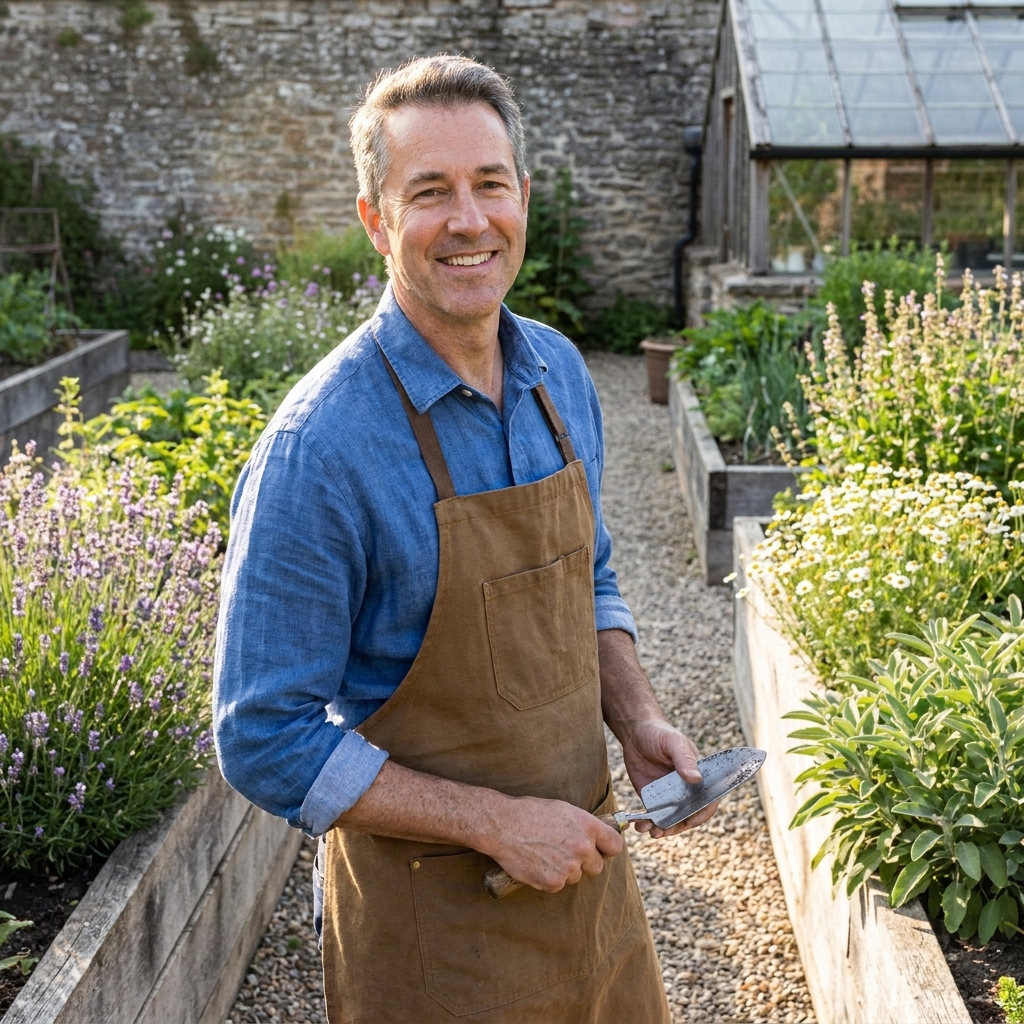
This is where colonial medicine becomes sensory. You stop reading labels and start noticing textures and smells: resinous leaves, bitter roots, sharp mints, bruised greens that release their scent on your fingers.
Two easy, reliable places to look for medicinal beds are historic kitchen gardens and living history sites with labeled herb plots. If you want a dedicated garden stop, Mount Vernon (Virginia) and Old Salem Museums and Gardens (Winston-Salem, North Carolina) are both strong bets for seeing kitchen garden traditions and medicinal herbs presented as part of everyday life, not just as a list of Latin names.
When you visit a garden with a medicinal section, keep an eye out for plants that show up in period remedy books and traditional practice, including:
- Yarrow (often associated with wound care traditions)
- Mint (digestive complaints and household use)
- Pennyroyal (historic folk use, and a good example of why “natural” can be risky, especially when ingested in concentrated forms or oils, and in pregnancy)
- Sage and thyme (kitchen herbs that doubled as household remedies)
- Chamomile (commonly found in later traditional use, and sometimes in remedy traditions depending on region and access)
- Elder (traditional syrups and cold-season preparations, with regional variation)
Gardens vary widely in how they handle medical history. Some focus on ethnobotany and Indigenous knowledge, others on European traditions, and the best ones show how those worlds overlapped and clashed.
Reading the cabinet
When you are standing in front of apothecary shelves, it is tempting to treat everything like a curiosity. I try to read it like a working space.
Follow the flow
- Storage up high, tools at hand: big jars and bulk stock often sit above, with mortars, scales, and mixing surfaces close to the counter.
- Repeated containers: a row of nearly identical jars usually signals commonly used ingredients.
- Stains and wear: a scuffed countertop or stained wooden drawer tells you what was handled constantly.
Notice what is missing
Most museums (rightly) do not keep dangerous materials in public spaces. But historically, apothecaries did handle toxic substances. When an exhibit mentions mercury compounds, arsenic preparations, or strong opiates, take it seriously as a reminder that early medicine was powerful and risky. It is a good moment to discuss with kids that “natural” does not automatically mean “safe.”
Pair it with Revolution travel
Medicine is not a side story in the Revolution. It is part of the machinery that kept armies moving. Camp disease, contaminated water, infected wounds, and harsh weather frequently rivaled or exceeded battlefield losses in some campaigns. If you tour battlefields and encampments, you are already circling the medical story.
Two trip pairings I love:
- Encampments and supply lines: visit an encampment-focused site, then add a museum stop that covers hospitals, sanitation, and provisioning. (If Valley Forge is on your list, you might enjoy my deep dive on Baron von Steuben at Valley Forge, which helps frame how discipline and systems touched every part of army life, including care and cleanliness.)
- Coastal towns and maritime medicine: ports meant sailors, cramped quarters, and constant injury risk. For coastal context, see John Paul Jones and the Continental Navy.
How to visit safely
Apothecary history can brush up against modern health topics. Museums are generally careful, but it helps to go in with a few ground rules.
- Do not self-medicate from historical recipes. Many traditional ingredients can interact with medications, trigger allergies, or be unsafe in pregnancy and for children.
- Ask about sources. The best sites will explain whether a recipe comes from a household receipt book, a physician’s notes, a military manual, or a period pharmacopeia.
- Slow down for the labels. Apothecary exhibits are information-rich, and you will get more out of 30 focused minutes than a rushed loop through the room.
FAQ
Did colonial remedies ever work?
Some did. Basic wound cleaning, certain plant-based anti-inflammatories, and alcohol-based tinctures could help. But without germ theory and antibiotics, even a “working” remedy could be overwhelmed by infection. A lot of treatments were aimed at comfort and symptom relief.
What is the difference between an apothecary and a doctor in the 1700s?
It depended on place and time. In many towns, apothecaries compounded and sold medicines and sometimes advised customers. Physicians diagnosed and treated, but might also dispense medications. In practice, roles overlapped, especially outside major cities.
What should I bring to an herb garden or museum visit?
Comfortable shoes and a phone camera for label photos. If you are traveling with kids, a simple scavenger hunt works wonders: find a mortar and pestle, find a labeled herb bed, find a glass bottle with a fitted stopper, and find a recipe or remedy book page.
How do I fit this into a bigger Revolutionary War trip?
Pick one “medicine stop” to balance out your battlefields: a living history museum day or an intact apothecary museum plus a historic district stroll. If you are mapping out your days and driving time, my starting point is Plan a Revolutionary War site visit.
A last look
The longer I do this, the more I appreciate small, grounded history. Not the grand speeches, but the daily fight to stay alive through winter coughs, infected cuts, childbirth, and camp illness. An apothecary cabinet is a catalog of hopes and hard lessons. If you find one on your travels, give it time. Read the labels. Picture the hands that reached for those jars. Then step back and take in the whole wall of it, because that is what the 18th century felt like for most people: a world where relief came from what you could grow, grind, steep, and share.