

I still remember my first big Revolutionary War reenactment as a kid in Pennsylvania. I went for the musket smoke and the marching, but what stuck with me was the clothing. Not just the bright regimentals either. It was the everyday stuff: a woman in a plain wool gown stirring a pot, a farmer in a sweat-darkened linen shirt, a gentleman whose coat fit like it was built into his posture. Long before I started collecting antique maps, I started collecting little mental notes about clothing. When something is right, it helps the whole scene click into focus.
This guide is for that moment when you are at a living history event or historic site and you want to tell the difference between “close enough” costume and clothing that is doing real historical work. Not to nitpick reenactors. Most are volunteers doing their best. Think of this as a set of friendly field skills that will make your visits richer, and your questions better.
If you are planning your first event, I also have a trip-planning guide here: Plan Your Trip Around Revolutionary War Reenactments.
Start with the silhouette
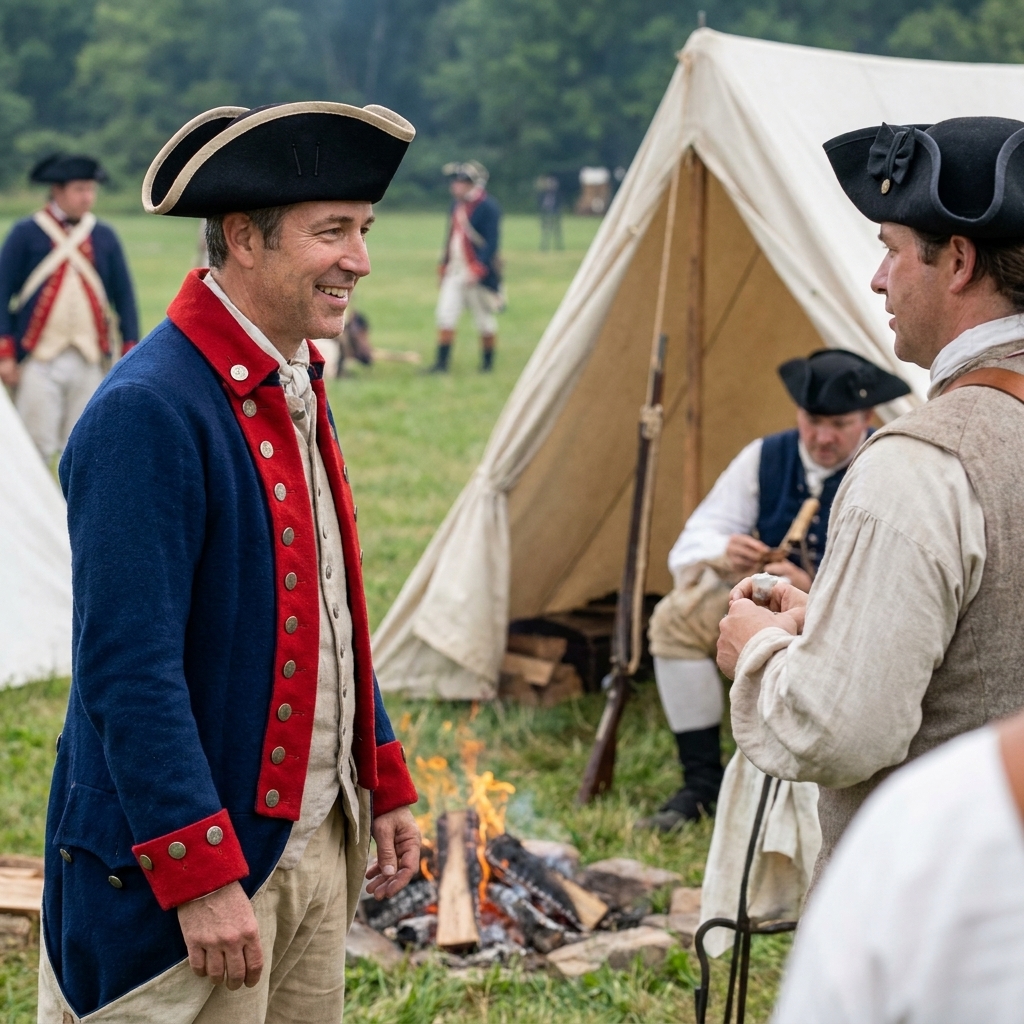
When clothing looks “off,” it is usually the shape first and the accessories second. Eighteenth-century clothing creates a very specific outline because it is structured by layers.
- Men’s silhouette: broad shoulders, close-fitting torso, skirted coat, and breeches that end at the knee. Legs are finished with stockings, not bare calves. The waistcoat is long enough to matter, usually reaching to mid-thigh.
- Women’s silhouette: a smooth cone through the torso created by stays (or other structured support), with skirts supported by petticoats and sometimes added hip shape such as bum rolls, hip pads, or hoops (region and decade dependent). The waistline often sits higher than many modern waistlines, and the bust and back are held upright.
- Children’s silhouette: this varies a lot by decade and status, but kids are not just modern children in miniature. Very young boys often wear gowns before being breeched. Girls commonly wear short gowns and petticoats with practical layers, especially in mid-to-late 18th-century portrayals.
If someone is wearing otherwise good-looking clothing but the outline feels modern, look for what is missing underneath. No stays or supportive bodice. No petticoat. A too-short waistcoat. A coat with modern shoulder padding. Those are the things that quietly break the spell.
The layer check
If you want one reliable method while you walk through a camp, use a simple “layer check.” Authentic impressions nearly always get the order right, even when the fabrics are humble.
Men: the everyday stack
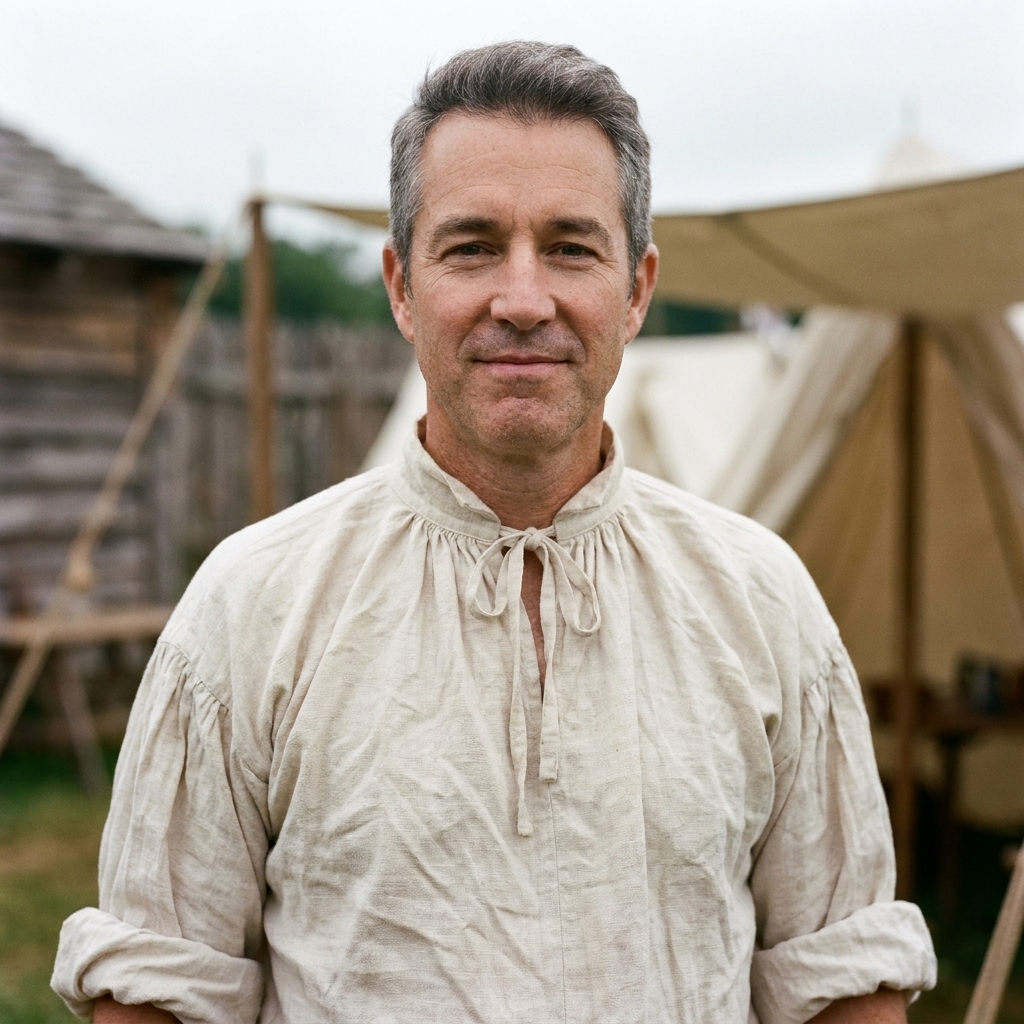
- Shirt: linen, roomy, long tails. It is a workhorse garment and often the only layer that touches skin.
- Breeches or trousers: breeches for most military and civilian impressions; trousers are more common later and in certain labor contexts. Breeches close with buttons or ties at the knee.
- Waistcoat: the core middle layer. For civilians it can be showy. For soldiers it is often plainer, depending on unit and supply.
- Coat or jacket: skirted coats for many impressions; short jackets are common for working men and some regional portrayals.
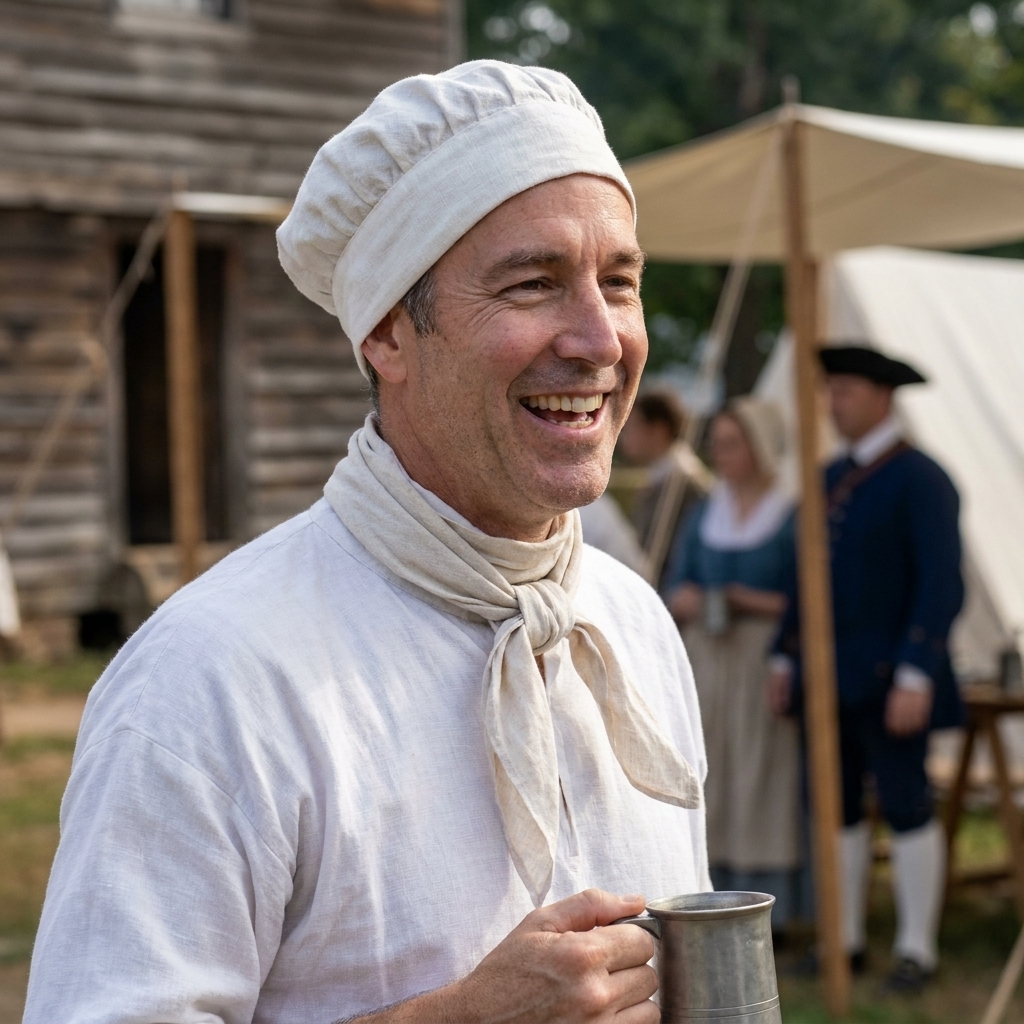
- Neckwear: a stock or neckcloth, usually linen. It is tied, wrapped, or buckled, not a modern necktie.
- Stockings and shoes: stockings are part of the system. Shoes are low-cut and often buckle, though ties show up too depending on time, place, and personal kit.
Women: the everyday stack
- Shift: linen undergarment, the foundational layer.
- Support layer: stays are common, but they are not the only option. Depending on decade, status, and setting, you may also see jumps or other lightly boned, stiffened, or supportive bodices, especially in working portrayals.
- Petticoat: at least one, sometimes more depending on season and status.
- Gown, bedgown, or jacket: the outer garment depends on class, region, and activity.
- Apron and neckerchief: very common for working portrayals. Neckerchiefs serve warmth and modesty.
- Cap: especially for married women and working settings. A bare head with loose hair can signal a modern default more often than not.
At many events you can politely ask, “Can you tell me about your layers?” Interpreters who care about accuracy usually love that question because it lets them talk about comfort, labor, and why clothing was built the way it was.
Fabric tells the truth
You do not need to touch anything to get useful fabric clues. Stand back and watch how a garment hangs and moves. Eighteenth-century fabrics have a different “behavior” than many modern substitutes.
Fabrics you should expect to see
- Linen: shirts, shifts, caps, neckcloths, many aprons. It wrinkles and softens with wear. It breathes in summer.
- Wool: coats, waistcoats, many gowns, stockings, blankets. Wool drapes with weight and has a matte look. Even when it is fine, it rarely looks shiny.
- Silk: more common in higher-status impressions, often in gowns, waistcoats, and accessories. Real silk has depth, not the flat shine of cheap satin.
- Leather: shoes and accoutrements, and occasionally breeches, especially for riding or certain kinds of work.
Red flags that often mean modern materials
- Stretch: if it clings like athletic wear, it is modern.
- Obvious polyester shine: especially in waistcoats and gowns.
- Overly crisp quilting cotton: it can look too stiff and “new-craft-store” compared with period linens and wools.
- Fleece and puffy insulation: sometimes hidden for warmth, which is understandable, but visible modern puffiness breaks the silhouette.
One of my favorite things to look for is fullness. Period shirts and shifts use lots of fabric gathered into small spaces. That volume is normal. Modern clothing often tries to be efficient and fitted. Eighteenth-century basics are generous and engineered with gathers.
Fasteners and seams
Once the silhouette and fabrics look right, the next level is construction. You can spot a lot at a glance.
Buttons, buttonholes, and ties
- Buttons: period-correct buttons are often pewter, brass, bone, wood, or cloth-covered. Plastic is the obvious giveaway, but also watch for modern novelty buttons.
- Buttonholes: hand-sewn buttonholes look different than machine-stitched ones. They are not perfectly uniform, and they sit with the fabric rather than looking punched out.
- Ties: many closures are ties, especially inside layers. You might see ribbon or tape ties at shirts, caps, shifts, and stays.
Visible machine stitching
Machine stitching is not automatically “bad” at a public reenactment. Plenty of otherwise careful reenactors use machines for durability and time. But if you see bold, perfectly straight topstitching in places that would not be topstitched, it can signal a modern pattern or modern construction choices.
Leather and shoe tells
Shoes are one of the hardest pieces to get right and one of the easiest to spot.
- Close to period-correct: low shoes with a simple profile, leather soles, buckles or ties, and a shape that does not look like a modern dress shoe.
- Common “almost”: modern riding boots for soldiers in situations where short gaiters or half-gaiters would be more typical, or modern moccasins standing in for period shoes.
Hats and hair
If you are scanning a crowd and something feels like Halloween, look at the head first. Modern haircuts and bare heads can pull you out of the period faster than a less-than-perfect waistcoat.
Men
- Hats: cocked hats, round hats, knit caps, and fatigue caps appear depending on role and setting.
- Hair: not everyone wore a towering white wig in real life, but hair was styled differently. Queues, tied-back hair, or hair controlled under a cap looks more period than a sharp modern cut.
Women
- Caps: extremely common in day-to-day life. A simple linen cap can do more for authenticity than an expensive outer gown.
- Hair: usually dressed up, controlled, pinned, or covered. Long loose hair is the modern default, not the 18th-century one.
Color and pattern
Movies taught us that the past was either drab brown or blindingly bright. Real life was more interesting. People loved color, but the palette depends on dyes, money, and purpose.
What looks believable
- Natural and dyed wools: blues, reds, greens, browns, grays, and off-whites that look slightly muted.
- Printed cottons and linens: for certain women’s garments, neckerchiefs, and accessories, especially later in the century and in civilian portrayals.
- Stripes and small checks: common in workwear textiles, aprons, and some waistcoats.
What sometimes looks suspicious
- Ultra-saturated modern colors: neon-bright reds or electric blues that look like they came from a modern dye bath.
- Perfect uniformity: everything brand new, crisp, and spotless across an entire camp can look staged. Many reenactors “dirty down” clothing to suggest wear, but there is a sweet spot. A believable kit looks lived-in, not theatrically filthy.
One of my favorite indicators of experience is when someone can explain why a color choice fits their impression. If they can tell you, “This is a working gown in wool because it holds up around the fire,” or “This is a militia coat made from civilian cloth,” you are usually talking to someone who has done the reading.
Clothing tells a story
In the 18th century, clothing was a loud language. At reenactments, you can often read rank, job, and daily routine just by looking carefully.
Signs of labor
- Aprons, sleeve protectors, and caps: often point to domestic and trade work.
- Short jackets and simple waistcoats: common among artisans and laborers.
- Sturdy woolens and leather: practical, durable choices.
Signs of status
- Finer cloth and tighter fit: not modern-tight, but carefully tailored.
- Silk, metallic trim, and more elaborate accessories: often indicate wealth.
- Cleaner linen and more frequent changes: a quiet marker of means.
Military impressions
Uniforms are tricky because supply was messy. A very accurate camp might show a mix: issued pieces, civilian substitutes, repaired clothing, and field modifications.
It also helps to remember that “accuracy” standards vary by event. A public demonstration might prioritize clear visuals and safety. An immersion event can push deeper into small details. Tactical events have their own rules and compromises. If you want context for what you are walking into, start here: Plan Your Trip Around Revolutionary War Reenactments.
Quick checklist
Here is the “walk-through-camp” checklist I keep in my head. You can run it in about ten seconds without staring at anyone too hard.
- Silhouette: does the outline read 18th century?
- Layers: are the right layers present and in the right order?
- Fabric behavior: does it hang like linen and wool, or cling and shine like synthetics?
- Closures: ties, buttons, and buckles that look plausible?
- Footwear and stockings: do legs and shoes fit the period system?
- Head and hair: hats and caps appropriate for role and setting?
- Story: can the clothing be explained as a life, an occupation, a season, and a location?
How to ask good questions
Most reenactors are there to teach, and the best conversations start with curiosity, not critique. These are the questions that almost always get a warm response.
- “What time period and place are you portraying today?”
- “What is that garment called?”
- “Is that wool or linen? How does it feel in this weather?”
- “How do you keep that hat or cap on in the wind?”
- “Did people really wear that many layers in summer?”
If you are visiting historic sites and museums between reenactments, you can sharpen your eye by looking at domestic life and trades. Two good starting points on the site are Colonial Life and Mastering the Trades: Colonial Blacksmiths and Printers. Clothes make more sense when you connect them to work.
Common misconceptions
“Everyone wore tricorn hats”
Tricorns are real, but not universal. You will also see round hats, knit caps, and practical headwear depending on class, job, and setting.
“Corsets were torture devices”
Stays are structured, yes, but many women described them as supportive when properly made and fitted. They distribute weight and shape posture. The “fainting lady” myth is more Victorian storytelling than daily colonial reality.
“Frontier clothing is always buckskin”
Leather appears, but so do wool and linen. Trade networks moved cloth surprisingly far. If you are touring frontier stories later, it helps to keep that mixed-material reality in mind.
“If it is handmade, it must be accurate”
Handmade can still be based on a modern pattern, modern fabric, or modern fit assumptions. Accuracy is about sources and construction choices, not just hours spent sewing.
Follow the weather
When I am judging an impression as a visitor, I try to think like the person being portrayed. A wool coat at a chilly spring event? Makes sense. A linen shirt and cap during a July heat wave? Also makes sense. Clothing in the 18th century was deeply seasonal and practical, and a good reenactment impression usually looks like it is responding to the day’s conditions, not just checking boxes.
If you want a few quick seasonal tells to look for, these are often more revealing than any one fancy garment.
- Cold weather: mitts, wool caps, cloaks, greatcoats, muffs, and extra neckwear that looks like it belongs.
- Warm weather: lighter neckcloths, rolled sleeves done in a practical way, fewer outer layers, and more visible linen.
- Rain and mud: gaiters, sturdier overshoes, and a general sense that the kit is built to survive the ground, not just pose on it.
Also, give people a little grace for modern concessions. Sunscreen, hydration, discreet medical gear, and necessary eyewear are part of keeping volunteers safe. The best impressions usually hide those things well, but sometimes safety wins, and it should.
And if you ever find yourself at a battlefield event sweating through your modern T-shirt under a borrowed coat, take comfort in this: plenty of Continental and militia men complained about heat, wool, and long marches too. History is often best understood through the soles of your shoes, but sometimes it is also understood through the back of your neck.